MIT's Magnetic Mixer Unlocks Future of 3D-Printed Organs
Scientists at MIT just solved one of the biggest problems in 3D bioprinting with a simple magnetic device that could help create replacement organs. The innovation keeps living cells perfectly mixed during printing, making lab-grown tissues more reliable for testing drugs and potentially replacing damaged human organs.
Imagine printing a new heart or liver the way you print a document, cell by cell, layer by layer. That future just got a lot closer thanks to a tiny magnetic propeller developed at MIT.
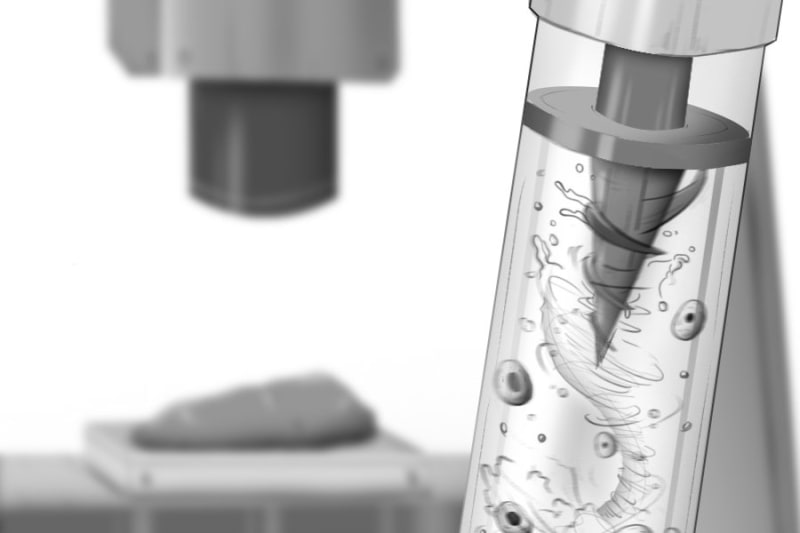
The innovation, called MagMix, solves a frustrating problem that has held back 3D bioprinting for years. When scientists try to print living tissues using cells mixed into gel-like "bioinks," gravity does what gravity does: the cells sink to the bottom of the printer syringe like sand settling in water.
This settling causes clogged nozzles, uneven cell distribution, and tissues that don't match what researchers intended. During the long printing sessions needed to create large tissues, the problem only gets worse, making it nearly impossible to print consistent, high-quality biological structures.
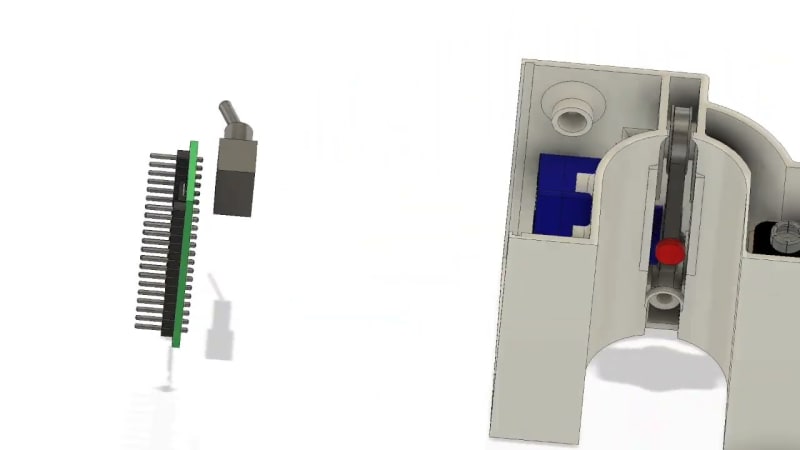
MagMix changes everything with elegant simplicity. A small magnetic propeller sits inside the bioprinter's syringe while an external magnet on a motor moves up and down nearby, controlling the propeller's gentle stirring motion. The device keeps cells uniformly mixed throughout printing without damaging them or requiring any changes to existing bioprinters.
"If we can print tissues that more closely mimic those in our bodies, we can use them as models to understand more about human diseases, or to test the safety and efficacy of new therapeutic drugs," explains Ritu Raman, assistant professor of mechanical engineering at MIT and senior author of the study published in the journal Device.
The team tested MagMix across multiple bioink types and prevented cell settling for more than 45 minutes of continuous printing. Cell viability remained high, and the researchers successfully printed cells that matured into functional muscle tissue over several days.
The implications reach far beyond the lab bench. Better bioprinted tissues could replace animal testing for drug safety, a priority for the FDA seeking faster and more informative approaches to evaluate new treatments. Eventually, the technology could enable doctors to print replacement tissues for patients with diseased or injured organs.
The Ripple Effect
What makes MagMix particularly exciting is its accessibility. The device is compact, low-cost, and works with any standard 3D bioprinter, meaning laboratories worldwide can adopt it without expensive equipment overhauls.
This democratization of advanced bioprinting technology could accelerate discoveries across disease modeling, drug screening, and regenerative medicine. When more researchers can reliably print high-quality tissues, breakthroughs happen faster and benefit more people.
The work was supported by MIT's Safety, Health, and Environmental Discovery Lab, which focuses on translating innovations from laboratory experiments to scalable real-world applications. "MagMix is a strong example of how the right combination of technical infrastructure and interdisciplinary support can move biofabrication technologies toward scalable, real-world impact," says founding director Tolga Durak.
Sometimes the most powerful innovations solve problems with surprising simplicity, opening doors we didn't realize were stuck.
More Images
Based on reporting by MIT News
This story was written by BrightWire based on verified news reports.
Spread the positivity!
Share this good news with someone who needs it