MIT's New Controller Cuts Excavator Training Time
Learning to operate a construction excavator can take years of practice with complex joysticks. MIT engineers just created a game-changing training system that lets operators control diggers as naturally as moving their own arm.
Imagine trying to master a claw machine at the arcade, except the stakes are building foundations and moving tons of earth instead of grabbing a stuffed toy.
That's the challenge facing excavator operators, who spend months or even years learning to translate joystick movements into precise digging, grading, and hauling. The mental gymnastics required to coordinate these controls has long been one of construction's toughest training challenges.
MIT engineers just changed the game with a refreshingly simple idea: what if the controller looked and moved like the actual excavator arm?
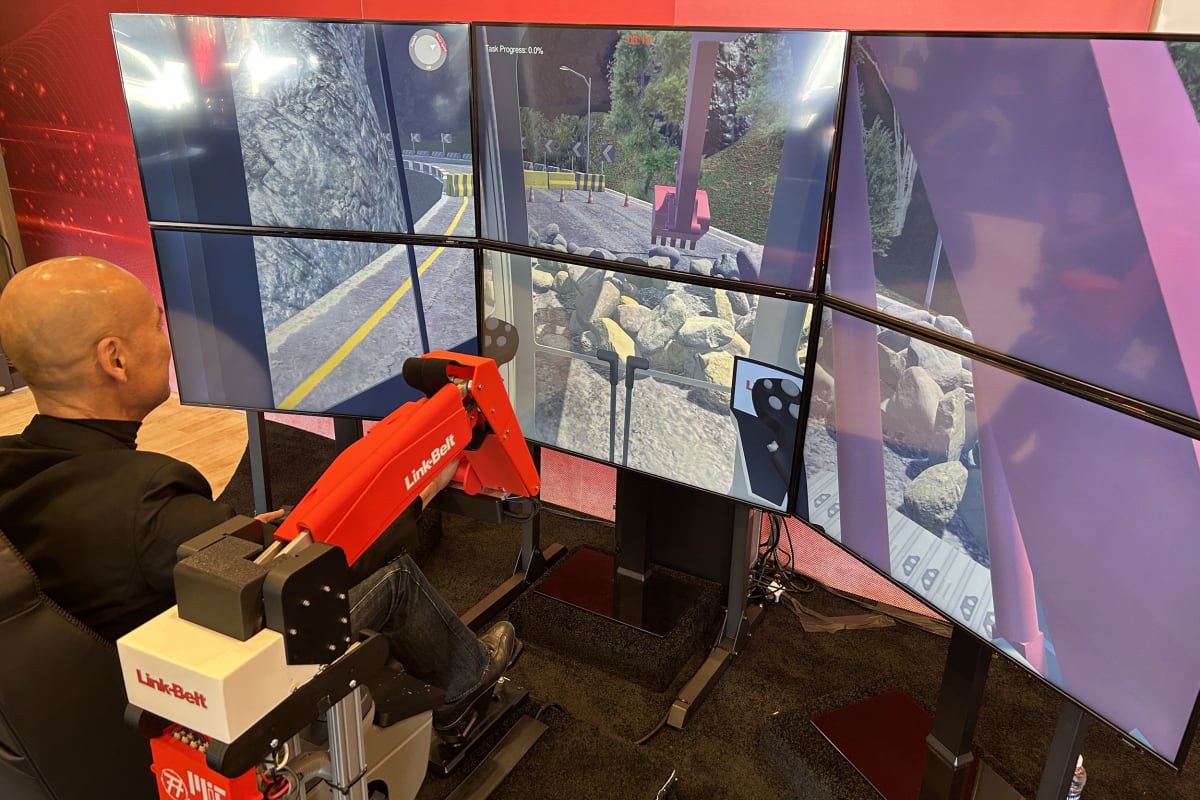
The team, led by principal research scientist Hermano Krebs, designed a miniature excavator arm that trainees hold and move with their own hand and arm. A virtual excavator displayed on six immersive screens mirrors every movement in real time. Instead of memorizing which joystick does what, trainees simply mimic the digging motions they want the machine to make.
"This is a more intuitive way to command the machine," Krebs explains. "We can eliminate a lot of the mental maps that an operator would need to build."
The innovation couldn't come at a better time. Japan's construction industry faces a rapidly aging workforce, and training replacements quickly has become urgent. Traditional training requires access to actual excavators and controlled courses, making it expensive and time-consuming.
The new system, called the "World-Space Interface," draws on Krebs' years of research in human-robot interaction and physical rehabilitation. His team understood how humans naturally control their limbs and applied that knowledge to heavy machinery operation.
The Ripple Effect spreads beyond just faster training. The mechanical arm could replace traditional joysticks in actual excavator cabs, making the machines easier to operate for everyone. Even more exciting, it opens possibilities for remote operation in dangerous environments like disaster zones or contaminated sites.
"If work has to be done in a difficult or unsafe environment, you could have an operator sitting off-site in a trailer and using this arm to remotely operate the excavator," Krebs says.
The team published their open-access results in the Journal of Computing and Civil Engineering, working alongside collaborators from Sumitomo Heavy Industries. By making their findings freely available, they're ensuring this breakthrough can reach the construction industry worldwide.
What started as a challenge to train operators faster has become a complete reimagining of how humans and heavy machinery work together.
More Images
Based on reporting by MIT News
This story was written by BrightWire based on verified news reports.
Spread the positivity!
Share this good news with someone who needs it