Mocked for Saving Birds, She Built 20,000-Woman Army
A wildlife biologist in Assam turned village mockery into India's most powerful women-led conservation movement. The endangered greater adjutant stork now has over 20,000 protectors.
When Purnima Devi Burman rushed to save nine injured stork chicks in 2007, men in her Assam village laughed at her. They called the bird dirty, unlucky, and asked who would clean up after it.
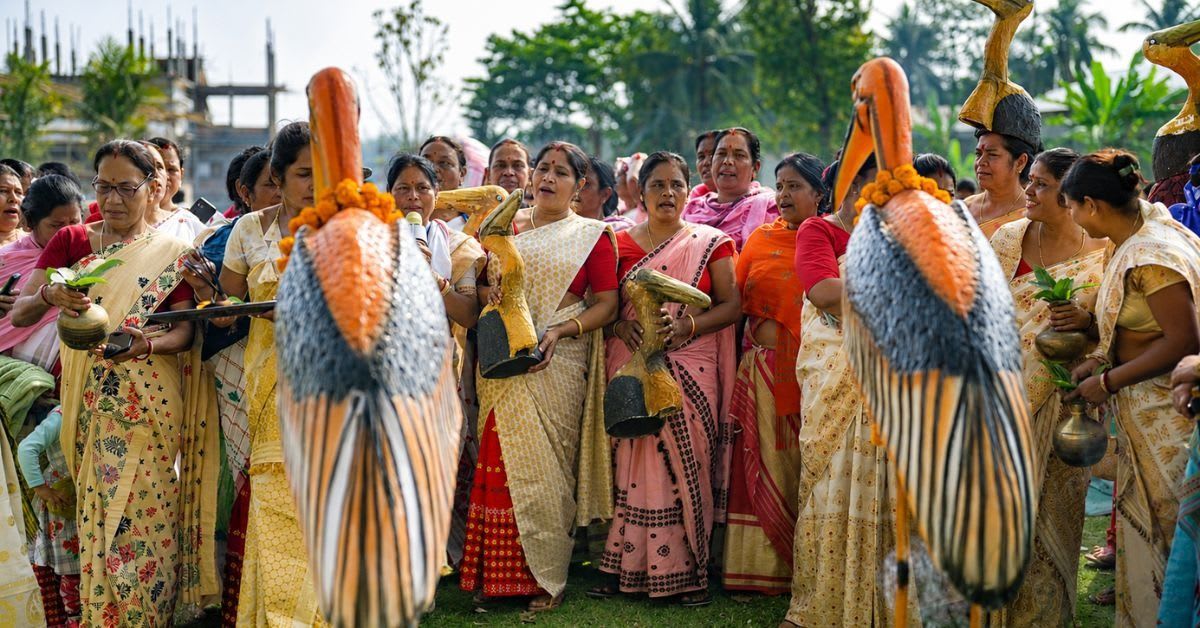
That moment of ridicule became the spark for one of India's most remarkable conservation stories. Today, over 20,000 women protect the once-hated hargila stork across Assam, transforming it from feared omen to beloved neighbor.
Purnima grew up in Pub Majir Gaon on the banks of the Brahmaputra, raised by her grandmother who wove birds into every story and song. When young Purnima refused to eat, her grandmother took her to the paddy fields and said the storks would steal her rice balls if she didn't finish them.
Those childhood memories stayed with her through her zoology degree and PhD research. But when she witnessed that tree being cut down in Dadara, destroying nine helpless chicks, she realized scientific papers alone wouldn't save the species.
The greater adjutant stork, one of the world's rarest birds, faced extinction not just from habitat loss but from generations of cultural fear. Villages cut down nesting trees without hesitation, believing the scavenging birds brought bad luck.
Purnima paused her PhD and chose a different path. She went door to door, not with lectures but with listening.
She organized cooking competitions, rangoli events, and folk prayers where women felt comfortable gathering. In these safe spaces, she began telling a new story about the hargila, not as cursed but as nature's cleanup crew, essential to keeping the ecosystem balanced.
Her breakthrough idea was simple but powerful: the Hargila baby shower. Drawing parallels between human mothers and the devoted care hargila mothers give their chicks, the concept struck an emotional chord that facts alone never could.
Women who once feared the birds began protecting them. What started informally around 2001 became the official Hargila Army in 2007, growing from a handful of supporters to over 20,000 women, with 1,500 actively monitoring nests and rescuing fallen chicks.
Why This Inspires
Purnima understood something many conservationists miss: culture changes hearts faster than data. By honoring local traditions and working within them rather than against them, she turned an entire community into allies.
Her work earned recognition as Time's Women of the Year 2025, but the real victory happens daily in Assam villages. Women who were once told a bird was worthless now wear their role as protectors with pride, passing new stories to their children about the hargila as helper, not害.
The movement proves that conservation doesn't require choosing between people and nature. When communities see themselves in the solution, protection becomes personal.
From mockery in a dusty village to an army of 20,000 women, Purnima transformed fear into the fiercest kind of love.
More Images
%2Fenglish-betterindia%2Fmedia%2Fmedia_files%2F2026%2F06%2F16%2Fhargila-army-2026-06-16-19-36-28.jpg)
%2Ffilters%3Aformat(webp)%2Fenglish-betterindia%2Fmedia%2Fmedia_files%2F2026%2F06%2F16%2Fedit-01458_11zon-2026-06-16-19-38-19.jpg)
%2Ffilters%3Aformat(webp)%2Fenglish-betterindia%2Fmedia%2Fmedia_files%2F2026%2F06%2F16%2Fphotos-hargila-army-14_11zon-2026-06-16-19-38-36.jpg)
Based on reporting by The Better India
This story was written by BrightWire based on verified news reports.
Spread the positivity!
Share this good news with someone who needs it