Model Wraps Prosthetic in Kente, Walks Ghana Runway
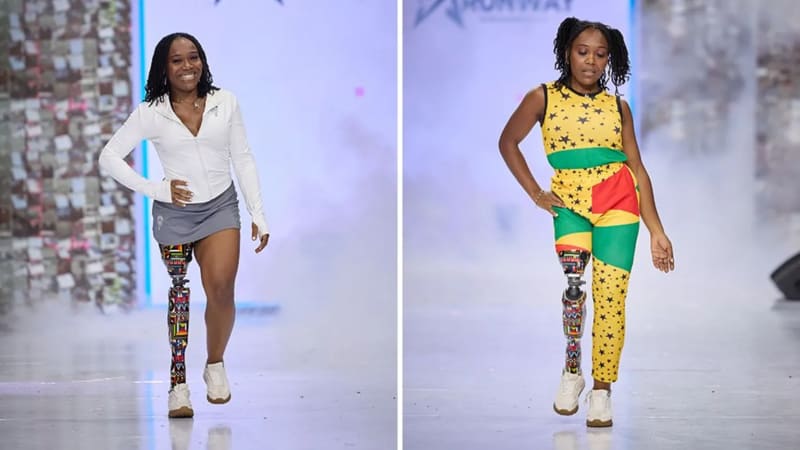
When Abena Christine Jon'el walked a major fashion show in Accra with her prosthetic leg wrapped in traditional Kente cloth, she wasn't just making a fashion statement. She was changing how an entire country sees disability.
When Abena Christine Jon'el walked a major fashion show in Accra with her prosthetic leg wrapped in traditional Kente cloth, she wasn't just making a fashion statement. She was changing how an entire country sees disability.
The 33-year-old model and writer lost her right leg to cancer at age two. Doctors gave her mother an impossible choice: radiation that might leave her daughter wheelchair-bound, or amputation. Her mother chose amputation, a decision Abena calls "the best she could have made."
Growing up in Chicago, Abena defied every stereotype about disabled children. "People imagine disabled kids as straight-A students who are sweet, quiet and perfect," she says. "I was the opposite. I was loud, I was a little black girl running around on one leg, I did not let anyone push me around."
That fierce spirit eventually led her to public speaking and writing. But something was missing. As a young adult, she devoured books about West Africa before colonialism, feeling a pull she couldn't explain.
Her first visit to Ghana in 2021 changed everything. Standing at the Assin Manso slave river site in central Ghana, she experienced what she calls "a moment that rearranged my entire understanding of myself." When she returned to the US, she fell into deep depression.
Three months later, she moved to Ghana permanently. She now lives with a Ghanaian mother who introduces her as her own daughter. "My Ghanaian identity is not pretend," she says. "It is ancestral."
Her Kente-wrapped prosthetic represents more than personal style. It's become a symbol of her advocacy for disabled Ghanaians, who she says remain largely invisible in positive spaces.
Why This Inspires
Abena isn't asking for pity or praise. She's demanding visibility. "In Ghana, disabled people have not been widely showcased in a positive light," she explains. "So stigma thrives. People do not see us in powerful or beautiful or joyful positions."
Her appearance at the 15th Rhythms on the Runway fashion show last month at Accra's historic Osu Castle wasn't about inspiration. It was about representation. She wants Ghanaians to see disabled people as they truly are: ambitious, stylish, talented, complex, and proud.
"Disability is not a limitation," she says. "Lack of support, lack of accessibility, that is what disables you."
By wrapping her prosthetic in Ghana's most celebrated fabric and refusing to shrink herself to fit expectations, Abena is showing a country what's possible when disabled people claim their space.
Based on reporting by Myjoyonline Ghana
This story was written by BrightWire based on verified news reports.
Spread the positivity!
Share this good news with someone who needs it