%2Fhttps%3A%2F%2Ftf-cmsv2-smithsonianmag-media.s3.amazonaws.com%2Ffiler_public%2F63%2F29%2F6329f0fc-722d-49fd-9932-cdf94afbbfea%2Fgettyimages-1287660795.jpg)
Montana's Fossil Paradise Reveals Dinosaurs' Final Days
A single fossil bed in Montana has unlocked nearly everything we know about T. rex and the final moments before dinosaurs vanished forever. Scientists are still finding treasures that show how life bounced back after Earth's most famous catastrophe.
One fossil hunter's discovery in Montana changed everything we know about the most famous predator that ever walked the Earth.
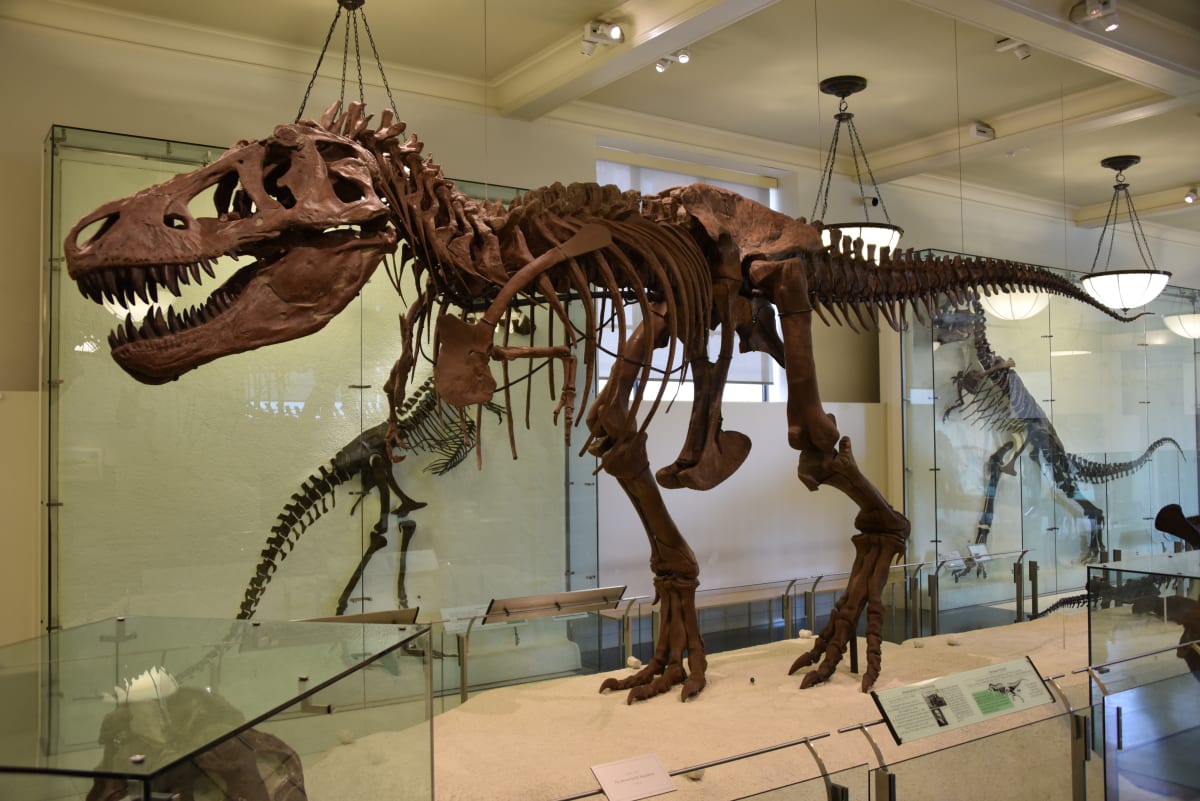
In 1902, Barnum Brown pulled bones from the badlands of eastern Montana that belonged to something nobody had seen before. Three years later, he gave it a name that would echo through history: Tyrannosaurus rex.
That first discovery sparked more than a century of fossil hunting in a geological wonder called the Hell Creek Formation. Stretching across Montana, the Dakotas, and Wyoming, this ancient rock layer has become the most important dinosaur graveyard in North America.
More than 95 percent of T. rex skeletons in museums worldwide come from these hills. Scientists have found adult specimens stretching 40 feet long and weighing nine tons, with jaws built specifically to crush bone. The sheer number of T. rex fossils tells an encouraging story: these apex predators thrived in a rich, healthy ecosystem teeming with life.
But T. rex isn't the only star of Hell Creek. The formation preserves entire communities of dinosaurs living together, from the tank-like Ankylosaurus to the three-horned Triceratops. Scientists have even found tiny mammals, preserved leaves, and microscopic pollen grains.
What makes Hell Creek truly special is what happened next. A thin layer of rock sits atop the formation, marking the moment 66 million years ago when an asteroid struck Earth. Below that boundary line: thriving dinosaurs. Above it: the survivors who rebuilt the world.
The overlying Fort Union Formation shows which creatures made it through Earth's fifth mass extinction. Small mammals, reptiles, and early plants began the slow work of recovery, eventually creating the age of mammals we live in today.
Scientists continue discovering smaller species that once hid in T. rex's shadow. Finding these tiny creatures requires patience and new techniques, but each discovery adds detail to our picture of this lost world.
The Ripple Effect
Hell Creek's fossils do more than fill museum halls. They've taught us that ecosystems can support incredible diversity, that catastrophes don't mean the end of life, and that recovery is always possible. The boundary between extinction and renewal sits preserved in these rocks, reminding visitors that life finds a way forward even after the worst disasters. Young paleontologists still flock to Montana's badlands, knowing that the next great discovery might be waiting just beneath their feet.
More Images
%2Fhttps%3A%2F%2Ftf-cmsv2-smithsonianmag-media.s3.amazonaws.com%2Ffiler_public%2F63%2F29%2F6329f0fc-722d-49fd-9932-cdf94afbbfea%2Fgettyimages-1287660795.jpg)
%2Fhttps%3A%2F%2Ftf-cmsv2-smithsonianmag-media.s3.amazonaws.com%2Ffiler_public%2F63%2F29%2F6329f0fc-722d-49fd-9932-cdf94afbbfea%2Fgettyimages-1287660795.jpg)
%3Afocal(1069x702%3A1070x703)%2Fhttps%3A%2F%2Ftf-cmsv2-smithsonianmag-media.s3.amazonaws.com%2Ffiler_public%2F63%2F29%2F6329f0fc-722d-49fd-9932-cdf94afbbfea%2Fgettyimages-1287660795.jpg)
Based on reporting by Smithsonian
This story was written by BrightWire based on verified news reports.
Spread the positivity!
Share this good news with someone who needs it