Morocco's Giant Mirror Farm Powers a Million Homes
In the Sahara's edge, Morocco built one of the world's largest solar plants using 2 million mirrors to generate electricity even after sunset. The ambitious Noor project shows both the promise and growing pains of Africa's clean energy transition.
Morocco just proved that deserts can do more than host Hollywood blockbusters.
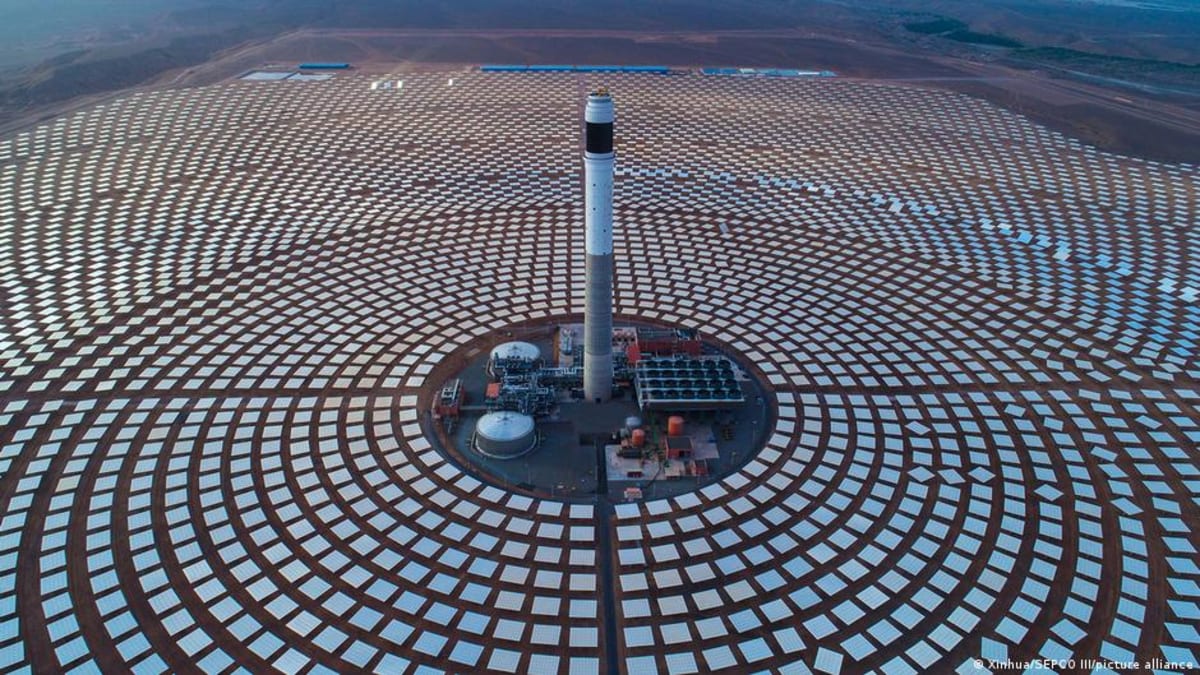
Near Ouarzazate, the "door to the desert" where films like Gladiator were shot, a field of 2 million giant mirrors now reflects sunlight onto a 247-meter tower. The concentrated light melts salt to 600 degrees Celsius, creating steam that spins turbines and powers over a million homes even hours after the sun sets.
The Noor solar complex stretches across nearly 500 hectares of high plateau land hemmed by the Atlas Mountains. Unlike typical black solar panels, this concentrated solar power plant uses mirrors to capture and store the sun's energy in molten salt, keeping the lights on long after dark.
Morocco is betting big on renewable energy for good reason. The country imports 90% of its coal, oil and gas, draining much of the national budget as global energy prices fluctuate. With temperatures regularly hitting 40 degrees Celsius in summer and hot days doubling since the 1970s, the shift away from fossil fuels has become urgent.
The nation's clean energy goals are ambitious by any standard. Morocco plans to generate 52% of its electricity from renewables by 2030 and 70% by 2050. With abundant sunshine and coastal winds, the country has the natural resources to make it happen.
Noor is just one piece of a much larger puzzle. Morocco has already built around two dozen major solar, wind and hydro projects, with several dozen more in development. The country recently pledged to phase out coal power entirely by 2040.
But ambition and achievement don't always move at the same pace. While Morocco has built enough renewable capacity to generate 46% of its electricity, it only achieved about half that output in 2023. The challenge isn't building the technology but integrating it into daily use.
Intissar Fakir, who directs the North Africa program at the Middle East Institute, points to grid limitations as a key bottleneck. The country needs major investment in storage systems and transmission infrastructure to actually use the clean power it's generating. Morocco also wants to export solar electricity to Europe, which will require even more grid upgrades.
The transition remains incomplete in other ways too. Fossil fuels still generate 48% of Morocco's energy emissions, and electricity costs residents around $110 monthly from a $550 average income. Many households in Ouarzazate still rely on butane gas rather than the solar power generated in their backyard.
Some researchers argue Morocco focused too heavily on megaprojects like Noor instead of decentralized rooftop solar for homes and businesses. The concentrated solar approach uses significant water to clean mirrors in a water-scarce region. Local farmers also lost grazing land to the project with minimal consultation, and some residents say the mirrors have increased local temperatures.
The Ripple Effect
Despite the challenges, Morocco has become a renewable energy leader in North Africa. The country's progress outpaces most of its neighbors, proving that even nations without oil wealth can build world-class clean energy systems. Noor demonstrates Morocco's technical capabilities and willingness to experiment with cutting-edge technology.
The project carries lessons for other developing countries navigating the energy transition. Large-scale infrastructure takes serious upfront investment, especially for lower-income nations. Grid modernization matters as much as building new power plants. And community consultation helps ensure local people benefit from projects in their regions.
Fakir calls Noor a flagship experiment that highlights both Morocco's ambition and the real-world challenge of displacing entrenched fossil fuels. Even massive investments in renewables require patience, infrastructure upgrades and sustained commitment to transform an entire energy system.
Morocco's mirror farm proves the technology works and the sun's potential is real.
---
Based on reporting by Google News - Clean Energy
This story was written by BrightWire based on verified news reports.
Spread the positivity!
Share this good news with someone who needs it