Morocco's Solar Plant Powers 1M Homes—Grid Next Challenge
Morocco built one of the world's largest solar plants in the Sahara Desert, generating enough clean energy for a million homes. The ambitious project proves Africa's renewable potential, even as the nation works to upgrade its grid to deliver that power to everyday people.
In the Moroccan city of Ouarzazate, where "Game of Thrones" once filmed desert scenes, two million giant mirrors are now writing a different kind of story. They're helping power a million homes with sunshine.
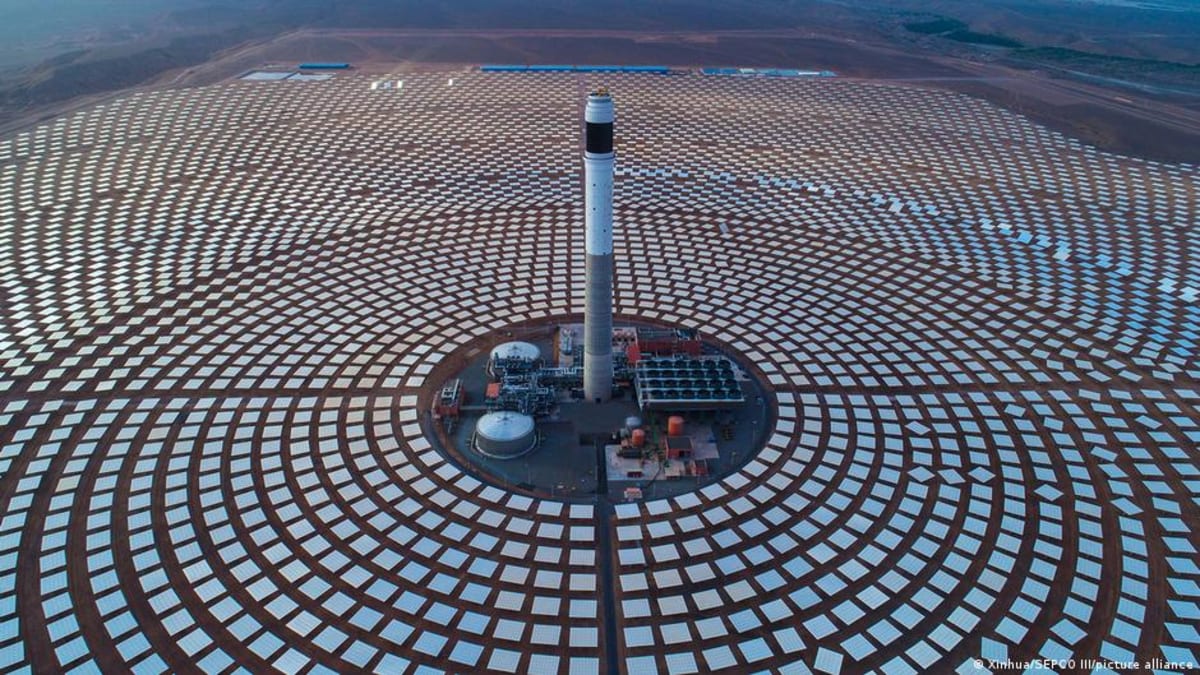
The Noor solar plant stretches across nearly 500 hectares on a plateau near the Sahara Desert. Unlike typical solar panels, this facility uses concentrated solar power—massive mirrors reflect sunlight onto a 247-meter tower, heating molten salt to 600 degrees Celsius.
The superheated salt creates steam that spins turbines, generating electricity even hours after the sun sets. It's a glimpse of what's possible when a sun-drenched nation invests in its greatest natural resource.
Morocco has made remarkable strides that most North African countries haven't matched. The nation has built around two dozen major solar, wind and hydro projects, with dozens more planned.
By 2030, Morocco aims to power its economy with 52% renewable electricity. By 2050, that target jumps to 70% clean energy capacity.
"Even by global standards, Morocco's transition plan is pretty ambitious," says Intissar Fakir, an energy policy expert at the Middle East Institute. The country recently pledged to phase out coal entirely by 2040.
Morocco currently has enough renewable technology installed to generate 46% of its electricity. That's real infrastructure, not just promises on paper.
The Bright Side
The gap between potential and delivery tells an important story about energy transitions. In 2023, Morocco only achieved about half of its 46% renewable capacity in actual output.
The challenge isn't the sunshine or the technology—it's the power grid. Morocco needs significant investment to upgrade its electricity network so it can integrate and distribute all this clean energy to homes and businesses.
This includes building energy storage systems and updating transmission lines. The country also wants to eventually export clean power to Europe, which requires even more infrastructure development.
Some energy experts and community groups advocate for decentralized solutions alongside mega-projects. Rooftop solar panels for homes, businesses and farms could complement large facilities like Noor, getting clean energy directly to the people who need it.
The experiment has revealed valuable lessons. Large-scale concentrated solar uses substantial water for cleaning mirrors in a desert region, and Noor required appropriating grazing land from local farmers.
Meanwhile, Moroccans spend about $110 of their $550 average monthly income on electricity. The country imports roughly 90% of its fossil fuels, making the switch to homegrown renewables increasingly urgent as global energy prices fluctuate.
Fakir calls projects like Noor important experiments that prove Morocco's technical capabilities. They also highlight that even massive renewable investments need time and supporting infrastructure to fully displace entrenched fossil fuel systems.
The Noor solar plant stands as proof that African nations can build world-class renewable energy systems—and as a roadmap showing that the technology is just the beginning of the journey.
Based on reporting by DW News
This story was written by BrightWire based on verified news reports.
Spread the positivity!
Share this good news with someone who needs it