Most Detailed Map Ever Shows Universe's Hidden Web
Scientists using NASA's James Webb Space Telescope have created the most detailed map ever of the cosmic web, revealing how galaxies connect across 13.7 billion years. The breakthrough lets us see the universe's skeleton when it was just one billion years old.
Astronomers just unveiled the clearest picture ever of how everything in space connects, revealing a cosmic architecture that's been invisible until now.
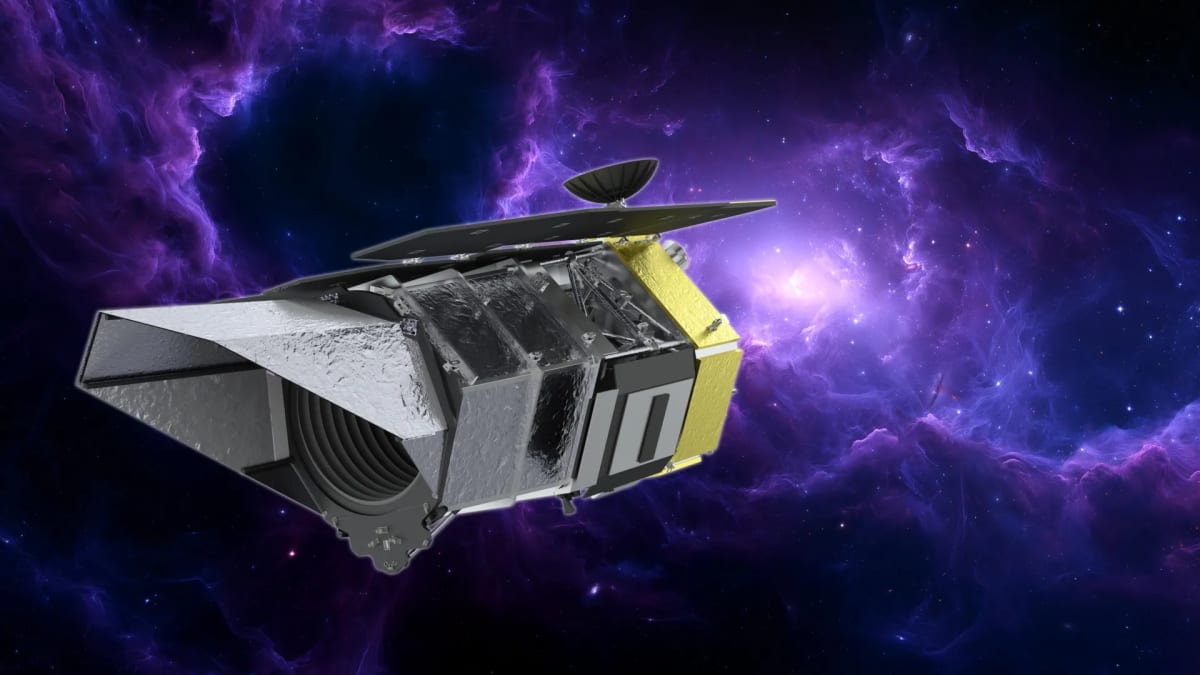
Using NASA's James Webb Space Telescope, an international team created the most detailed map of the cosmic web, the vast network of galaxies, dark matter, and gas that forms the skeleton of our universe. The achievement traces this enormous structure all the way back to when the universe was only one billion years old.
The cosmic web isn't random. Think of it as the universe's blueprint: massive filaments and sheets of matter surrounding empty voids, linking every galaxy and cluster into one intricate network stretching across the cosmos.
"JWST has completely changed our view of the universe," says Hossein Hatamnia, a graduate student at University of California, Riverside and the study's lead author. The telescope's infrared vision can see through cosmic dust and detect faint, distant galaxies that earlier observatories completely missed.
The team used COSMOS-Web, the largest survey ever conducted with the James Webb telescope. Covering an area three times the size of the full moon, the project mapped how galaxies formed connections across 13.7 billion years of cosmic history.
The improvement over previous maps is dramatic. Bahram Mobasher, a physics professor at UC Riverside, explains that structures once hidden or blurred now appear sharp and clear. What looked like single formations now resolve into many distinct features, revealing details that were smoothed away in older telescope data.
The breakthrough comes from two key advantages working together. The telescope detects far more faint galaxies in the same patch of sky, and it measures their distances with much greater precision. Scientists can now place each galaxy into its correct moment in cosmic time, creating a sharper, more accurate map.
Why This Inspires
This isn't just about looking backward. Understanding how galaxies connect and evolve helps us grasp our own place in the cosmos. The research team made their findings completely public, releasing the catalog of 164,000 galaxies, the mapping pipeline, and even a video showing the cosmic web evolving across billions of years.
For the first time, scientists can study how galaxies form clusters and connections throughout cosmic history, from when the universe was incredibly young to our nearby cosmic neighborhood. The research appears in The Astrophysical Journal and involved scientists from ten countries across four continents.
The universe's hidden architecture is hidden no more.
Based on reporting by Google News - Science
This story was written by BrightWire based on verified news reports.
Spread the positivity!
Share this good news with someone who needs it