Mother-Daughter Duo Preserves Northeast India's Food Wisdom
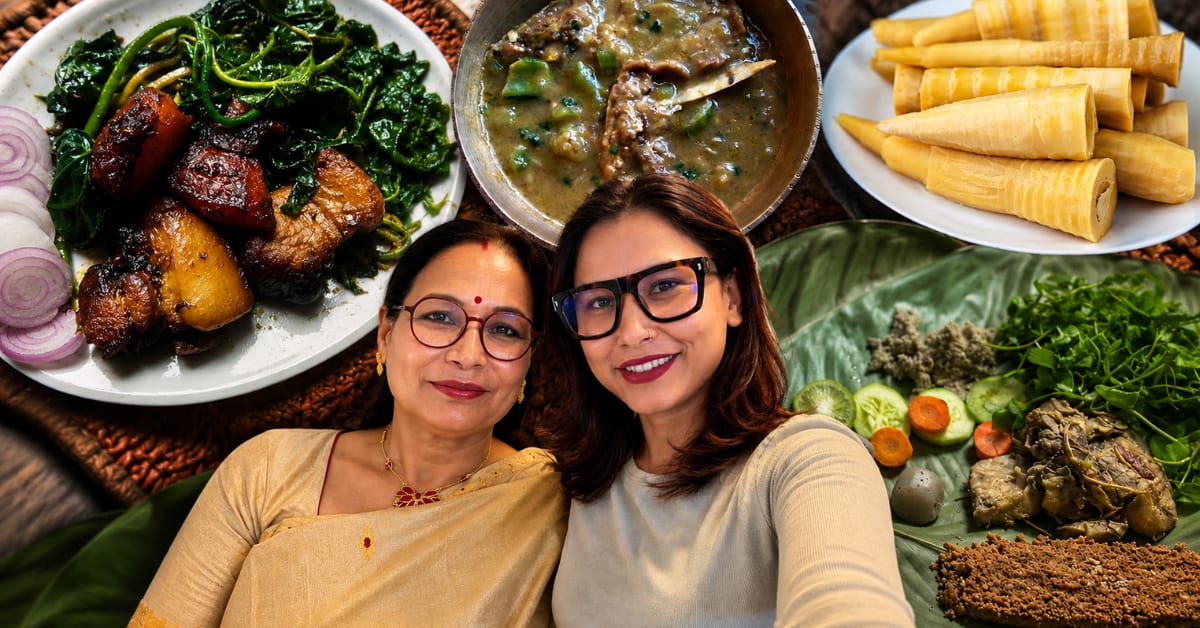
In Assam, Sumi Borah and her mother keep alive centuries-old sustainable cooking methods using smoked meats, fermented bamboo, and foraged herbs. Their kitchen reveals how Indigenous communities practiced zero-waste eating long before it became trendy.
Long before "farm to table" became a restaurant buzzword, families across Northeast India were living it every single day.
Sumi Borah's earliest memory isn't a dish. It's the smell of woodsmoke drifting through her family kitchen in Assam, where pork hangs above the fire for weeks and bamboo shoots ferment in jars for months. Fresh herbs picked from nearby forests dry by the window while rice simmers below.
"In our home, the kitchen was always active in some way," Sumi says. "Something was always being smoked, boiled, dried, or preserved."
For hundreds of Indigenous communities across Assam, Arunachal Pradesh, Nagaland, Manipur, Mizoram, Meghalaya, and Sikkim, food has never been separate from the land. Families forage wild herbs and seasonal vegetables based on what nature offers each month. They preserve harvests to last through monsoon seasons when fresh ingredients become scarce.
Sumi's mother still prepares one of the region's most recognizable dishes: smoked pork with fermented bamboo shoot. The recipe uses just six ingredients including ginger, king chilli, and salt. No heavy spices, no complicated techniques.
"The smoked meat and bamboo shoots naturally create rich flavours," Sumi explains.
During harvest season, her mother cleans, slices, and ferments large batches of bamboo shoots for storage. These preserved shoots become essential during monsoons when fresh produce is harder to find. Nothing goes to waste because nothing can afford to.
Traditional Northeastern meals follow this same philosophy. Broths stay light and oil is used sparingly. Smoke, fermentation, and fresh herbs build flavor gradually instead of masking ingredients with heavy spices.
"A lot of our food came directly from forests, rivers, kitchen gardens, or nearby farms," Sumi says. "I never saw ingredients as something that only came from supermarkets or packaged shelves."
The Ripple Effect
This isn't nostalgia. It's practical wisdom developed over generations by communities who learned to work with difficult terrain, unpredictable weather, and limited resources. These food systems naturally created what modern experts now call sustainable eating: seasonal, local, low-waste, and deeply connected to ecological rhythms.
The knowledge passes mother to daughter, grandmother to grandchild, through memory rather than written recipes. Young people watch bamboo being preserved and learn which forest herbs heal which ailments. They understand that cooking isn't just about feeding people today, but about respecting what the land provides and ensuring it continues providing tomorrow.
Climate shifts now threaten these time-tested traditions. But families like Sumi's prove that the path forward might actually look backward, toward Indigenous knowledge that never needed trendy labels to understand how humans should eat.
Their kitchen offers a quiet reminder: the most sustainable food systems were never invented by restaurants or lifestyle brands. They were created by people who simply learned to listen to the land.
More Images
%2Fenglish-betterindia%2Fmedia%2Fmedia_files%2F2026%2F07%2F20%2Fne-food-2026-07-20-17-21-24.png)

%2Ffilters%3Aformat(webp)%2Fenglish-betterindia%2Fmedia%2Fmedia_files%2F2026%2F07%2F20%2Fne-food-4-2026-07-20-17-42-42.png)
%2Ffilters%3Aformat(webp)%2Fenglish-betterindia%2Fmedia%2Fmedia_files%2F2026%2F07%2F20%2Fne-food-3-2026-07-20-17-37-08.png)
Based on reporting by The Better India
This story was written by BrightWire based on verified news reports.
Spread the positivity!
Share this good news with someone who needs it