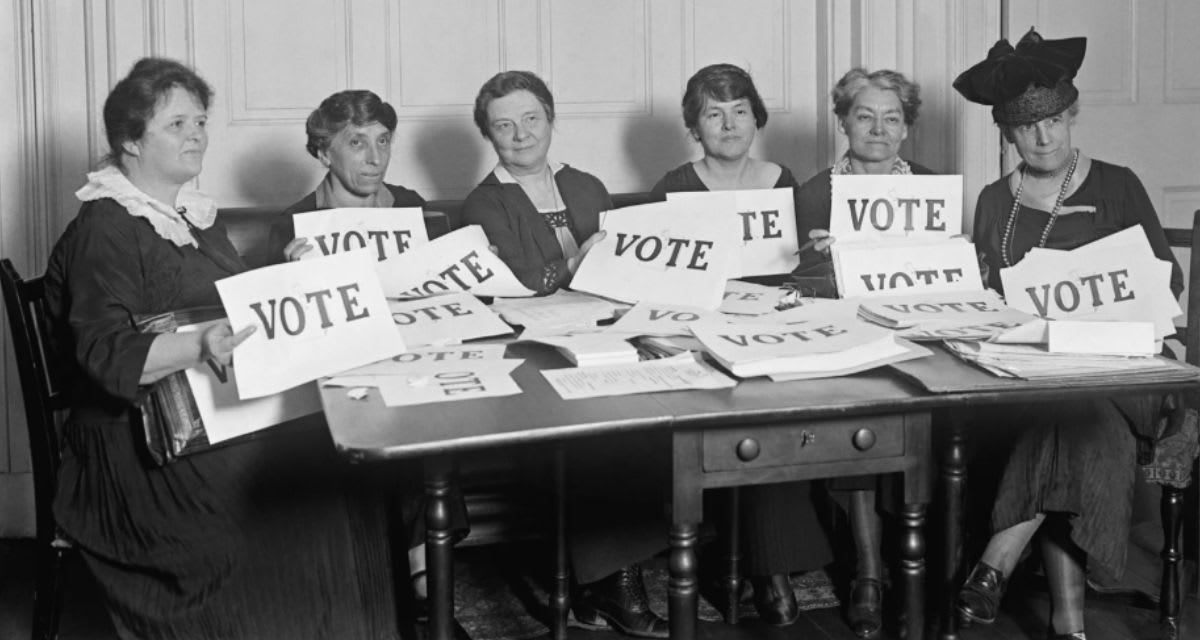
Mother's Letter Gave Women the Right to Vote in 1920
A 24-year-old Tennessee lawmaker wearing a red anti-suffrage rose shocked everyone when he cast the deciding vote that gave American women the right to vote. His mother's seven-page letter that morning changed his mind and altered history forever.
On August 18, 1920, Harry T. Burn held the fate of 17 million American women in his hands. The 24-year-old Tennessee state representative was about to cast what everyone assumed would be another "no" vote on women's suffrage.
Burn wore a red rose on his lapel that day, the symbol of anti-suffrage forces in Tennessee's heated "War of the Roses" political battle. Yellow roses represented supporters, red roses the opposition. He had already voted against suffrage twice before, and his conservative district expected him to do it again.
But that morning, Burn received a seven-page letter from his mother, Febb Ensminger Burn. She was college-educated and had been following her son's votes closely.
Her message was clear and loving. "Hurrah and vote for Suffrage and don't keep them in doubt," she wrote. Then she added a line that would echo through history: "Don't forget to be a good boy."
The vote came down to Burn. When the count reached 48 to 48, his "aye" stunned the Tennessee House of Representatives. That single vote made Tennessee the 36th state to ratify the 19th Amendment, meeting the threshold needed to grant American women the constitutional right to vote nationwide.
The fight for suffrage had begun 72 years earlier in Seneca Falls, New York, where Elizabeth Cady Stanton and Lucretia Mott led the first organized convention. Nearly everyone at that 1848 gathering died before seeing their dream realized.
The next day, Burn stood before his fellow representatives to explain his decision. "I knew that a mother's advice is always safest for a boy to follow and my mother wanted me to vote for ratification," he said.
He went further, recognizing the weight of the moment. "I appreciated the fact that an opportunity such as seldom comes to a mortal man to free 17 million women from political slavery was mine."
Why This Inspires
A mother's simple reminder to "be a good boy" became the catalyst for one of America's most significant civil rights victories. Febb Ensminger Burn understood that real change often requires courage from unexpected places, and she trusted her son to rise to the moment.
Her letter shows that monumental progress sometimes hinges on personal relationships and moral conviction. The suffragists who fought for 72 years never gave up, and when the critical moment arrived, a mother's wisdom carried the cause across the finish line.
One vote. One letter. Seventeen million women finally heard.
More Images



Based on reporting by Upworthy
This story was written by BrightWire based on verified news reports.
Spread the positivity!
Share this good news with someone who needs it