MRI Scan Spares Heart Patients from Risky Invasive Tests
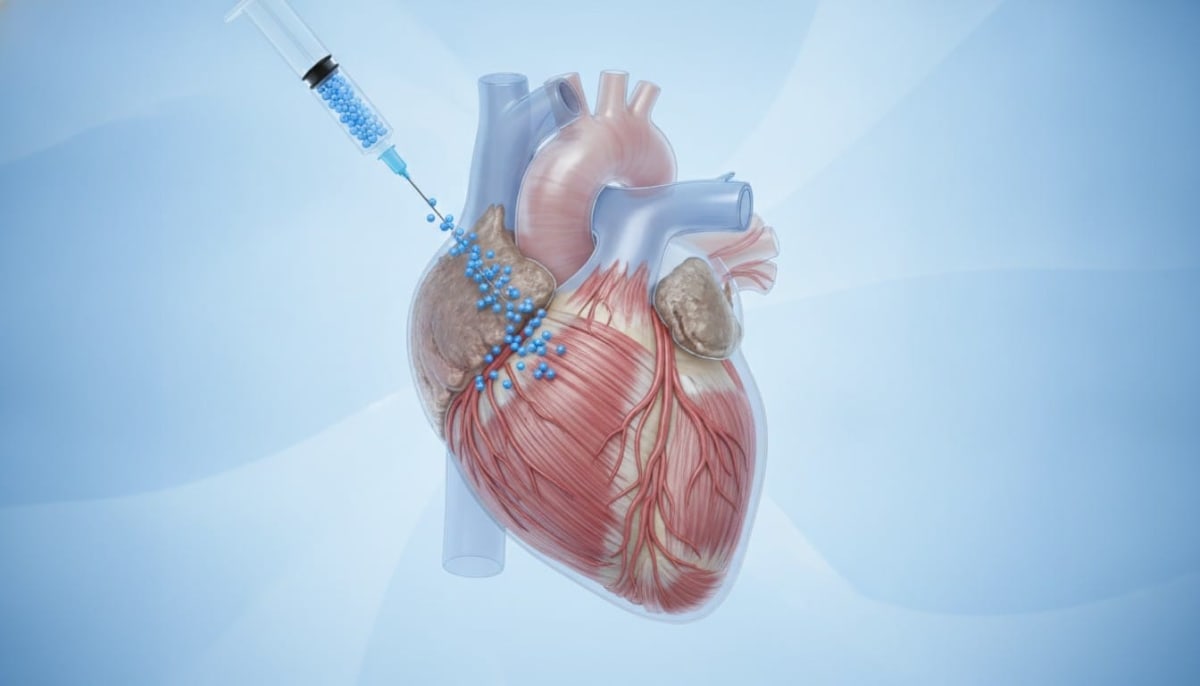
Thousands of heart failure patients could soon skip a risky procedure where doctors thread tubes into their hearts, thanks to a breakthrough MRI technique. UK researchers developed a method to measure crucial blood oxygen levels using a standard scan instead.
Heart failure patients have long faced an uncomfortable dilemma: undergo a risky invasive test, or miss out on critical information that could save their lives. Now, researchers have found a way to eliminate that choice entirely.
Scientists from the University of East Anglia, working with colleagues at Leeds and Newcastle universities, developed a technique that uses routine MRI scans to measure blood oxygen levels. This breakthrough could spare tens of thousands of patients from right heart catheterization, a procedure where doctors insert a tube directly into the heart.
The invasive catheter test helps doctors understand how severe a patient's heart failure has become. But it comes with significant risks, especially for older or frail patients who need the information most.
Lead researcher Professor Pankaj Garg calls the development a "game changer for assessing advanced heart failure." The new method uses MRI technology called T2 mapping to track how oxygen-depleted blood behaves in a magnetic field.
Blood with different oxygen levels reacts slightly differently to magnets. The research team created a formula that predicts oxygen readings based on these reactions, without requiring tubes or blood samples.
The technique proved remarkably accurate in testing. When researchers first tried it on 30 patients, the MRI results closely matched traditional catheter readings. They then studied 628 people newly diagnosed with heart failure, following them for around three years.
Patients with healthier oxygen readings on their MRIs were significantly less likely to die or require hospitalization. The MRI-based measurements stayed accurate even when accounting for age, other illnesses, and overall heart function.
The Ripple Effect
This innovation extends far beyond individual patients. Heart failure affects hundreds of thousands of people in the UK alone, and similar numbers across the United States and worldwide.
Dr. Peter Swoboda from the University of Leeds points out that doctors can now "read off a crucial number from an everyday scan." That transforms a routine MRI into a powerful diagnostic tool without threading anything into someone's heart.
The technique requires no extra equipment, no contrast dye, and adds only seconds to a standard cardiac scan. Dr. Gareth Matthews notes this accessibility could "widen access to safer heart failure assessment across the NHS."
Because patients can undergo MRI scans repeatedly without risk, doctors can monitor heart failure progression more frequently. This means catching problems earlier and adjusting treatments faster, especially for patients too frail for catheter procedures.
The research team acknowledges more studies are needed to confirm findings across different hospitals and patient groups. They're also working to understand how best to integrate these measurements into everyday medical decisions.
For now, though, thousands of heart patients can look forward to getting the answers they need without the tube they dread.
More Images


Based on reporting by Google News - Health Breakthrough
This story was written by BrightWire based on verified news reports.
Spread the positivity!
Share this good news with someone who needs it