Mumbai Expert Plants 300,000 Trees in Tiny Urban Spaces
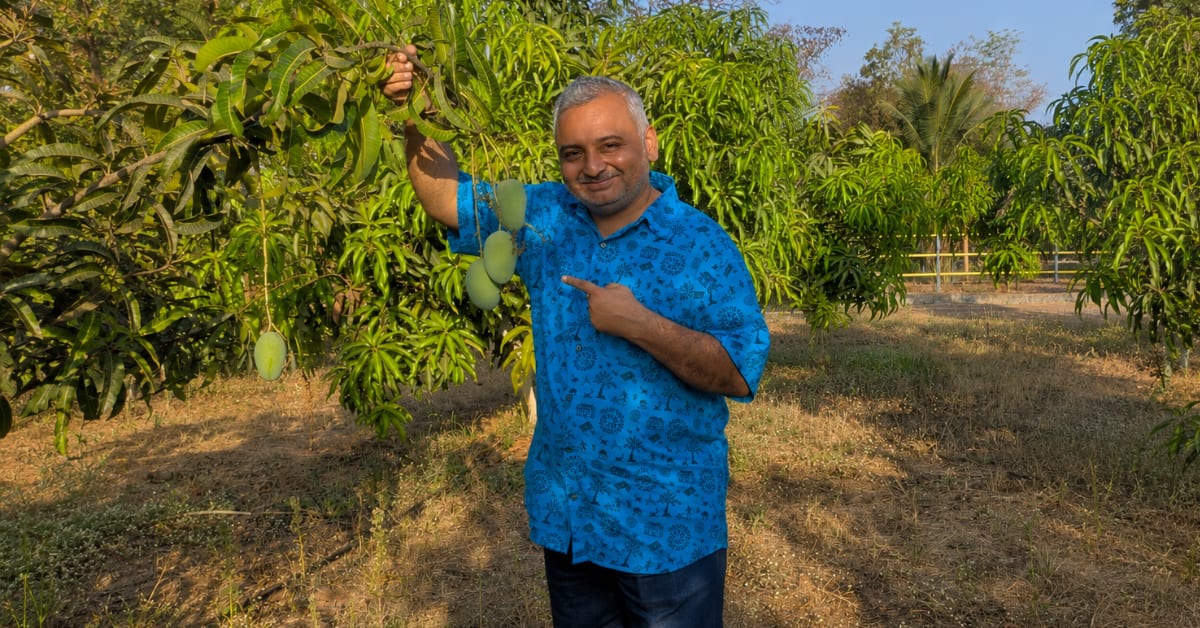
Subhajit Mukherjee is proving India's crowded cities can have forests by transforming spaces as small as 100 square feet into thriving green havens. His Mission Green Mumbai has planted over 300,000 trees and created 40 dense pocket forests across major cities.
A hospital in Mumbai used to be so hot and dry that staff couldn't walk outside during the day. Today, dense forests line its walls, birds sing in the branches, and employees take their lunch breaks in the shade.
The change happened in just three years, thanks to Subhajit Mukherjee and his Mission Green Mumbai initiative. He's on a mission to prove that India's most crowded cities aren't too packed for forests. They just need to think differently about space.
Subhajit has created over 40 pocket forests across Mumbai, Pune, and Chennai, personally planting more than 300,000 trees. His secret? You only need 100 square feet and a plan that includes water, not just saplings.
"We have a 'no green without blue' philosophy," Subhajit explains. Most tree planting efforts in India fail because nobody plans for watering the saplings after they go in the ground.
His pocket forests use the Miyawaki method, a Japanese technique adapted for Indian cities. The forests feature multiple layers of native plants packed densely together, just like natural forests grow. They're watered using recycled water from hospitals, schools, and housing societies.
At Malad's General Hospital, the transformation is remarkable. Manoj, a senior pharmacy officer, says the campus was nothing but dead grass and dried-out trees three years ago. Now pocket forests grow along boundary walls and between buildings, watered entirely by the hospital's RO reject water and wastewater.
"There is at least a 50% improvement in conditions," Manoj says. "We can now take walks outside the building during the day."
The timing couldn't be more urgent. Indian cities are warming 60% faster than rural areas, with summer temperatures routinely hitting 47°C. Mumbai has only 13% green cover when experts recommend 33% as a minimum for livable cities.
Subhajit's individual projects range from 2,000 to 12,000 trees, with new installations happening almost weekly. But the real magic is in the replication. He's created a free toolkit that any citizen, school, or housing society can use to start their own pocket forest.
The model has spread across India through citizen groups, hospitals, and corporate partnerships. Each forest attracts butterflies and birds, features native species like curry leaf and nirgundi, and creates measurable cooling effects in surrounding areas.
The Ripple Effect
What started as one man's conviction has become a nationwide movement. Housing societies, navy schools, and government hospitals are now transforming forgotten corners into thriving ecosystems. Every forest cools its surroundings, provides habitat for urban wildlife, and proves that space constraints are just excuses waiting to be solved.
The toolkit includes everything needed: species lists, soil preparation guidelines, watering schedules, and budget estimates. Anyone with 100 square feet of unused space and a WhatsApp number can join the movement.
Subhajit proves that environmental change doesn't require waiting for government action or massive funding, just soil, saplings, and the understanding that water makes all the difference.
More Images
.png)
%2Fenglish-betterindia%2Fmedia%2Fmedia_files%2F2026%2F06%2F04%2F1-2026-06-04-16-15-11.png)


Based on reporting by The Better India
This story was written by BrightWire based on verified news reports.
Spread the positivity!
Share this good news with someone who needs it