Musician Shares Her AI Voice Clone With the World
Experimental composer Holly Herndon trained an AI model on her own voice and released it free for anyone to use. She sees the technology as a tool to bring artists together, not replace them.
A professional musician just did something that sounds impossible: she gave away her voice to the entire world.
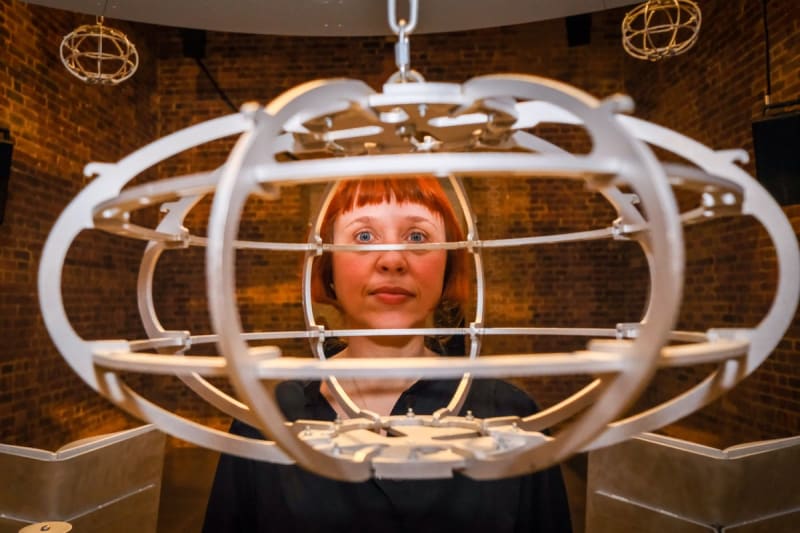
Holly Herndon, an experimental composer with degrees from Mills College and Stanford, spent years training an artificial intelligence model on her unique singing voice. Instead of keeping it private, she released Holly+ as a free tool that lets anyone perform using her vocal signature.
The project started in 2021 when Herndon worked with Voctro Labs to create a voice clone that works in real time. When her British partner first tested it by singing into the system, Herndon heard herself speaking with a British accent. The experience was so surreal she had to leave the room.
But that uncanny moment sparked a bigger vision. Herndon sees AI voice technology as a way to free artists from physical limitations and bring people together to create in new ways.
She and her partner Mat Dryhurst treat every step of building their AI models as art itself. For a recent exhibition in Berlin, they created a model inspired by medieval composer Hildegard von Bingen, imagining what polyphony would sound like if it existed in her era. They invited the public to train alongside them and interpret the results through live singing.
Herndon's approach stands in sharp contrast to commercial AI music tools like Suno, which train on massive datasets scraped from the internet. She makes all her own training data, composing music specifically for the AI to learn from. The result sounds distinctly like her, not like an average of everything online.
The Ripple Effect
Herndon believes this technology could transform how we think about creativity itself. She imagines a future where singers can morph between voices in real time, creating hybrid performances that blend operatic sopranos with whale songs or shift between different vocal identities mid-performance.
Her vision extends beyond individual expression. She thinks AI could help artists escape the attention economy's grip by using intelligent agents to filter noise and actually bring people together in physical spaces. Some of her developer friends already "vibe code" with AI assistance while cooking dinner or hiking with their kids.
The deeper shift, Herndon says, is recognizing that creativity has always been collective. AI just makes that reality visible by showing how art emerges from aggregated human knowledge and community collaboration. The 20th century model of the lone genius is giving way to something more honest about how innovation actually works.
For Herndon, the question isn't whether AI will replace human artists. It's whether we'll use these tools to build a future that brings us together or keeps us scrolling alone. She's betting on connection.
More Images
Based on reporting by Scientific American
This story was written by BrightWire based on verified news reports.
Spread the positivity!
Share this good news with someone who needs it