NASA and Europe Team Up for 2028 Mars Rover Launch
After years of budget cuts, political setbacks, and partnership changes, NASA has officially restarted work with Europe to send a life-hunting rover to Mars. The Rosalind Franklin rover is now set to launch no earlier than 2028 on a SpaceX Falcon Heavy rocket.
📺 Watch the full story above
A Mars mission that nearly died multiple times is getting a second chance at the red planet.
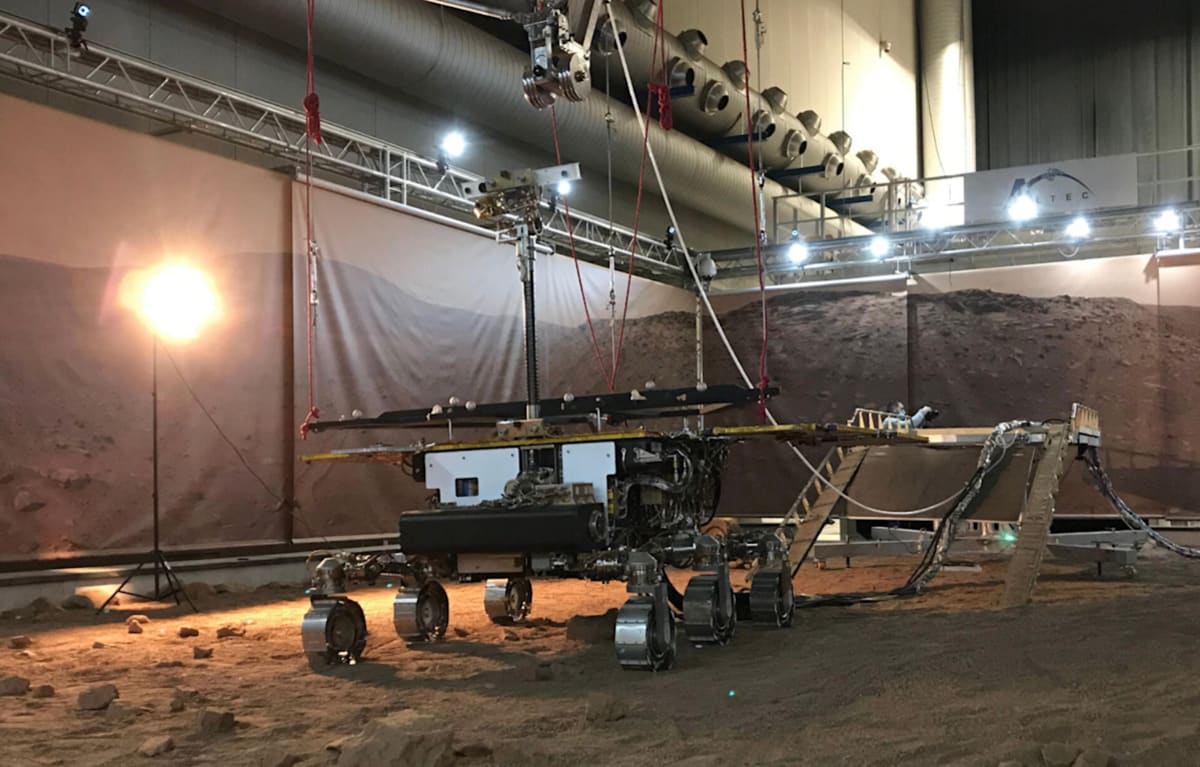
NASA confirmed it's back on board to help launch Europe's Rosalind Franklin rover, a robotic explorer designed to search for signs of ancient life on Mars. The mission targets a 2028 launch aboard a SpaceX Falcon Heavy rocket from Kennedy Space Center.
This international partnership splits the work between continents. The European Space Agency is providing the rover, spacecraft, and lander. NASA will supply critical braking engines, heater units to keep the rover alive in Mars' freezing temperatures, and launch support.
The rover comes equipped with cutting edge science tools. A high tech mass spectrometer and organic molecule analyzer will help it hunt for biosignatures at its landing site, Oxia Planum, a region scientists believe once held water.
Getting here took 27 years of persistence. The mission was first dreamed up in 2001, with an original launch date of 2009. Budget cuts forced NASA to drop out in 2012, so Russia stepped in as launch partner. Then technical problems caused more delays. The European Space Agency ended its Russian partnership in 2022 after the invasion of Ukraine, leaving the mission's future uncertain until NASA rejoined in 2024.
Even then, challenges continued. The Trump administration proposed a 23% cut to NASA's overall budget and a 47% slash to its science programs while the Artemis II crew was literally circling the Moon. The proposed cuts threatened to end NASA's involvement in this project and many others.
The Bright Side: Despite political headwinds and years of starts and stops, scientists on two continents refused to give up on this mission. Their persistence means we're closer than ever to answering one of humanity's biggest questions: are we alone?
The 2028 launch window represents more than just a date on the calendar for researchers who've dedicated decades to this dream.
More Images

Based on reporting by Engadget
This story was written by BrightWire based on verified news reports.
Spread the positivity!
Share this good news with someone who needs it