NASA and IBM Release Free AI Model to Map the Moon
Scientists can now explore decades of lunar data in seconds thanks to a breakthrough AI model that spots ice deposits, craters, and volcanic features better than any tool before it. NASA and IBM just made it free for anyone to use.
Finding water on the Moon just got a whole lot easier, and the tool that makes it possible is now available to scientists everywhere for free.
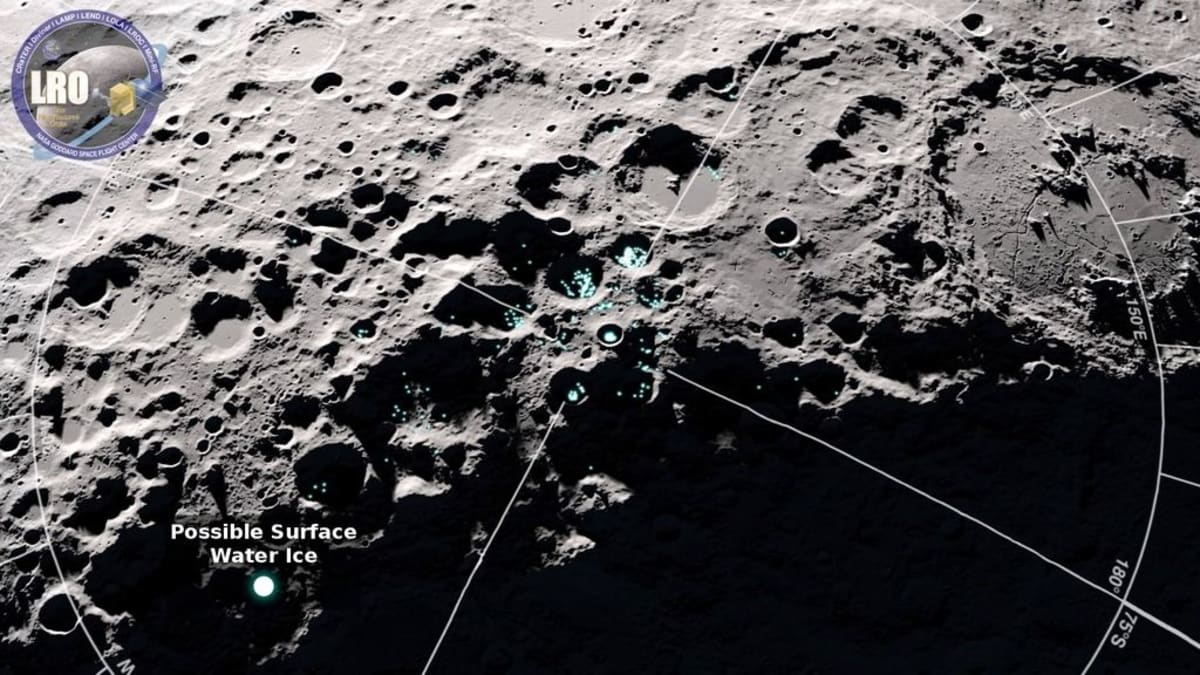
NASA and IBM released the Lunar Foundation Model this week, an AI system that turns decades of moon observations into instant insights. The model can identify potential ice deposits, craters, and volcanic formations up to 23% more accurately than current methods.
Here's why that matters. The Moon's surface has been continuously photographed and mapped by sensors for decades, creating massive amounts of data. But until now, scientists had to either review thousands of images by hand or use low-resolution tools that missed important details.
The new AI model solves that problem by learning patterns across different types of lunar data at once. It combines images and maps from nine different instruments across four space missions, creating the most complete picture of the Moon's surface ever assembled in one place.
The breakthrough is already showing results. The model reduced errors in identifying areas with potential lunar ice by 22% compared to previous methods. That's crucial because ice on the Moon means access to water and oxygen, both essential for establishing a future Moon base and creating rocket fuel for Mars missions.
The AI also excels at mapping craters at meter-scale resolution, helping NASA identify safe landing sites and avoid hazards like steep slopes. At broader scales, it outperforms existing models by 19% while using only half the training data.
Scientists can use the tool to study volcanic features that reveal the Moon's thermal history and identify changing regions important for future surface operations. The model learns from imperfect data and still delivers more accurate results than current systems.
The Ripple Effect: By making both the AI model and the underlying dataset open source, NASA and IBM handed the global research community a powerful foundation to build on. Any scientist anywhere can now access cutting-edge AI trained on petabytes of lunar data, removing barriers that once limited space exploration to institutions with massive computing resources.
The collaboration extends NASA and IBM's ongoing effort to transform scientific data into openly available tools for discovery. The unified dataset they created brings together tens of thousands of images from NASA's Lunar Reconnaissance Orbiter, GRAIL mission, and Japan's SELENE/Kaguya spacecraft into one machine-learning-ready format.
Kevin Murphy, NASA's chief science data officer, captured the opportunity perfectly: "Collecting data is only part of the job. We also have to make data easier for scientists to explore and use."
The Moon has kept its secrets long enough, and now researchers have the tools to uncover them faster than ever before.
More Images
Based on reporting by Google: scientific discovery
This story was written by BrightWire based on verified news reports.
Spread the positivity!
Share this good news with someone who needs it