NASA and IBM Release Free AI Tool to Map the Moon
Scientists can now explore decades of lunar data in minutes thanks to a breakthrough AI model released free to the public. The tool has already proven 23% better at finding potential ice deposits and landing sites than existing technology.
Imagine trying to find a specific grain of sand on a beach the size of Africa. That's what scientists faced when analyzing decades of Moon data until now.
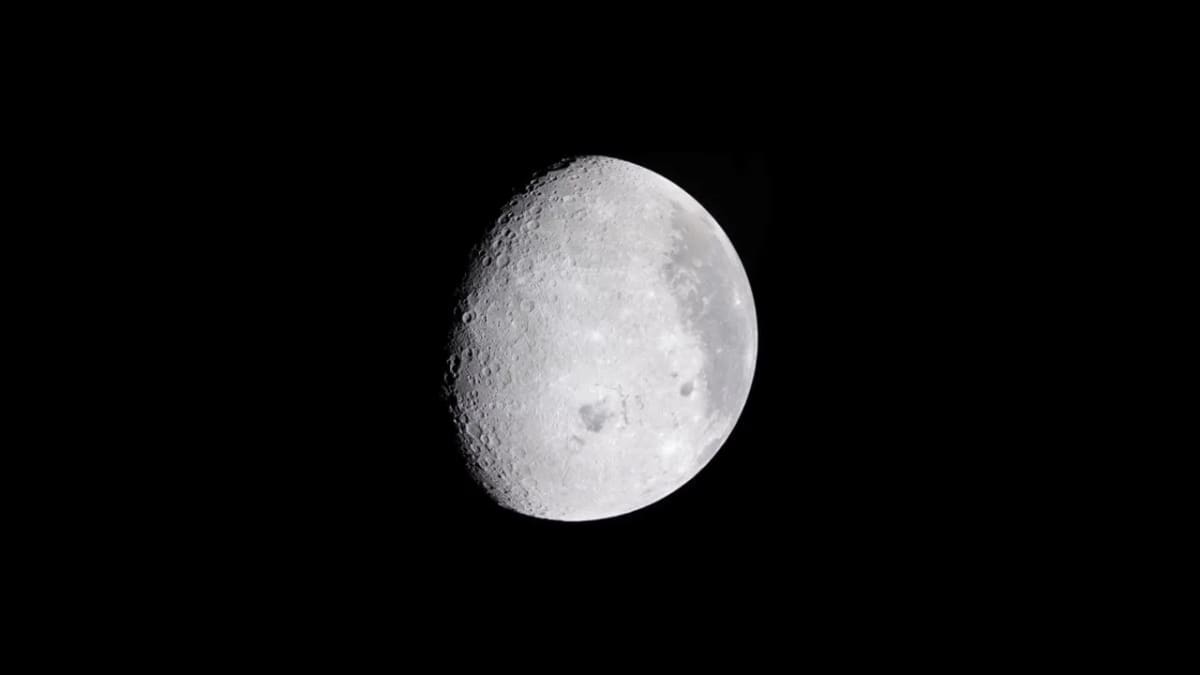
NASA and IBM just released a free AI tool that transforms how we explore the Moon. The NASA-IBM Lunar Foundation Model can scan through petabytes of information collected over decades and spot patterns human eyes might miss.
The technology has already proven itself in testing. It identified potential ice deposits in permanently shadowed craters 22% more accurately than existing tools, using data from four different space missions spanning years of observations.
Why does finding ice matter? Water hidden beneath the lunar surface could provide drinking water and oxygen for future Moon bases. It could even be converted into rocket fuel for missions to Mars.
The model excels at other crucial tasks too. It mapped ancient volcanic patches 3% more precisely than previous methods and detected craters 19% better while using half the training data. These craters hold clues about the Moon's history and help identify safe landing zones for future missions.
For the first time, researchers worldwide can access a unified dataset combining tens of thousands of images from NASA's Lunar Reconnaissance Orbiter, the GRAIL mission, and Japan's SELENE spacecraft. Previously, scientists spent countless hours manually comparing maps from different instruments that didn't always align.
Kevin Murphy, NASA's Chief Science Data Officer, sees this as just the beginning. The agency's decades of scientific observations are now easier for researchers everywhere to explore and build upon.
The Ripple Effect
This lunar breakthrough joins IBM and NASA's growing family of open-source AI models covering Earth's weather, climate patterns, and space phenomena. By making these tools free and accessible, they're democratizing space exploration.
Small research teams without massive budgets can now contribute to lunar science. University students can train the model to answer specific questions about the Moon's geology. Independent scientists can test hypotheses that might lead to the next big discovery.
The model's ability to work with imperfect or incomplete data means even older observations remain valuable. Nothing goes to waste when AI can find connections across different instruments and time periods.
As humanity prepares to return to the Moon and establish a permanent presence there, tools like this ensure we choose the safest locations and make the most of limited resources. Every crater mapped and every ice deposit identified brings us closer to sustainable lunar exploration.
The Moon has kept its secrets for billions of years, but now scientists everywhere have the key to unlock them.
More Images



Based on reporting by Google: NASA discovery
This story was written by BrightWire based on verified news reports.
Spread the positivity!
Share this good news with someone who needs it