NASA-Backed Maps Reveal Hope for Tigers, Lions, and Jaguars
Scientists combined satellite data with expert knowledge to create living maps showing where endangered species can thrive now and in the future. The discovery reveals far more suitable habitat remains than expected, offering a roadmap for bringing wildlife back.
Conservation just got a powerful new tool that's already helping bring species back from the brink.
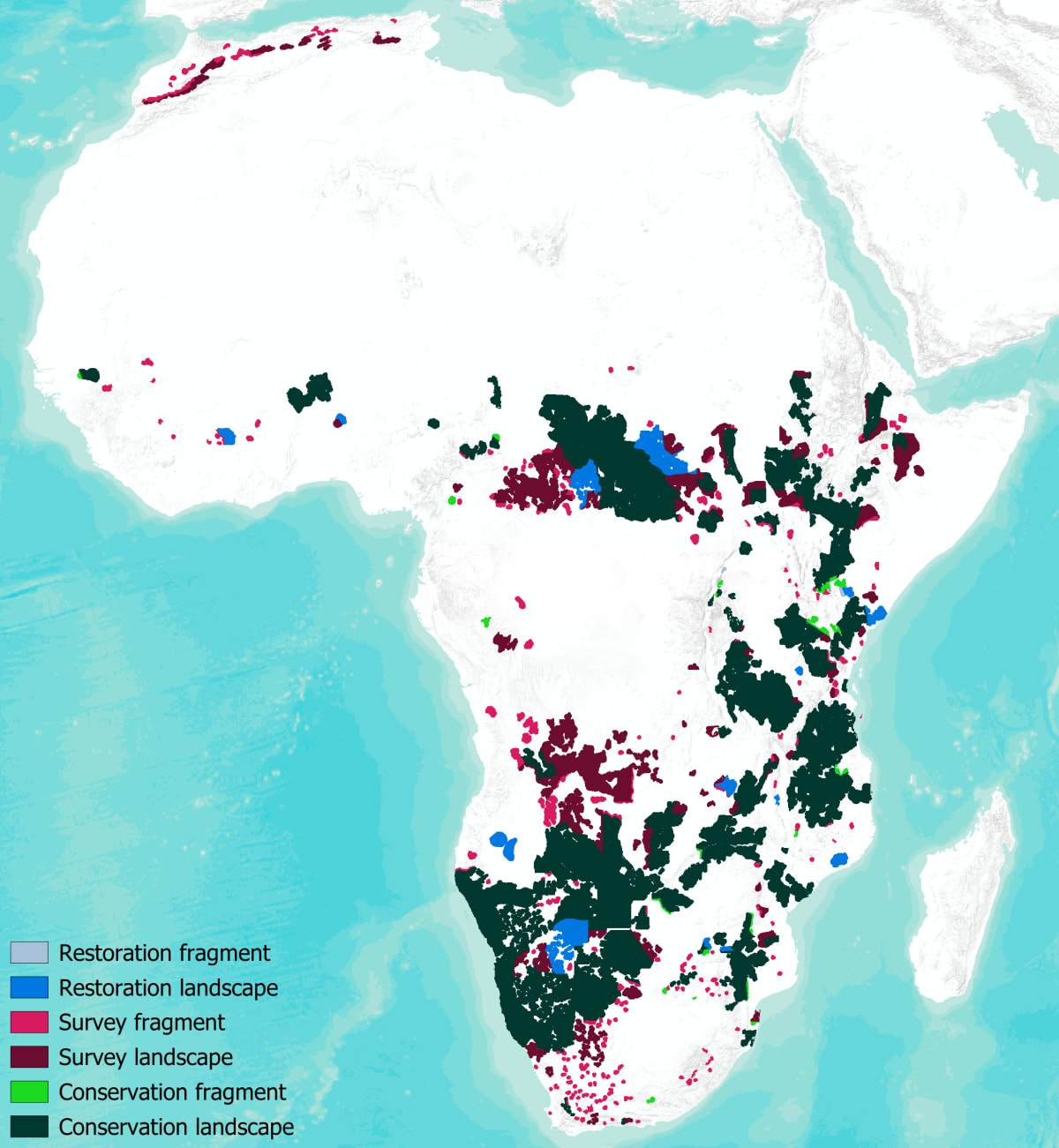
The Wildlife Conservation Society, working with NASA, has developed dynamic habitat maps for four of the world's most threatened large animals: tigers, jaguars, African lions, and American bison. Unlike traditional range maps, these show not just where species live today, but where they could thrive tomorrow.
The secret lies in combining three types of information. Scientists started with 20 years of satellite imagery tracking land cover, human development, roads, and urbanization. Then they added insights from field experts who understand what each species actually needs to survive. Finally, they layered in real observations from camera traps and citizen scientists to confirm where animals already exist.
"We are trying to integrate the richness of expert opinion with remote sensing and modern computational technology to get dynamic maps at very large spatial scales," said Gautam Surya, conservation planning scientist at WCS.
The results surprised even the researchers. Habitat availability wasn't nearly as dire as they feared. While that doesn't mean animal populations are immediately recovering, it shows the foundation for comeback stories still exists.
The maps work by color coding landscapes. Green areas need urgent protection because species already live there. Blue zones represent restoration opportunities where suitable habitat exists but animals have disappeared. Reconnecting these patches could create wildlife highways allowing populations to expand and stabilize.
The Ripple Effect
These maps are already changing conservation on the ground. In the U.S. and Canada, WCS partners with Indigenous communities to identify grassland habitats perfect for rewilding bison herds. Next month's Convention on the Conservation of Migratory Species in Brazil will use the jaguar maps to guide international protection efforts.
The impact extends far beyond four charismatic species. Tigers, lions, jaguars, and bison all need vast, healthy ecosystems filled with prey animals and intact ecological processes. Protecting their habitats means safeguarding countless other species that share those landscapes.
Conservation organizations are already using the maps to target fundraising and demonstrate exactly where donor dollars will make the biggest difference. Instead of guessing where to focus limited resources, decision makers can now see in real time which landscapes offer the brightest opportunities.
Rachel Neugarten, executive director of conservation planning at WCS, explained the urgency: "Decision-makers need to figure out how to spend their very scarce resources most effectively and in real time. These maps could point to places where, if landscapes were reconnected or species were introduced, there are potential bright spots."
The framework proved so successful across drastically different habitats that scientists plan to expand it to more species, creating a growing library of hope for biodiversity worldwide.
More Images

Based on reporting by Mongabay
This story was written by BrightWire based on verified news reports.
Spread the positivity!
Share this good news with someone who needs it