NASA Builds Nuclear Drone to Explore Saturn's Moon Titan
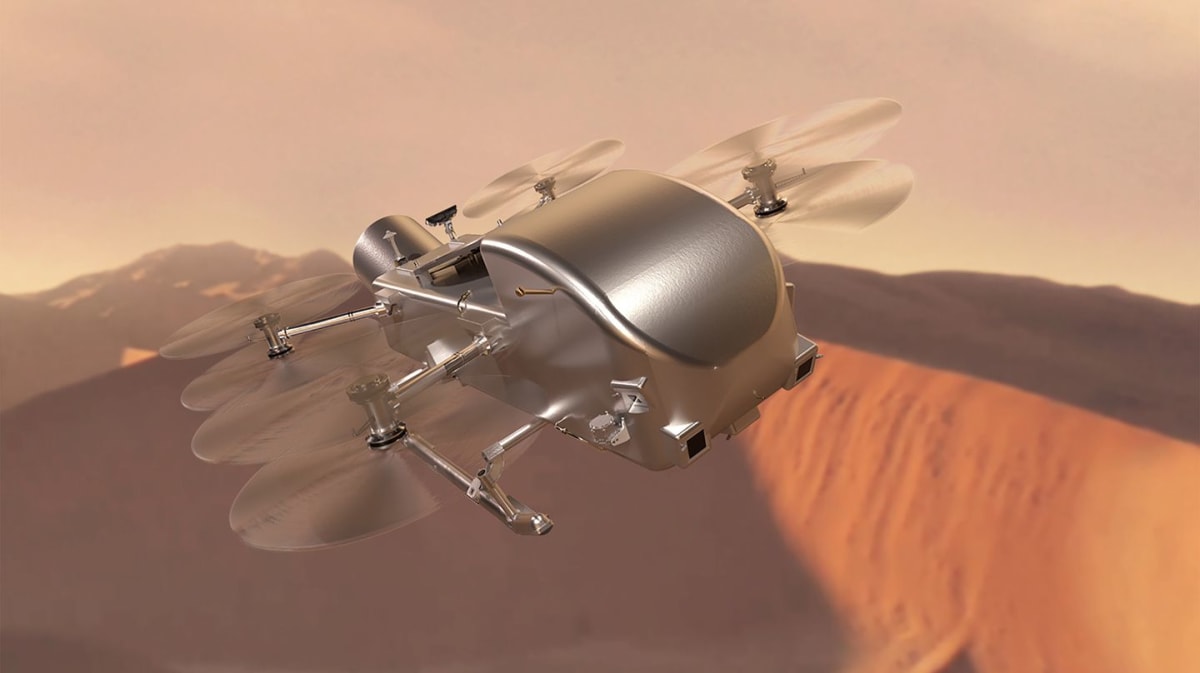
NASA engineers just started building Dragonfly, a car-sized nuclear-powered drone that will fly across Saturn's mysterious moon Titan in search of life's chemical origins. The mission launches in 2028 and represents humanity's boldest attempt yet to explore an alien world by air.
For the first time ever, a nuclear-powered drone will soar through the skies of another ocean world in our solar system.
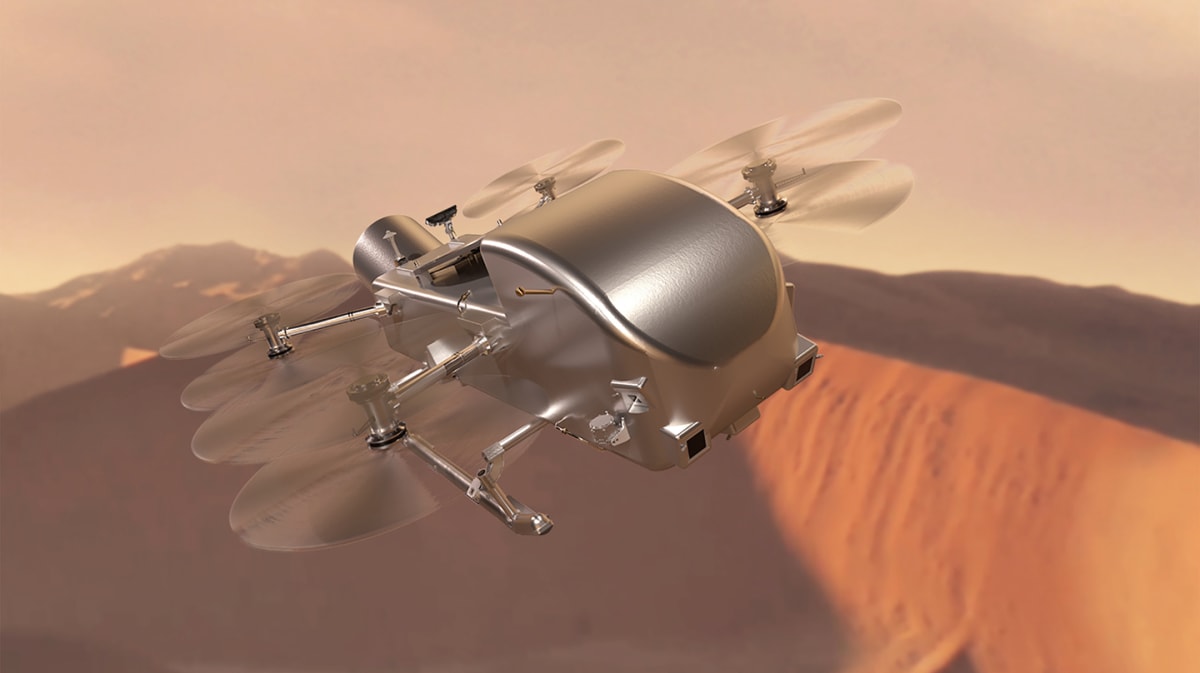
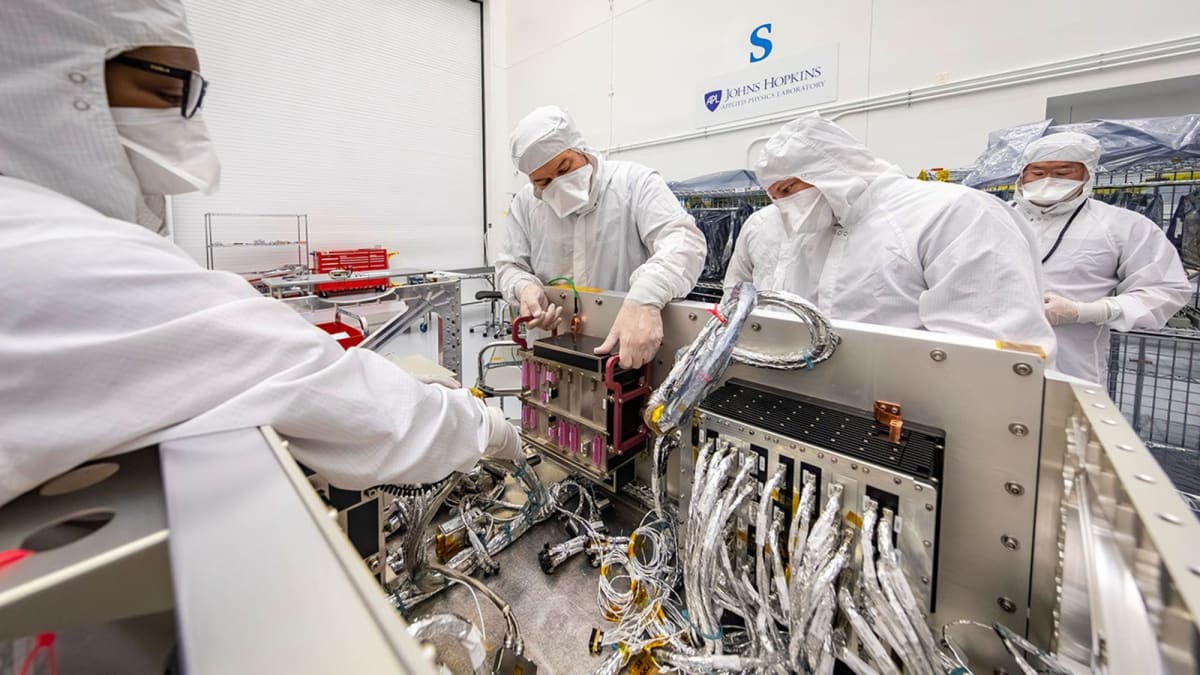
Engineers at Johns Hopkins Applied Physics Laboratory in Maryland have officially begun building Dragonfly, a revolutionary rotorcraft destined for Titan, Saturn's largest moon. The car-sized drone will launch in 2028 aboard a SpaceX Falcon Heavy rocket.
"This milestone essentially marks the birth of our flight system," said Elizabeth Turtle, Dragonfly's principal investigator. Every component installed and tested brings the team closer to an extraordinary goal: searching for the building blocks of life on a world nearly a billion miles from Earth.
Titan captivates scientists because it's thought to be rich in the precursor molecules of life as we know it. The moon has a thick atmosphere, liquid methane lakes, and organic chemistry similar to early Earth. Only one spacecraft has ever touched its surface: the European Huygens lander, which survived just a few hours there in 2005.
Dragonfly will change that dramatically. After arriving at Titan, the drone will explore diverse sites to study chemistry, geology, and atmosphere across the alien moon. It will hop between locations, analyzing the terrain for clues about how life could emerge in our universe.
The mission builds on NASA's wildly successful Mars helicopter Ingenuity, which was only the size of a tissue box and completed nearly three years of flights before ending operations in January 2024. Dragonfly dwarfs its predecessor and runs on nuclear power instead of solar energy, essential for surviving Titan's dim, frigid environment.
The $3.35 billion mission represents a massive leap in planetary exploration. Engineers are currently testing Dragonfly's "brain," its integrated electronics module that handles guidance, navigation, and data processing. They're also assessing special insulating foam to protect the craft from Titan's bone-chilling temperatures.
Testing will continue through early 2027 at APL before the spacecraft ships to Lockheed Martin Space in Colorado for final systems testing. After one last environmental assessment back at APL, Dragonfly heads to Kennedy Space Center for its spring 2028 launch window.
Why This Inspires
We're living in an era when flying robots exploring distant moons isn't science fiction anymore. Dragonfly represents years of human ingenuity, collaboration, and determination to answer one of our biggest questions: Are we alone?
The mission shows how far we've come since the Apollo era. Today's space exploration combines cutting-edge nuclear technology, autonomous flight systems, and advanced scientific instruments in ways previous generations could only dream about.
Every test completed in Maryland brings us closer to the moment Dragonfly takes its first flight on another world, searching for answers about life's origins that could reshape our understanding of the universe.
If successful, Dragonfly won't just explore Titan—it will prove humanity can build flying laboratories capable of revolutionizing how we study worlds beyond Earth.
More Images


Based on reporting by Space.com
This story was written by BrightWire based on verified news reports.
Spread the positivity!
Share this good news with someone who needs it