NASA Captures Interstellar Comet's Journey Home
NASA's planet-hunting spacecraft caught rare footage of an interstellar comet racing through our solar system, giving scientists a precious glimpse of a visitor from beyond. The 28-hour video reveals secrets about this cosmic traveler's path back to deep space.
A spacecraft designed to find distant planets just gave us an unexpected gift: a stunning view of an interstellar comet passing through our cosmic neighborhood.
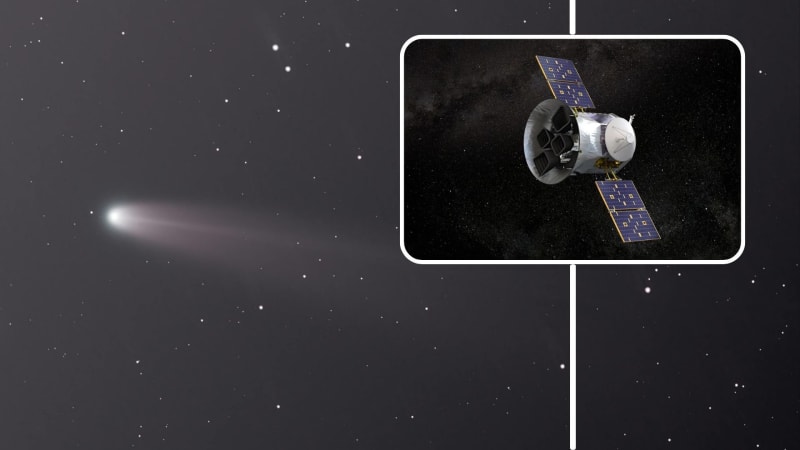
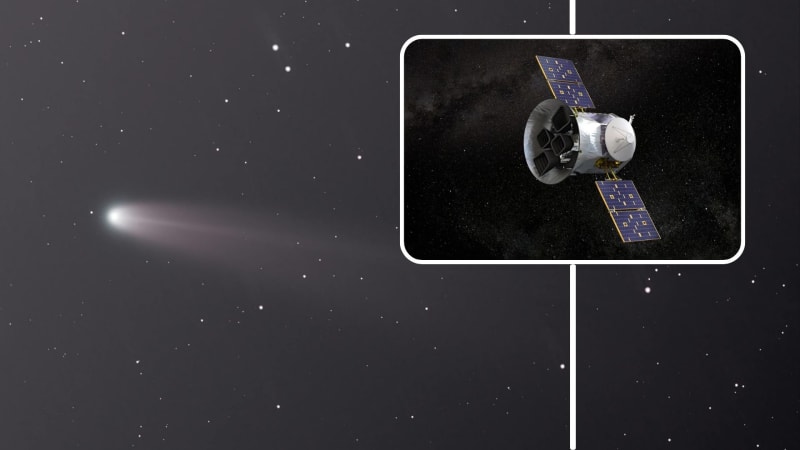
NASA's TESS spacecraft captured comet 3I/ATLAS as a bright dot with a glowing tail streaking across a starfield packed with stars. The spacecraft watched the rare visitor from January 15 to 22 as it headed back out of our solar system after swinging past the sun.
Daniel Muthukrishna at MIT compiled the observations into a 28-hour video that shows the comet's journey. The footage includes a time gap when TESS briefly entered safe mode due to a solar panel issue, but the remaining images give scientists valuable data to study.
What makes this comet special is where it came from. Unlike most comets that call our solar system home, 3I/ATLAS traveled here from interstellar space, making it only the third confirmed visitor from beyond our cosmic backyard.
TESS wasn't looking for comets when it spotted this one. The spacecraft hunts for exoplanets by watching for tiny dips in starlight when planets pass in front of distant stars, but its wide view makes it perfect for tracking nearby objects too.
The Bright Side
Scientists got an unexpected bonus when they looked back through TESS data from May 2024. The spacecraft had photographed the comet two months before anyone knew it existed, giving researchers extra time to study its behavior and path.
Now astronomers worldwide can access these observations through NASA's public archive. They're searching for patterns in the comet's brightness that reveal how fast its core spins and how vigorously it sheds dust and gas.
The comet measured about 11.5 in apparent magnitude, roughly 100 times too faint to see without a telescope but easily visible through even modest equipment. That brightness, combined with TESS's continuous monitoring, gave scientists their best look yet at an interstellar visitor.
These rare encounters help researchers understand what exists in the space between stars. Each interstellar object carries clues about distant solar systems and the materials floating through our galaxy.
While comet 3I/ATLAS is now speeding away from us forever, the data it left behind will keep scientists busy for months uncovering the secrets of our brief cosmic guest.
More Images

Based on reporting by Space.com
This story was written by BrightWire based on verified news reports.
Spread the positivity!
Share this good news with someone who needs it