NASA Finds Best Evidence Yet of Universe's First Stars
Two independent research teams using the James Webb Space Telescope have discovered what may be the first direct evidence of Population III stars, the universe's original stellar bodies formed just 400 million years after the Big Bang. This groundbreaking find could transform these ancient stars from theory into observed reality.
Scientists may have just spotted evidence of the universe's very first stars, born when our cosmos was still in its infancy.
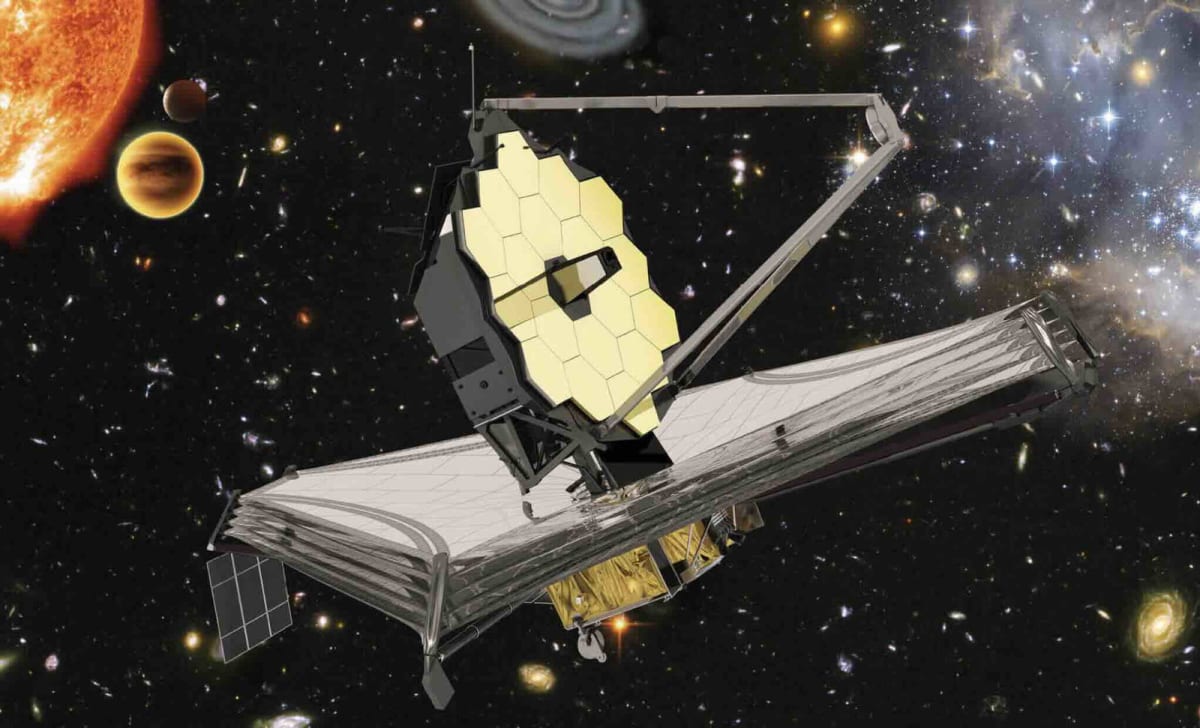
Using NASA's James Webb Space Telescope, two independent research teams detected unusual signals coming from a companion object near one of the brightest galaxies in the universe. The discovery could finally prove that Population III stars, long theorized but never confirmed, actually exist.
The breakthrough started two years ago when University of Cambridge researcher Roberto Maiolino noticed something strange. A faint emission line appeared in data from galaxy GN-z11, revealing a companion object the team named Hebe.
What made this signal special was its purity. The emission showed double ionized helium but no traces of heavier metals like iron, oxygen, or carbon.
That's exactly what astronomers would expect from the universe's first stars. Unlike the stars we see today, Population III stars formed from almost pure hydrogen and helium, before heavier elements even existed.
These ancient giants would have been massive, living fast and dying young in spectacular supernovas. When they exploded, they scattered the heavier elements created in their cores throughout space, seeding the universe with the building blocks for everything that came after.
A team led by Elka Rusta at the University of Florence independently detected similar signals from the same cosmic location. Their analysis suggests these primordial stars were anywhere from 10 to 100 times the mass of our Sun, fitting perfectly with predictions for the universe's earliest stellar bodies.
Why This Inspires
Before the James Webb Space Telescope, detecting these faint signals would have been impossible. The telescope's advanced near-infrared instruments can now peer deeper into the early universe than ever before, turning what seemed like science fiction into observable science.
Both research teams are planning follow-up observations to gather even more evidence. Each new discovery brings us closer to understanding not just how stars formed, but how the universe itself evolved from simple elements into the rich, complex cosmos we inhabit today.
What makes this discovery particularly exciting is that it happened twice, independently. When two separate teams find the same thing using different methods, it strengthens the case that they've found something real.
The James Webb Space Telescope continues to exceed expectations, revealing cosmic secrets hidden for over 13 billion years. These glimpses into our universe's earliest days remind us that we're still at the beginning of understanding our cosmic story, and the best discoveries may still lie ahead.
Based on reporting by Google: NASA discovery
This story was written by BrightWire based on verified news reports.
Spread the positivity!
Share this good news with someone who needs it