NASA Finds Galaxy Cluster Forming 1 Billion Years Early
Astronomers discovered a massive galaxy cluster forming just 1 billion years after the Big Bang, up to 2 billion years earlier than scientists thought possible. The finding suggests the universe grew up much faster than we imagined.
The universe was apparently in a huge hurry to get organized.
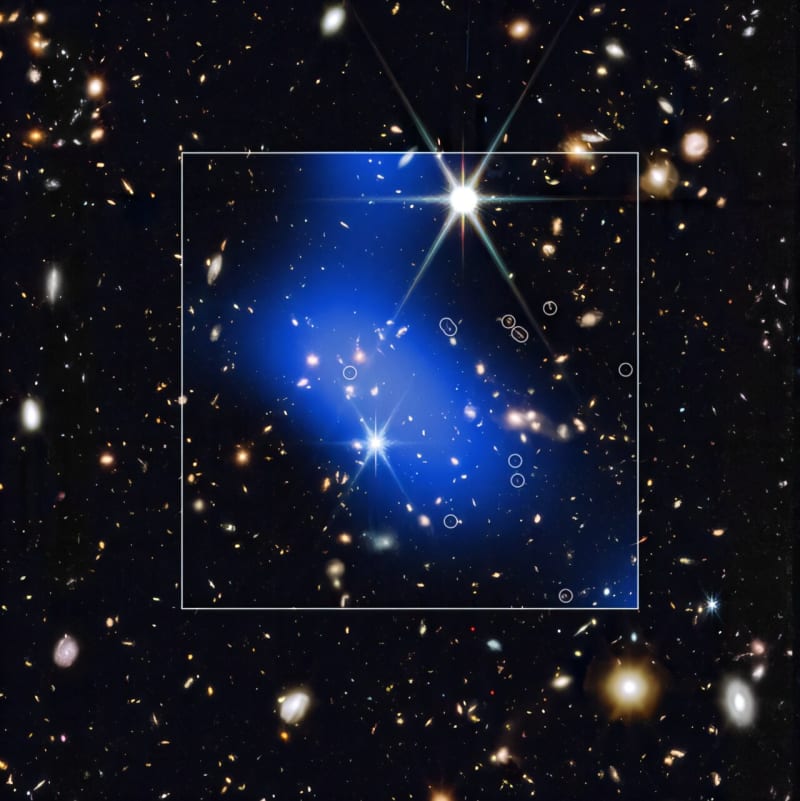
Astronomers at The University of Manchester have discovered a cosmic giant forming impossibly early in the universe's history. The structure, called JADES-ID1, weighs about 20 trillion times more than our sun and started assembling just 1 billion years after the Big Bang.
That's a billion or two years earlier than scientists believed possible.
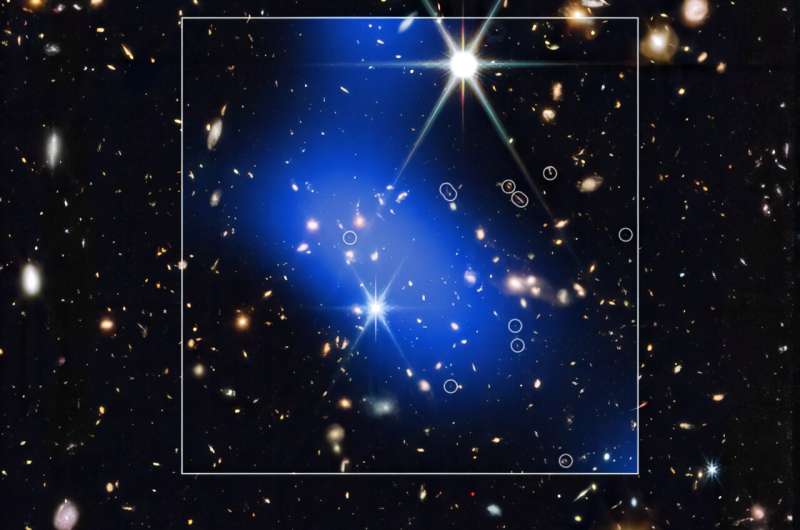
The discovery came from NASA's Chandra X-ray Observatory and James Webb Space Telescope working together. The two powerful instruments stared at the same patch of sky at the limits of their capabilities, revealing something that shouldn't exist yet.
JADES-ID1 is what astronomers call a protocluster. Think of it as a cosmic construction site where a galaxy cluster is being violently assembled. Eventually, it will become one of the largest structures in the universe, containing hundreds or thousands of galaxies swimming in superheated gas.
The Webb telescope spotted at least 66 galaxies clustered together. Chandra detected the enormous cloud of million-degree gas surrounding them. Together, these signatures confirm that gravity has already pulled this massive structure together.
"It's like watching an assembly line make a car, rather than just trying to figure out how a car works by looking at the finished product," said co-author Gerrit Schellenberger of the Center for Astrophysics.
The previous record holder for an early protocluster appeared 3 billion years after the Big Bang. JADES-ID1 beats that by 2 billion years.
Most models of the universe predict there simply wasn't enough time or a high enough density of galaxies for something this massive to form so quickly. The discovery challenges astronomers to rethink how the largest structures in the cosmos came together.
Why This Inspires
This discovery opens a window into a cosmic moment we've never witnessed before. Scientists are watching the universe's building blocks snap together in real time, revealing that creation happened faster and more dynamically than our best theories predicted.
The finding also shows what becomes possible when humanity's most powerful tools work together. The Chandra Deep Field South is one of the few places in the entire sky where this discovery could have been made, requiring the deepest X-ray observation ever conducted combined with Webb's unprecedented vision.
Professor Christopher Conselice at The University of Manchester captured the excitement: "JADES-ID1 is giving us new evidence that the universe was in a huge hurry to grow up."
The research appears in the journal Nature and represents years of collaborative work between international teams pushing the boundaries of what we can observe about our cosmic origins.
More Images
Based on reporting by Phys.org
This story was written by BrightWire based on verified news reports.
Spread the positivity!
Share this good news with someone who needs it