NASA Finds Star Collision in Tiny, Unexpected Galaxy
Astronomers discovered neutron stars colliding in one of the smallest, faintest galaxies ever observed, solving a decades-old mystery about gamma-ray bursts. The finding shows that universe-shaking cosmic events happen in places we never thought to look.
Scientists just found cosmic fireworks in the universe's tiniest venue, and it's rewriting what we know about where extreme space events can happen.
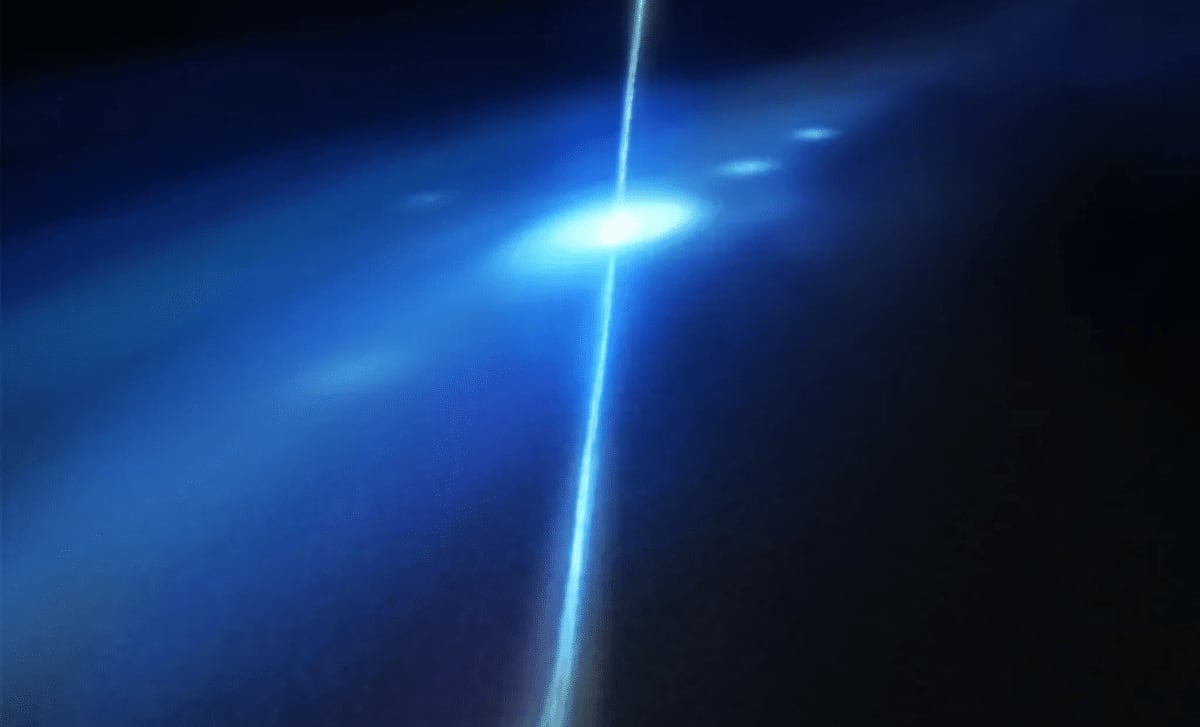
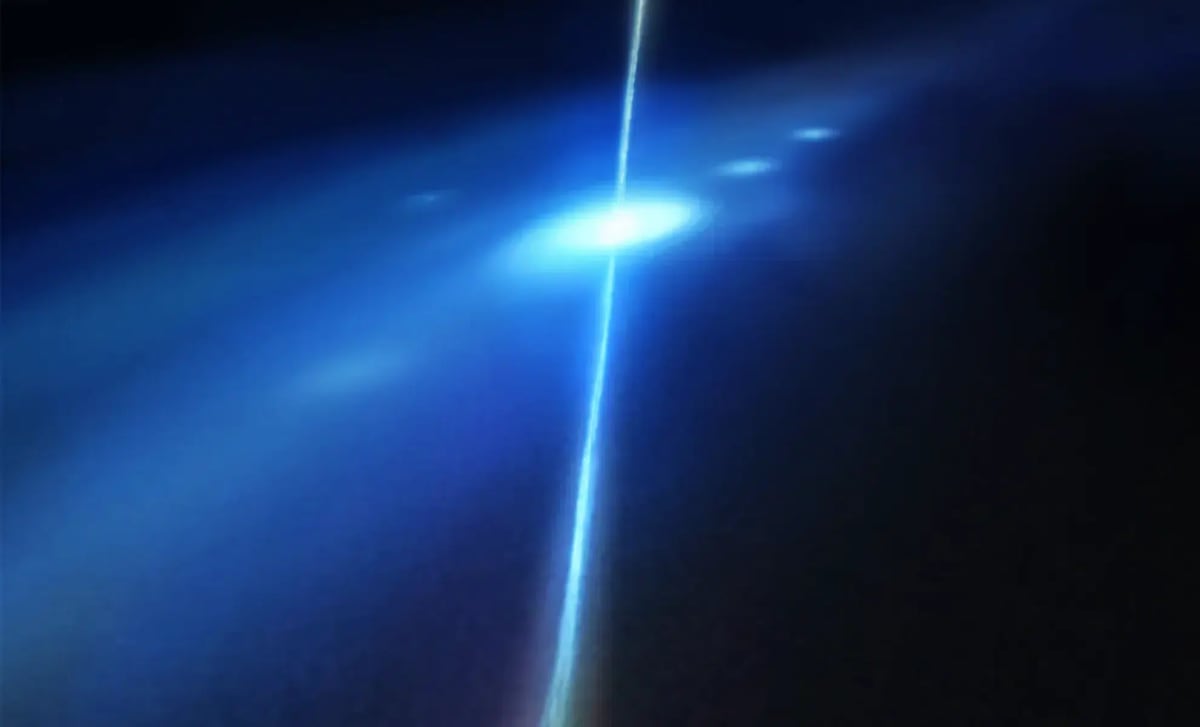
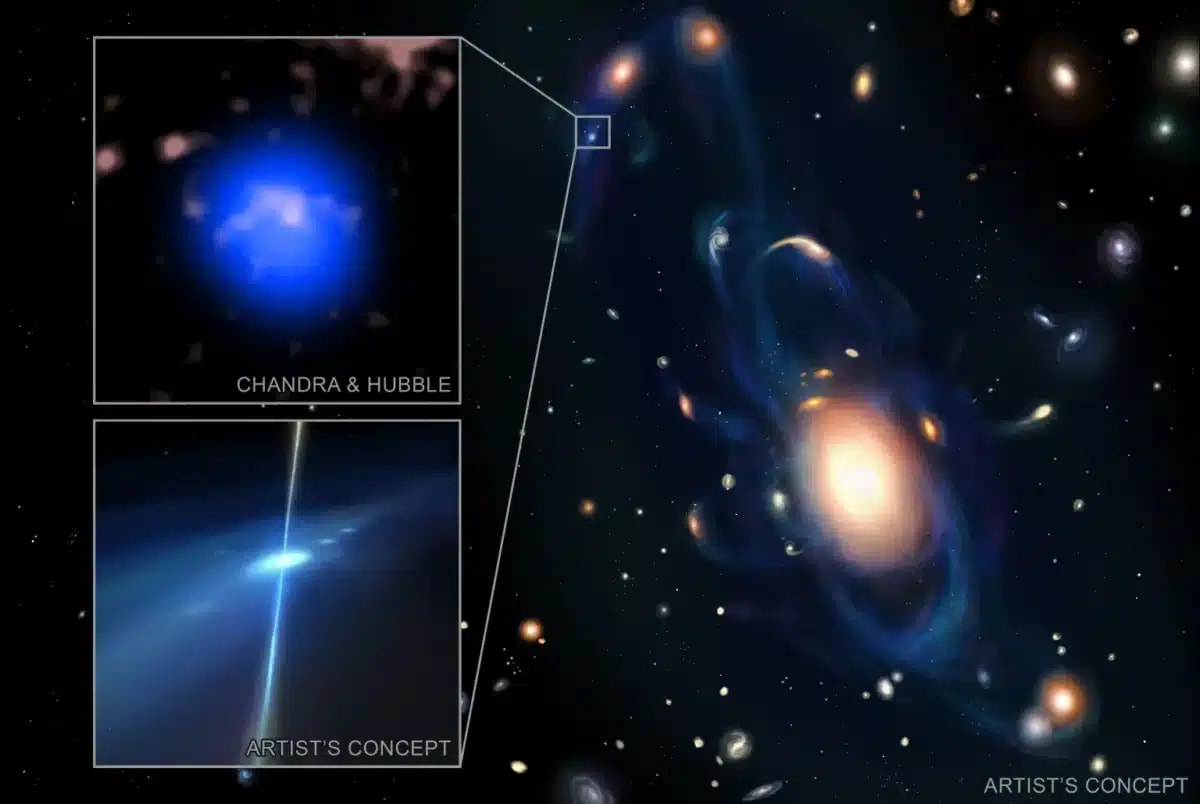
Astronomers led by Simone Dichiara from Penn State University detected two neutron stars colliding inside a galaxy so small and faint that most telescopes would miss it entirely. The galaxy sits 4.7 billion light years away, tucked inside a massive stream of gas stretching 600,000 light years across space.
"Finding a neutron star collision where we did is game changing," Dichiara said. The discovery challenges a fundamental assumption: that these powerful cosmic crashes only happen in large, easily visible galaxies.
Neutron stars are among the densest objects in existence. They pack more mass than our sun into a sphere just a few dozen miles wide, and when two collide, they release more energy in seconds than the sun will emit in its entire lifetime.
The collision produced a gamma-ray burst, an intense flash of radiation that NASA's Fermi Gamma-ray Space Telescope spotted first. Then Chandra X-ray Observatory, Swift, and Hubble Space Telescope worked together to pinpoint exactly where it came from.
What they found was unexpected. The explosion happened in a dwarf galaxy born from a violent merger of several larger galaxies hundreds of millions of years ago.
"We found a collision within a collision," said co-author Eleonora Troja from the University of Rome. That ancient galaxy crash triggered waves of new star formation, eventually creating the two neutron stars that would collide eons later.
Why This Inspires
This discovery solves a puzzle that's bothered astronomers for years. Sometimes gamma-ray bursts appear in seemingly empty space with no visible host galaxy nearby. Scientists wondered if their instruments were missing something.
They were right. Some galaxies are simply too small and dim for most telescopes to detect, but that doesn't make them any less active or important.
The finding opens exciting possibilities. Neutron star collisions forge heavy elements like gold and platinum through intense nuclear reactions. If these events happen in tiny galaxies throughout the universe, they might be far more common than we realized.
"Chandra's pinpoint X-ray localization made this study possible," said co-author Brendan O'Connor from Carnegie Mellon University. "Without it, we couldn't have tied the burst to any specific source."
The breakthrough shows how collaboration between different telescopes reveals cosmic secrets that individual instruments would miss. Fermi detected the burst, Chandra found its exact location, and Hubble revealed the faint galaxy hiding there.
This tiny galaxy is proving that size doesn't determine cosmic importance. Even the smallest corners of the universe can host the most spectacular events, reminding us there's still so much left to discover in the vast space around us.
More Images

Based on reporting by Google News - Science
This story was written by BrightWire based on verified news reports.
Spread the positivity!
Share this good news with someone who needs it