NASA Funds Spacecraft to Map Minerals Across Solar System
A NASA-funded spacecraft concept could survey minerals on the moon, asteroids, and Mars' moons in a single mission. The technology could help identify valuable resources before sending expensive mining missions.
Imagine a spacecraft that hops from world to world, mapping where to find valuable minerals before we spend billions on mining missions.
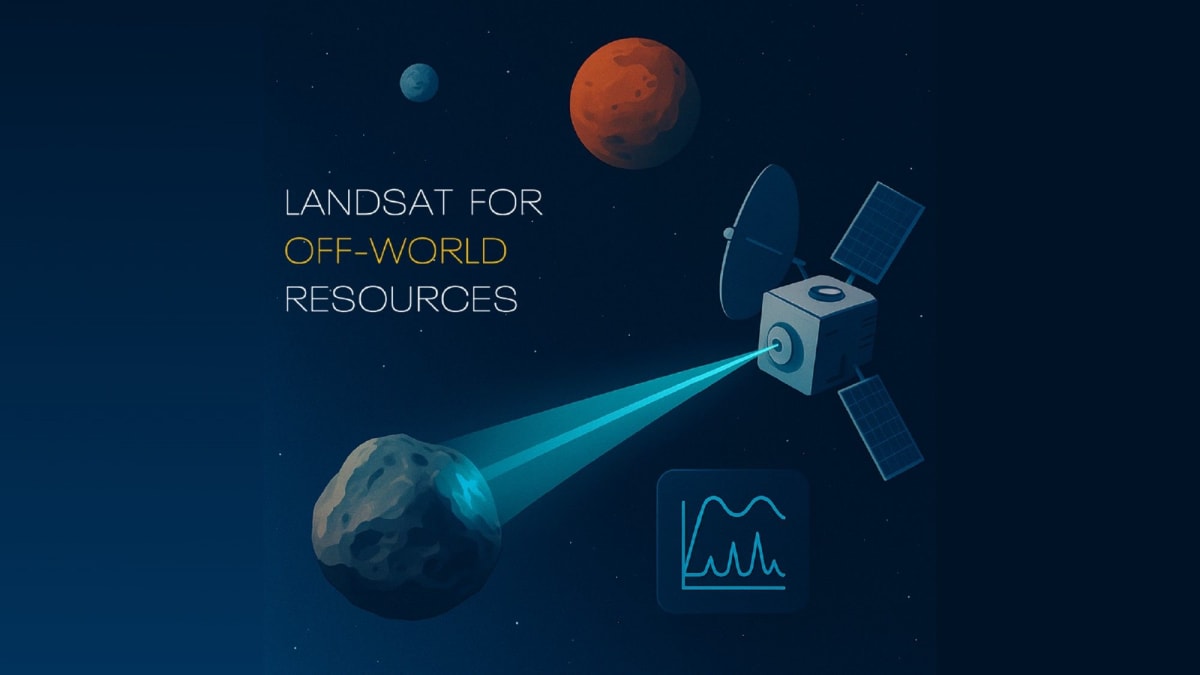
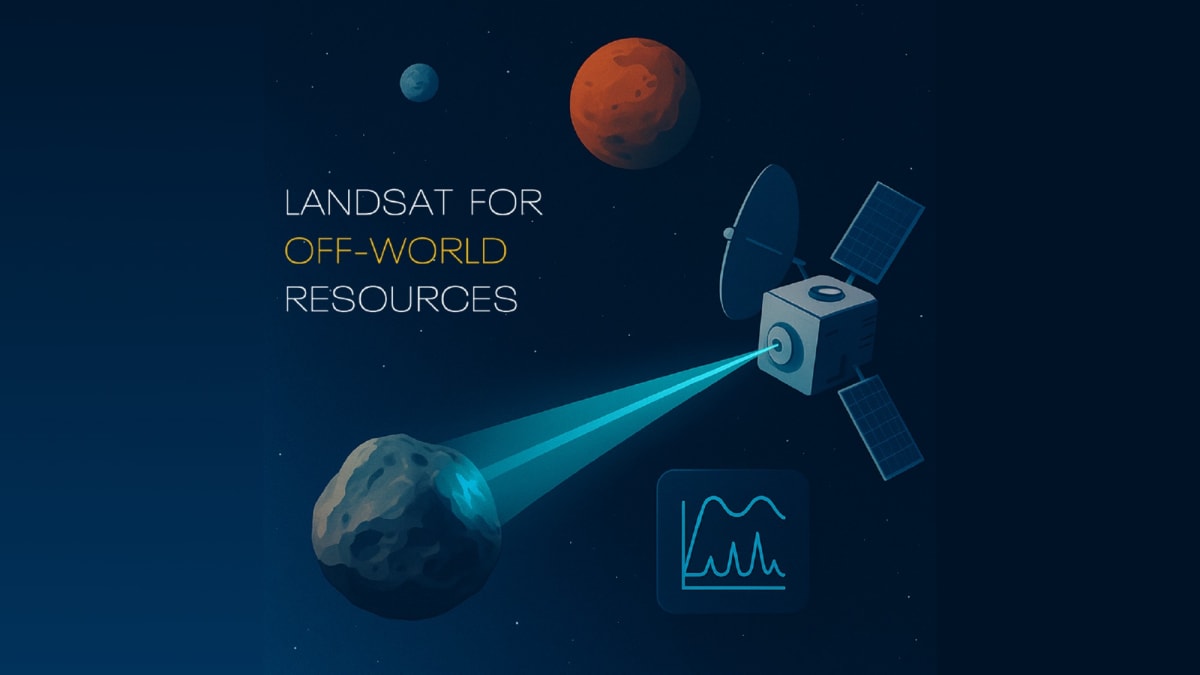
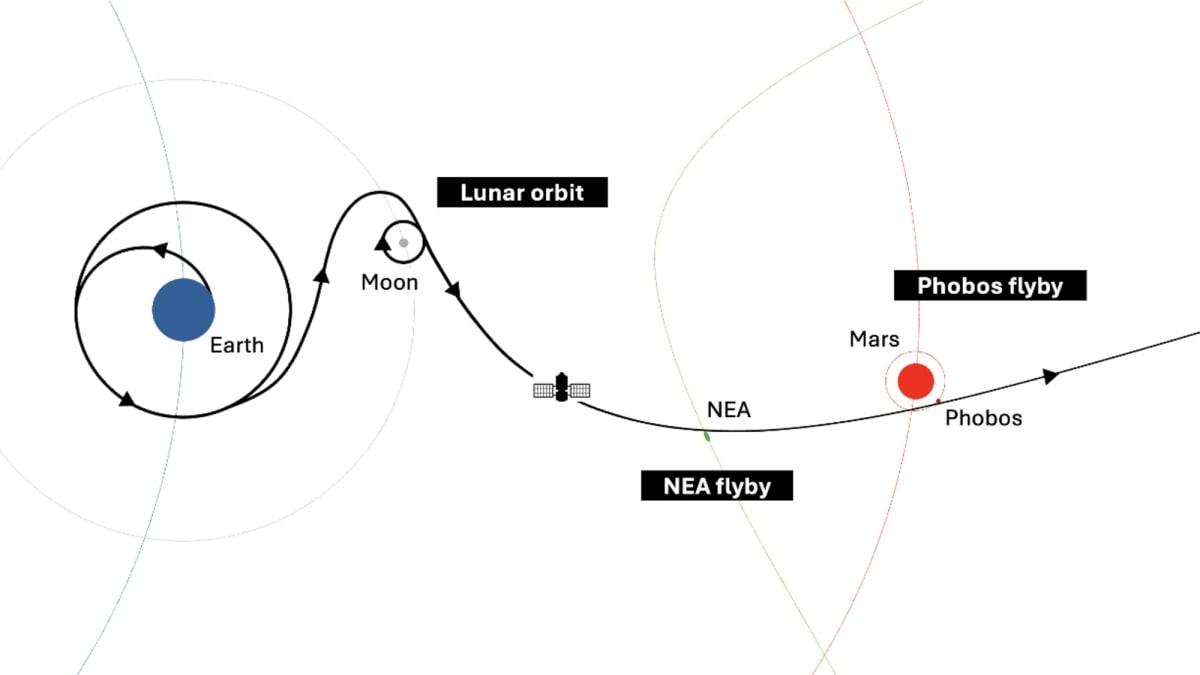
NASA just funded a project called Interworld Slingshot Resource Surveys to do exactly that. The concept would create a spacecraft that surveys multiple destinations like the moon, nearby asteroids, and even Phobos, one of Mars' moons, all in one mission.
The project tackles a huge problem facing space exploration. "The thing most likely to stop space mining may be that we cannot afford to prove there is anything worth mining," said Pablo Sobron, the principal investigator from the SETI Institute. Landing in the wrong spot could waste an entire exploration program.
The technology draws inspiration from Landsat, a series of U.S. satellites that have mapped Earth's minerals and climate for over 50 years. Now researchers want to bring that same capability to other worlds.
The spacecraft would use Raman spectroscopy, a technique that bounces laser light off surfaces to identify what minerals are present. NASA's Perseverance rover already uses this method on Mars, but only up close. The challenge is making it work from 19 to 31 miles away, much farther than the current record of 393 feet.
The timing matters for U.S. space ambitions. NASA plans to establish a moon base in the 2030s to access helium-3 and other valuable materials. Knowing where these resources are before astronauts arrive would give America a major advantage.
The project received $175,000 from NASA's Innovative Advanced Concepts program to prove the concept works. Over nine months, the team will study whether the technology can detect the incredibly faint signals needed for long-distance mineral scanning. Only about one photon in 10 trillion produces the Raman signal they need to read.
The Ripple Effect
If successful, this technology could transform how we explore space. Instead of sending expensive missions based on educated guesses, we could scout locations first and land with confidence. That means fewer failed missions, lower costs, and faster progress toward establishing human presence beyond Earth.
The approach could also help private space mining companies identify profitable locations without risking their entire business on a single landing. Better information means smarter decisions and more successful missions.
This single spacecraft visiting multiple worlds would gather more mineral data in one trip than sending separate missions to each destination. That efficiency could accelerate space exploration by years while saving billions of dollars.
The future of space exploration just got a little clearer, one laser beam at a time.
More Images

Based on reporting by Space.com
This story was written by BrightWire based on verified news reports.
Spread the positivity!
Share this good news with someone who needs it