NASA Launches 3 Satellites to Answer "Are We Alone?" Question
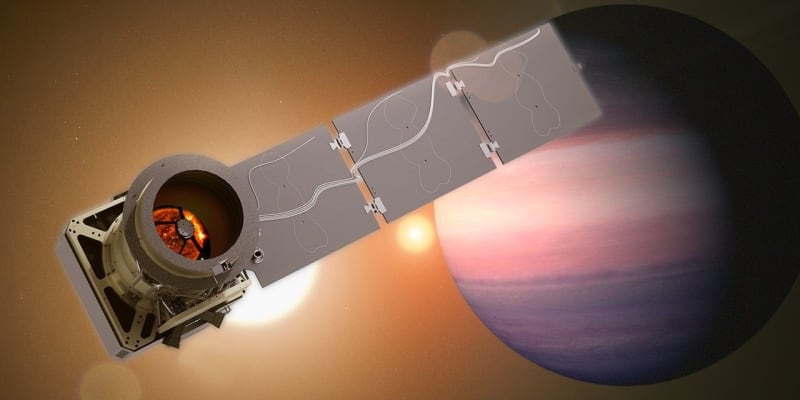
NASA is sending three innovative spacecraft on an exciting cosmic quest to study planets beyond our solar system and unlock the mysteries of the universe. The Pandora satellite and two companion CubeSats are set to launch from California, representing a bold new era of accessible, creative space exploration.
📺 Watch the full story above
The cosmos is about to become a little less mysterious, and NASA is making it happen with an inspiring trio of spacecraft launching on January 11 from Vandenberg Space Force Base in California. Leading this celestial expedition is Pandora, a groundbreaking satellite designed to study the atmospheres of exoplanets and help answer humanity's most profound question: Are we alone in the universe?
What makes this mission particularly exciting is its approach to one of astronomy's trickiest challenges. When scientists observe distant planets, they struggle to separate the chemical signals coming from the planet's atmosphere from those of its host star. It's like trying to hear a whisper next to someone shouting. Pandora will change that game entirely.
"Pandora's goal is to disentangle the atmospheric signals of planets and stars using visible and near-infrared light," explained Elisa Quintana, the mission's principal investigator at NASA's Goddard Space Flight Center in Maryland. "This information can help astronomers determine if detected elements and compounds are coming from the star or the planet, an important step as we search for signs of life in the cosmos."
The satellite will dedicate an entire year to studying at least 20 exoplanets, observing each one ten times with 24-hour observation periods. This patient, detailed approach will help scientists trace the exact origins of elements and compounds that could indicate habitability. Pandora uses a specially designed aluminum telescope and even incorporates a spare detector originally developed for the famous James Webb Space Telescope, proving that innovation and resourcefulness go hand in hand.
Joining Pandora on this cosmic journey are two shoebox-sized satellites with big missions. BlackCAT will study black holes and the high-energy universe, while SPARCS will monitor the activity of low-mass stars. These compact companions demonstrate that groundbreaking science doesn't always require enormous budgets or massive equipment.
Daniel Apai, an astronomy professor at the University of Arizona where Pandora's operations center is located, captured the mission's significance beautifully: "The Pandora mission is a bold new chapter in exoplanet exploration. It is the first space telescope built specifically to study, in detail, starlight filtered through exoplanet atmospheres."
The Ripple Effect: This mission represents something even bigger than the science itself. As part of NASA's Astrophysics Pioneers program, Pandora embodies a new philosophy of space exploration that emphasizes creative, cost-effective approaches while training the next generation of space scientists. All of the mission's data will be made publicly available, meaning students, researchers, and curious minds worldwide can participate in these discoveries.
The knowledge gained from Pandora will help scientists interpret observations from past missions like Kepler and guide future projects in their search for habitable worlds. By solving the puzzle of separating planetary atmospheres from stellar signals, this mission paves the way for more accurate detection of water vapor, oxygen, and other potential indicators of life beyond Earth.
As these three spacecraft prepare to launch aboard a SpaceX Falcon 9 rocket, they carry with them humanity's timeless curiosity and our collective hope of discovering we're part of a larger cosmic community. The universe is vast, but missions like Pandora bring us closer to understanding our place within it.
More Images


Based on reporting by NASA
This story was written by BrightWire based on verified news reports.
Spread the positivity! 🌟
Share this good news with someone who needs it
More Good News


DAILY MORALE
What did the thermometer say to the graduated cylinder?
EXPLORE INTEL
DAILY INSPIRATION
Hope is the thing with feathers that perches in the soul and sings the tune without the words and never stops at all.
Emily Dickinson