NASA Launches $30M Rescue for Falling Swift Telescope
A spacecraft just rocketed into orbit on a daring mission to save a NASA telescope falling back to Earth. If successful, the Swift Observatory will be back studying cosmic explosions by September.
A three-armed rescue spacecraft launched Friday to catch a falling NASA telescope before it's too late.
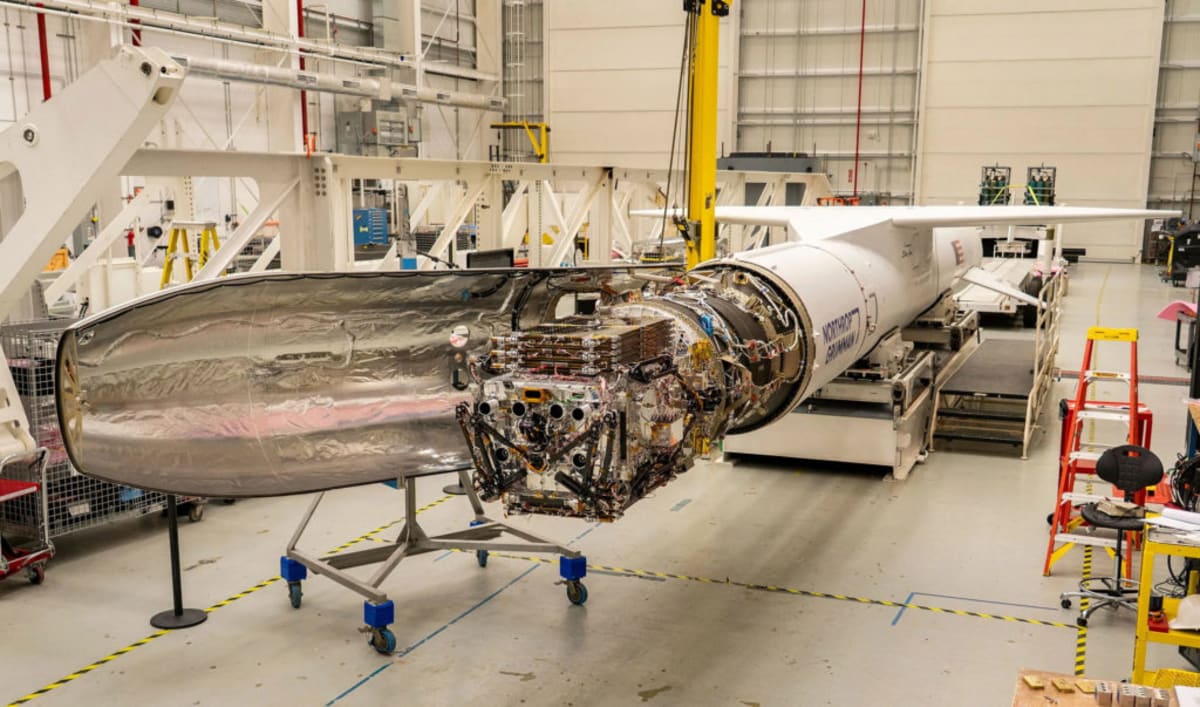
Katalyst Space Technologies sent its Link spacecraft into orbit from the Marshall Islands, blasting off from a modified airplane carrying a Pegasus rocket. The mission: reach NASA's Swift Observatory in about a month and boost it back to safety.
Swift has been circling Earth since 2004, tracking some of the universe's most powerful explosions like gamma ray bursts and dying stars. But recent solar storms pushed it dangerously low, and without help, the 1.6-ton telescope would crash back to Earth by October.
NASA paid Katalyst $30 million to pull off this rescue. The company had just nine months to plan and build the entire mission.
"The biggest danger was always we don't launch anything and we let Swift burn up in the atmosphere," said Katalyst CEO Ghonhee Lee. "Our team has done that."
Link will gently fire its thrusters to raise Swift 150 miles higher, bringing it back to its original altitude of 374 miles above Earth. The slow, careful boost prevents any jarring that could damage the telescope's delicate instruments.
Swift stopped making observations weeks ago to preserve its remaining altitude. If everything goes according to plan, it'll be back scanning the cosmos by September.
The Ripple Effect
This rescue opens the door for saving other valuable space assets. NASA's famous Hubble Space Telescope faces a similar fate in the coming years, also sinking because of increased solar activity.
The mission proves that spacecraft don't have to be disposable anymore. When valuable telescopes start falling, we can now send help instead of watching them burn up.
Katalyst assembled this high-stakes rescue in record time after NASA insisted on urgency. Bad weather and technical glitches caused last-minute delays, but the team pushed through.
Now comes the tricky part: Link must catch up to Swift, gently grab it with its three robotic arms, and slowly push it higher without breaking anything. It's never been done before at this scale.
By September, a telescope that seemed doomed could be back to work, watching the universe's most spectacular fireworks show.
More Images




Based on reporting by Google News - Science
This story was written by BrightWire based on verified news reports.
Spread the positivity!
Share this good news with someone who needs it