NASA Launches Mission to Save 20-Year-Old Space Telescope
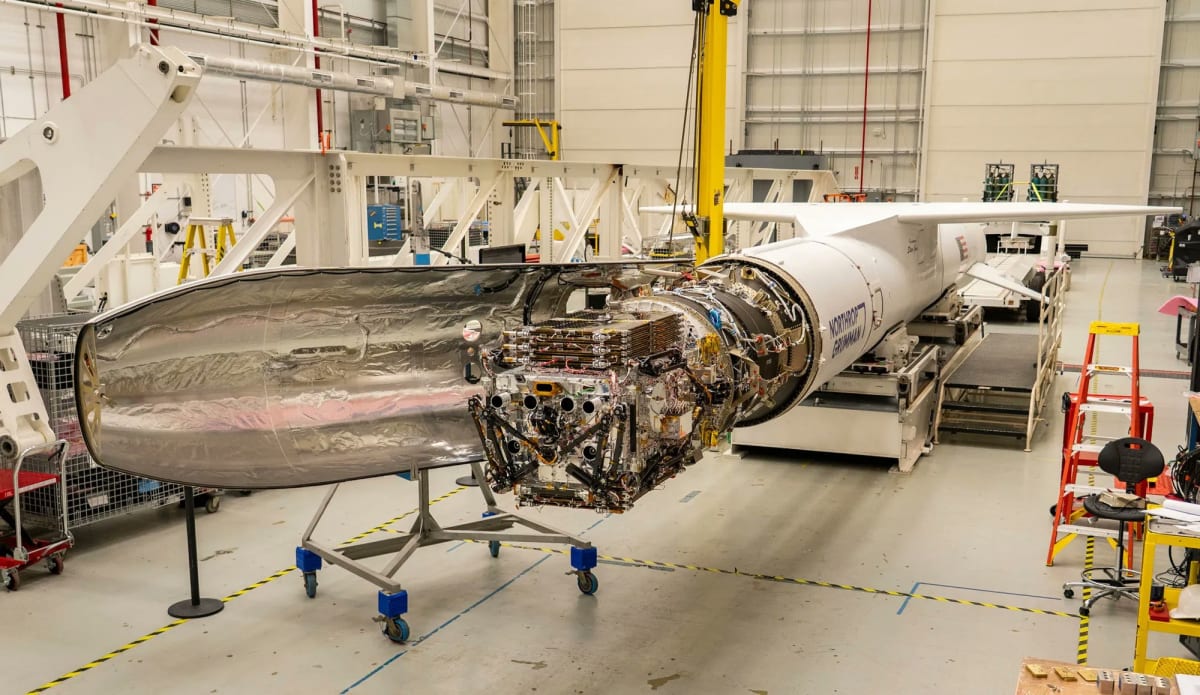
A groundbreaking rescue mission will attempt to save a gamma-ray telescope that's been studying the universe for two decades. Built in just nine months, the Link spacecraft will try something never done before: grabbing an unprepared satellite to boost it back into safe orbit.
NASA's Swift Observatory has been watching cosmic explosions since 2004, but gravity has been pulling it closer to Earth each year. Now a small company called Katalyst Space Technologies is racing to save it with a mission that seemed impossible just months ago.
The rescue spacecraft, called Link, launches June 27 from the Pacific Ocean. Its job sounds simple: catch Swift and push it higher. But Swift was never designed to be grabbed by another spacecraft, and Katalyst has never tried anything like this before.
What makes this story remarkable isn't just the challenge. It's the speed. Katalyst went from blank page to ready-to-launch spacecraft in nine months, completing work that normally takes years.
"No one thought it was going to be possible," said Shawn Domagal-Goldman, director of NASA's astrophysics division. People doubted both the technical challenge and NASA's ability to cut through red tape quickly enough.
The clock is ticking. Swift's orbit is decaying fast, and the telescope could crash back to Earth as soon as late this year if nothing changes. Link must reach Swift before it drops below 300 kilometers altitude, which could happen in October.
The actual capture will be tricky. Link has three robotic arms ready to grab Swift at different points, but it only needs one to work. Swift will stay operational during the attempt, maneuvering to help Link find clean spots to grip without debris getting in the way.
Kieran Wilson, who leads the Link project at Katalyst, called Swift "an unprepared but cooperative partner." The two spacecraft will work together during the final approach, inspecting possible grab points in real time.
The Bright Side
This mission proves that fast-moving space rescues are possible. For $30 million and nine months of work, NASA and Katalyst showed that government agencies can move quickly when urgency matters.
Even if the capture doesn't go perfectly, the team already considers this a win. They retired the biggest risk by simply getting ready in time. Swift might get years of extra life studying gamma-ray bursts, black holes, and cosmic mysteries.
The teams at NASA, Katalyst, and Northrop Grumman proved that impossible timelines become possible when everyone commits to the same urgent goal.
Whether Link succeeds in grabbing Swift or not, this mission opens doors for future satellite rescues and shows what determination can accomplish in record time.
More Images


Based on reporting by SpaceNews
This story was written by BrightWire based on verified news reports.
Spread the positivity!
Share this good news with someone who needs it