NASA Maps Giant Ice Glaciers Spanning Hundreds of Light-Years
NASA's SPHEREx telescope has mapped massive frozen regions in space that stretch across hundreds of light-years, revealing where Earth's water likely came from. These interstellar glaciers inside star-forming clouds could hold the key to understanding how planets get their water.
The water you drank this morning might have started its journey in a glacier bigger than entire star systems, floating in the coldest corners of space.
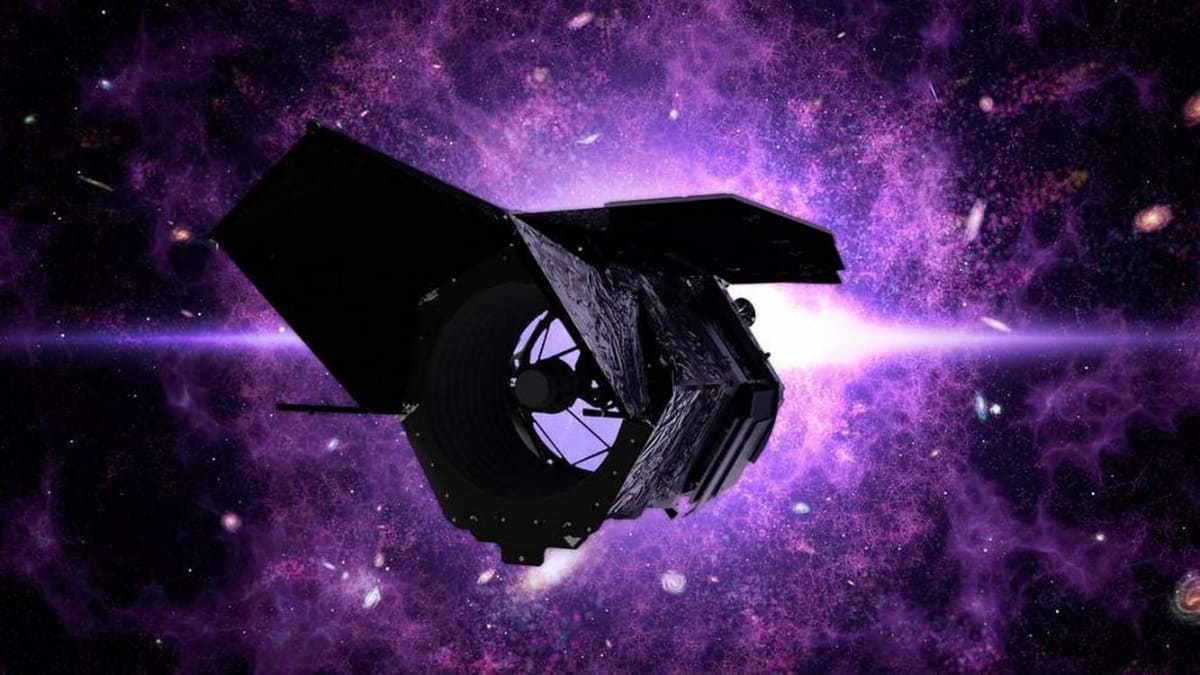
NASA's SPHEREx telescope just completed mapping enormous frozen regions inside molecular clouds, the cosmic nurseries where stars and planets are born. These icy structures stretch across hundreds of light-years, dwarfing anything on Earth.
Unlike previous discoveries that spotted small pockets of space ice, SPHEREx scanned the entire sky in 102 different infrared wavelengths. This lets scientists see chemical fingerprints invisible to normal telescopes.
What they found surprised everyone. Tiny dust particles scattered throughout massive gas clouds are coated in layers of ice: water, carbon dioxide, and carbon monoxide frozen together. When you zoom out, these countless icy specks form continuous frozen regions so vast that scientists are calling them the space equivalent of glaciers.
But instead of carving mountains, these glaciers are building solar systems.
Why This Inspires
Researchers believe these icy regions are the universe's original water reservoirs. As stars and planets form, they pull in material from these clouds, ice and all.
That means the oceans covering our planet, the ice caps on Mars, and the frozen moons orbiting Jupiter all likely trace back to these ancient cosmic glaciers. The same water that helped spark life on Earth spent billions of years drifting through space as frozen dust.
Previous telescopes like James Webb and Spitzer spotted ice around individual stars. SPHEREx is different because it maps entire regions at once, showing how ice is distributed across hundreds of light-years. It's the difference between photographing one tree and mapping an entire forest.
The telescope has only finished its first complete sky scan. More data is coming, and scientists expect to gain clearer understanding of how water travels from these frozen clouds into forming planets.
Each new scan could reveal more about how solar systems assemble themselves, and possibly why some planets become life-friendly while others stay barren.
The next time you fill a glass of water, remember it traveled farther than you can imagine to get here.
More Images

Based on reporting by Google: NASA discovery
This story was written by BrightWire based on verified news reports.
Spread the positivity!
Share this good news with someone who needs it