NASA Mars Helicopter Blades Break the Sound Barrier
NASA just proved that next-generation Mars helicopter blades can spin faster than the speed of sound without falling apart. This breakthrough could revolutionize how we explore the Red Planet's skies.
Engineers at NASA just shattered expectations for what's possible in Martian flight.
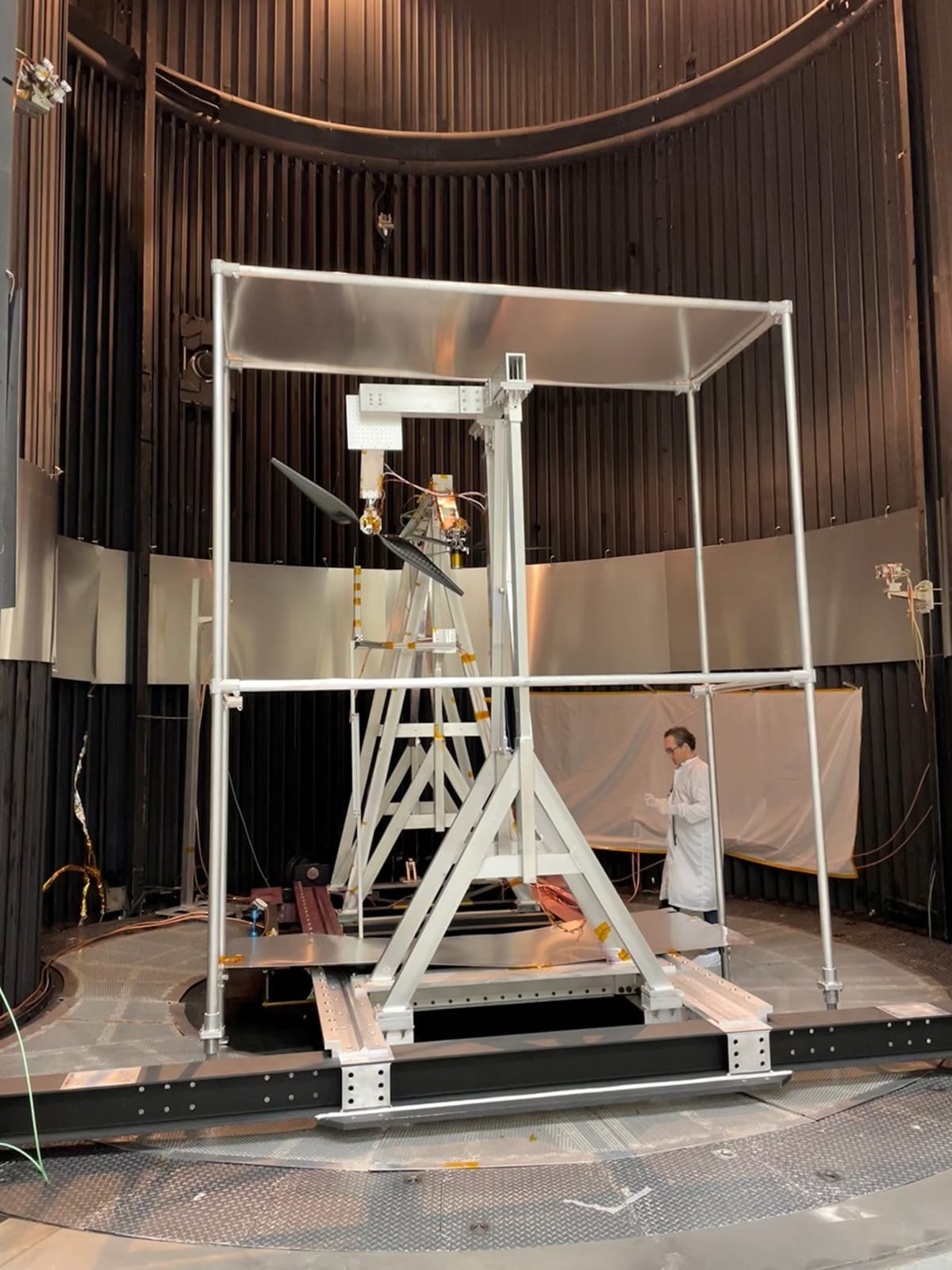
Inside a massive 25-foot space simulator at NASA's Jet Propulsion Laboratory in Southern California, test blades designed for future Mars helicopters spun beyond Mach 1. The rotors didn't just survive the extreme speeds. They thrived.
Engineer Fernando Mier-Hicks and his team ran the tests in November 2025, pushing the limits of what aerial vehicles can do on Mars. The thin Martian atmosphere makes flying incredibly difficult, requiring rotor blades to spin much faster than they would on Earth just to generate enough lift.
Breaking the sound barrier was the major concern. When rotor tips approach supersonic speeds, they create intense vibrations and stress that can tear equipment apart. But NASA's new blade design held strong.
The tests happened inside JPL's specialized chamber that mimics Mars conditions. The team collected data showing these advanced rotors could handle the punishing speeds needed for more ambitious flight missions on the Red Planet.
Why This Inspires
This achievement opens doors to exploring Mars like never before. Future helicopters could fly faster, carry heavier scientific instruments, and venture into terrain that rovers can't reach.
The original Ingenuity helicopter already made history as the first aircraft to achieve powered flight on another planet. These supersonic-capable blades represent the next generation, built on lessons learned from Ingenuity's success.
NASA's Mars Exploration Program funded this research specifically to maximize what future aircraft can accomplish. The investment shows the agency's commitment to expanding our ability to study Mars from the air.
More capable helicopters mean scientists could scout landing sites for human missions, investigate deep craters and caves, and cover vast distances to study the planet's geology and climate. What once seemed like science fiction is becoming engineering reality.
The breakthrough proves that thoughtful design and rigorous testing can overcome challenges that seem impossible at first. NASA engineers didn't just hope the blades would survive supersonic speeds. They built them to excel under those conditions.
Future Mars missions will benefit from technology proven right here on Earth, in a chamber designed to replicate the harsh environment 140 million miles away.
More Images


Based on reporting by NASA
This story was written by BrightWire based on verified news reports.
Spread the positivity!
Share this good news with someone who needs it