NASA Partners With Private Firm for 2028 Mars Mission
NASA just teamed up with Relativity Space to send cutting-edge atmospheric instruments to Mars in 2028, combining government science with private innovation to speed up discoveries. The partnership could pave the way for safer human landings on the Red Planet.
Getting humans safely to Mars just got a major boost, thanks to a groundbreaking partnership announced by NASA this week.
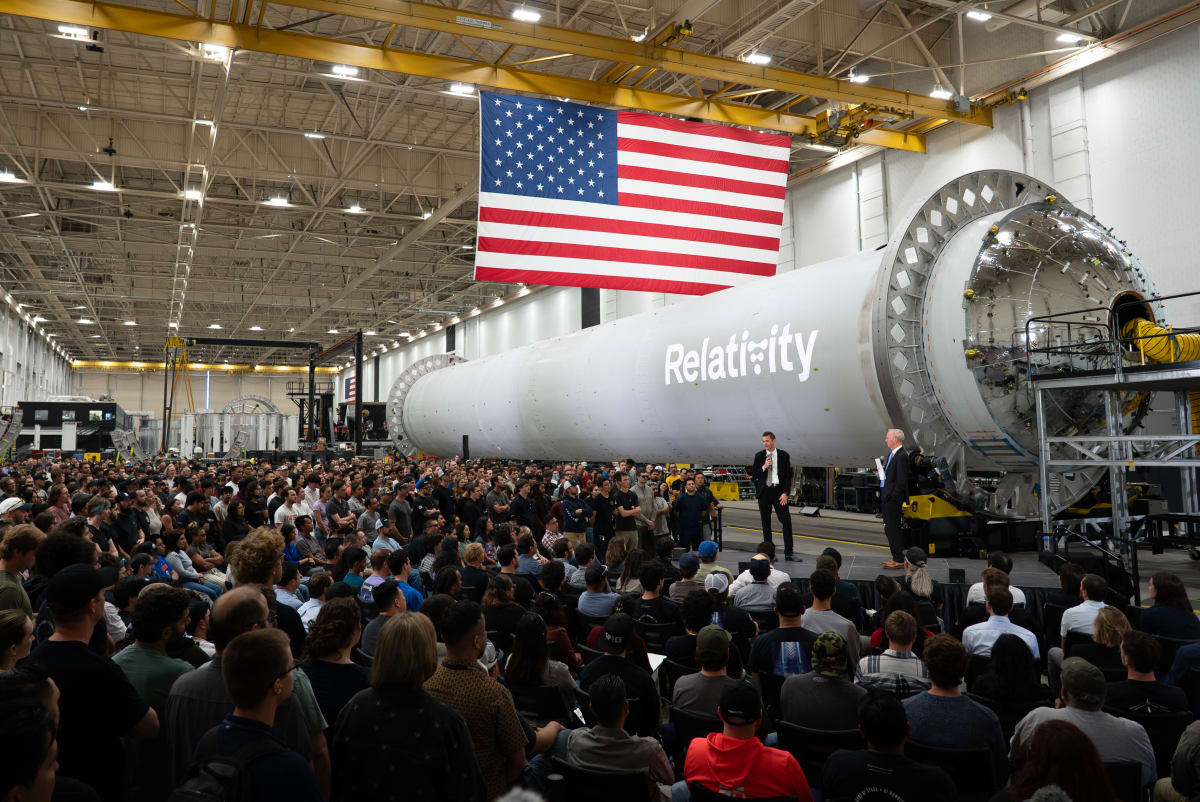
The space agency revealed it's joining forces with Relativity Space to launch Aeolus, a suite of four advanced instruments designed to study Martian winds, temperatures, dust, and clouds. NASA will provide the scientific instruments while Relativity Space handles the spacecraft, rocket, and flight operations for the 2028 mission.
This marks a new way of exploring space. Instead of NASA doing everything alone, the agency is letting private companies handle the heavy lifting while it focuses on what it does best: cutting-edge science.
"By pairing NASA's world-class instruments with commercial innovation and investment, we can deliver more science, more often," said NASA Administrator Jared Isaacman. The approach should speed up how quickly scientists get critical data they need.
Aeolus will be the first mission to provide daily, global views of the Martian atmosphere. That might sound technical, but the data is actually crucial for planning future crewed missions.
Understanding Martian weather patterns, dust storms, and atmospheric conditions will help engineers design better landing systems. That means fewer risks when astronauts eventually attempt to touch down on Mars.
The mission builds on more than 20 years of NASA spacecraft studying Mars from orbit, including the MAVEN mission and Mars Reconnaissance Orbiter. Aeolus takes those observations to the next level with more comprehensive, frequent measurements.
Researchers at NASA's Ames Research Center in California will build and integrate the four instruments. The team includes sensors for measuring wind speeds up to 37 miles above the surface, tracking temperature changes, monitoring dust and clouds, and capturing daily images of atmospheric activity.
The Ripple Effect
This partnership represents more than just one mission. It's a blueprint for how space exploration could work in the future.
By tapping into commercial investment and innovation, NASA can launch more missions without ballooning budgets. That means more frequent trips to Mars, more data for scientists, and faster progress toward putting boots on Martian soil.
The six-year Space Act Agreement between NASA and Relativity Space provides a stable framework for sustained collaboration. Once Aeolus reaches Mars, NASA will operate the scientific instruments for at least one Martian year (about two Earth years) while Relativity maintains the spacecraft.
All the data collected will be processed by NASA into ready-to-use products for researchers worldwide. That open approach means scientists everywhere can contribute to solving the challenges of Mars exploration.
The mission showcases how public and private sectors working together can achieve what neither could do alone as quickly or efficiently.
When Aeolus launches in 2028, it won't just be studying another planet—it'll be lighting the path for humanity's next giant leap.
More Images

Based on reporting by NASA
This story was written by BrightWire based on verified news reports.
Spread the positivity!
Share this good news with someone who needs it