NASA Powers Down Voyager 1 to Keep It Alive Longer
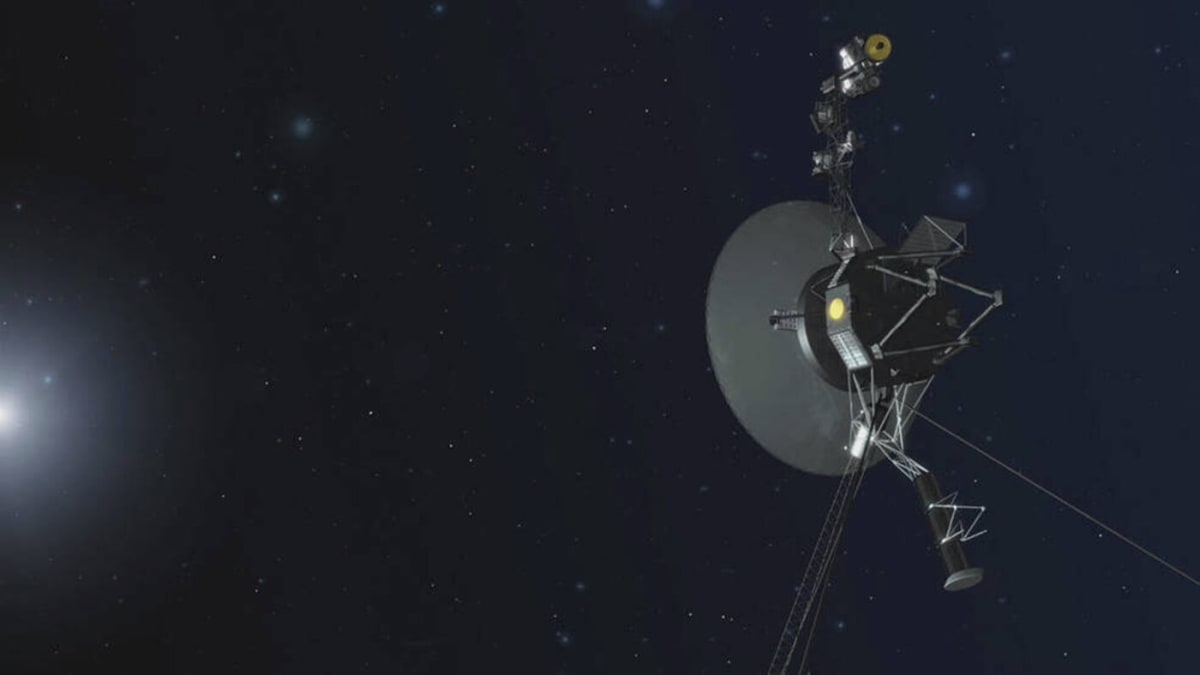
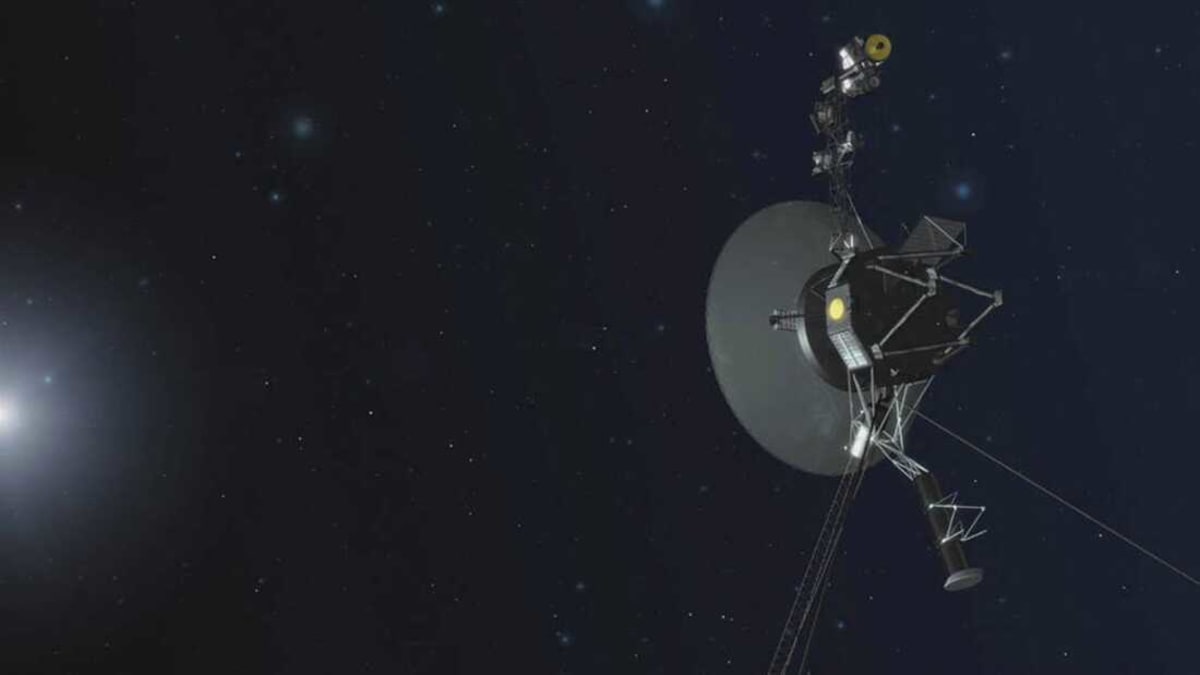
Nearly 50 years after launch, NASA turned off one of Voyager 1's science instruments not because it failed, but to extend humanity's farthest messenger a little longer. The spacecraft built for five years has lasted almost ten times that.
A spacecraft the size of a small car launched in 1977 for a five-year mission is still going strong nearly half a century later, more than 15 billion miles from home.
NASA just shut down one of Voyager 1's science instruments this week, but not because something went wrong. Engineers made the tough call to keep the little probe alive even longer as it explores the space between stars where no human-made object has ever traveled.
Voyager 1 runs on decaying plutonium, not solar panels or batteries. The nuclear fuel releases steady heat that converts to electricity, but it loses about 4 watts of power each year. After 49 years, every watt counts.
When power levels dropped unexpectedly during a routine check in late February, the spacecraft came dangerously close to an automatic shutdown. Engineers at NASA's Jet Propulsion Laboratory in California acted fast.
They deactivated the Low-energy Charged Particles experiment on April 17. The instrument had spent decades measuring cosmic rays and particles from our solar system and beyond, helping scientists map interstellar space in ways no other tool could.
The decision wasn't easy, but it was planned. Years ago, the Voyager teams agreed on which instruments to shut down in order, preserving the most scientifically valuable equipment while conserving power.
Why This Inspires
Voyager 1 was built for a once-in-175-years planetary alignment that let it slingshot past Jupiter and Saturn using gravity alone. It discovered the first volcanoes beyond Earth on Jupiter's moon Io in 1979 and gave us unprecedented views of Saturn's rings in 1980.
In 2012, it became the first human-made object to enter interstellar space, crossing the boundary where the Sun's influence ends and the space between stars begins. Its twin, Voyager 2, followed in 2018.
Today, Voyager 1 carries two working science instruments: one listening for plasma waves and another measuring magnetic fields. The latest shutdown buys the mission roughly another year.
Commands sent from Earth take over 23 hours to reach the probe traveling at light speed. Every instruction, every piece of data, crosses a gulf wider than anything humanity has ever bridged.
Engineers are now developing what they call "the Big Bang," a coordinated swap of powered components that could trade older systems for lower-power alternatives. They're testing the plan on Voyager 2 first.
The spacecraft that was supposed to last five years keeps teaching us that limits are often just starting points.
More Images

Based on reporting by NPR Science
This story was written by BrightWire based on verified news reports.
Spread the positivity!
Share this good news with someone who needs it