NASA Proved We Can Knock Asteroids Off Course
NASA crashed a spacecraft into an asteroid in 2022 and changed its path around the sun. The success proves humanity could defend Earth from a dangerous space rock heading our way.
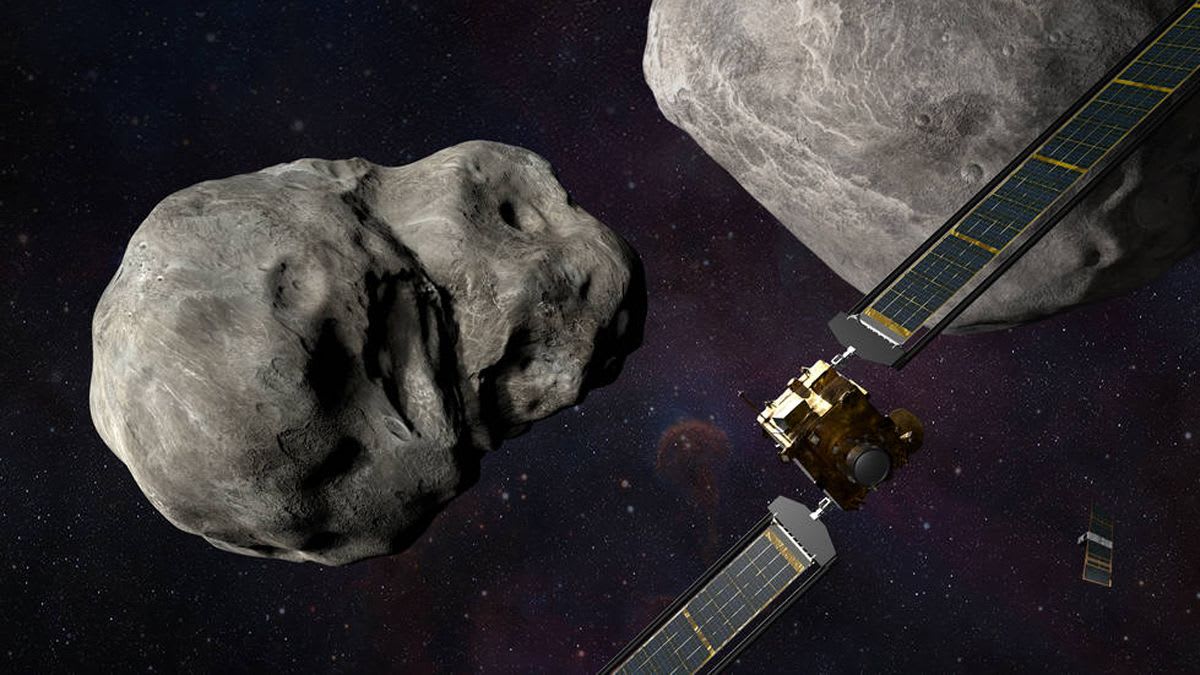
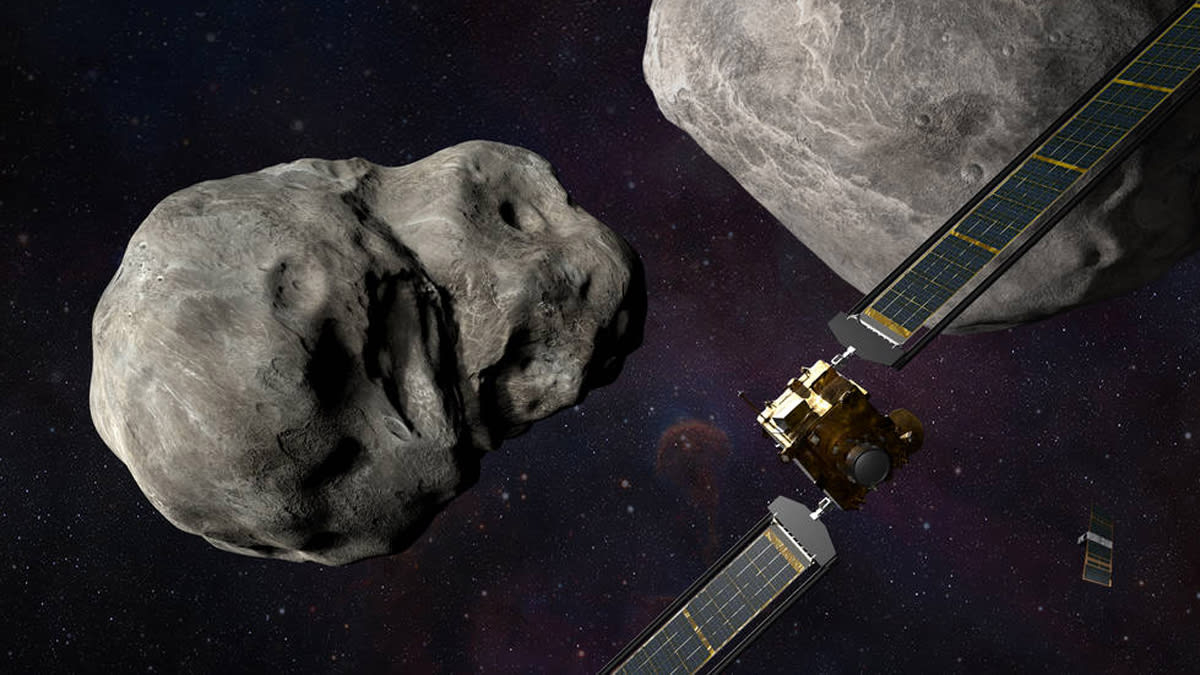
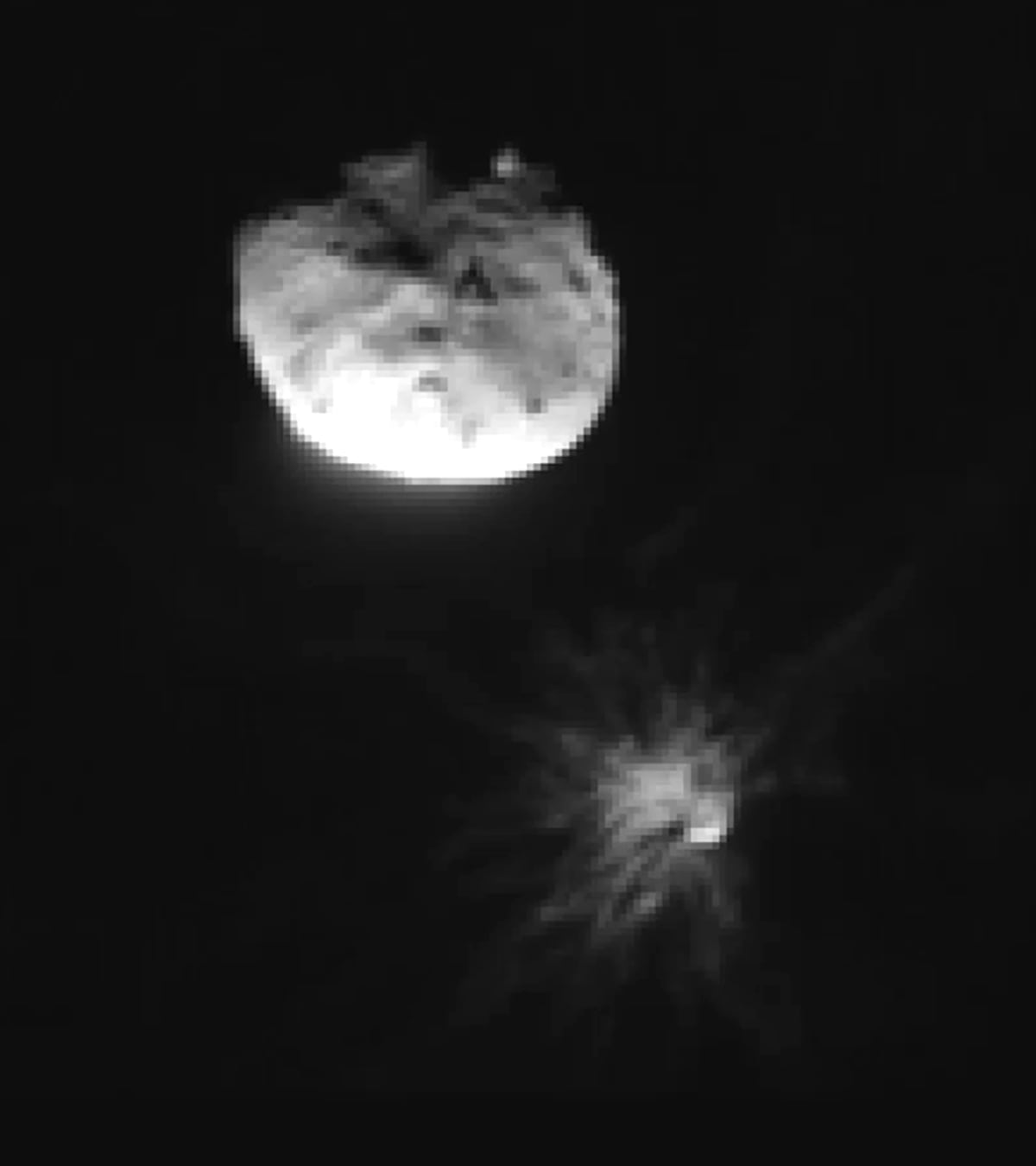
When NASA deliberately slammed a spacecraft into an asteroid in September 2022, scientists hoped to nudge it just slightly off course. The mission worked so well that it not only changed the small asteroid's orbit, but shifted the entire two-asteroid system's path around the sun.
The target was Dimorphos, a 560-foot asteroid orbiting its larger companion Didymos. NASA's DART spacecraft hit Dimorphos at four miles per second, shortening its orbit by 32 minutes. The goal had been just 73 seconds, making the mission a tremendous success.
Here's the really cool part: the impact created a massive cloud of debris that sprayed into space. As this material shot away from the asteroid, it gave Dimorphos an extra push, doubling the force of the original impact. Scientists call this bonus effect the "momentum enhancement factor."
The combined push from impact and debris was strong enough to change both asteroids' orbit around the sun by 0.15 seconds. That tiny shift translates to about 1.7 inches per hour, which might not sound like much until you consider the stakes.
"Over time, such a small change in an asteroid's motion can make the difference between a hazardous object hitting or missing our planet," said Rahil Makadia of the University of Illinois Urbana-Champaign. If we spot a dangerous asteroid early enough, we now know we can push it away.
The Ripple Effect
This breakthrough wouldn't have been possible without 49 amateur astronomers who traveled to remote locations around the world between October 2022 and March 2025. They observed 22 stellar occultations, watching the asteroids pass in front of distant stars to precisely measure their changing positions.
Their dedication allowed scientists to calculate exactly how DART changed the binary system's orbit. "This result would not have been possible without the dedication of dozens of volunteer occultation observers around the world," said Steve Chesley of NASA's Jet Propulsion Laboratory.
NASA plans to launch the Near-Earth Object Surveyor telescope after September 2027 to find more potentially hazardous asteroids. Combined with DART's proven deflection technique, we're building a real planetary defense system.
Humanity just proved we're not helpless against cosmic threats.
More Images

Based on reporting by Google News - Science
This story was written by BrightWire based on verified news reports.
Spread the positivity!
Share this good news with someone who needs it