NASA Rockets Map Northern Lights in 3D Scan
NASA launched three rockets into the aurora borealis over Alaska, creating the first-ever 3D map of the electrical currents powering the northern lights. The breakthrough could help protect satellites and improve our understanding of space weather.
Scientists just pulled off a CT scan of the sky, and the results are rewriting what we know about the northern lights.
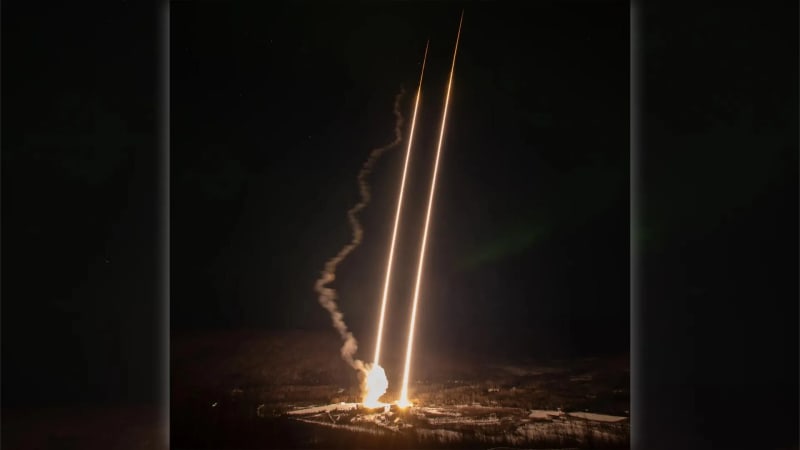
NASA successfully launched three sounding rockets into the glowing aurora over Alaska in February, capturing unprecedented data about the electrical forces that create one of nature's most stunning displays. The missions lifted off from the Poker Flat Research Range near Fairbanks, targeting the invisible currents that power the dancing lights.
The star of the show was GNEISS (pronounced "nice"), which launched two rockets just 30 seconds apart on February 10. Each rocket released four smaller instruments while flying through the same aurora, creating multiple measurement points within the glowing region. Together with ground receivers, they built a three-dimensional electrical map of the atmosphere.
"It's essentially like doing a CT scan of the plasma beneath the aurora," said Kristina Lynch, the mission's lead scientist and professor at Dartmouth College. The technique works similarly to medical imaging: the rockets transmitted radio signals through the charged atmosphere to ground stations, and scientists analyzed how the plasma changed those signals.
The key mystery they're solving is how electricity completes its circuit. When electrons stream down from space to create auroras, they eventually must return to space. But unlike the focused beams coming in, the return flow scatters in many directions, shaped by winds, pressure changes, and shifting magnetic fields.
A third rocket, the Black and Diffuse Auroral Science Surveyor, launched February 9 to investigate mysterious dark patches called black auroras. These blank spots within the lights may mark areas where electrical currents suddenly reverse direction. The mission reached 224 miles high and returned excellent data after a weather-delayed attempt in 2025.
Why This Inspires
This isn't just beautiful science. Understanding these electrical currents helps protect the satellites we rely on every day for GPS, communications, and weather forecasting.
When auroral currents spread through the upper atmosphere, they create heat, winds, and turbulence that can damage spacecraft traveling through that region. By learning to "read" the aurora's electrical patterns, scientists can better predict and prepare for space weather that affects our technology.
The missions join NASA's EZIE satellite (launched March 2025) in creating a complete picture from multiple angles. Ground instruments, orbiting satellites, and rockets flying directly through the aurora now work together as a coordinated observation system.
All three rockets performed flawlessly, with every instrument and boom deploying as planned. The teams report they're thrilled with the quality of data now being analyzed.
The northern lights just became a lot more than a pretty show in the sky.
Based on reporting by Science Daily
This story was written by BrightWire based on verified news reports.
Spread the positivity!
Share this good news with someone who needs it