NASA Rover Finds Ancient Molecules Preserved on Mars
NASA's Curiosity rover discovered 21 carbon-based molecules locked in Martian rocks for billions of years, including seven never seen on Mars before. The finding reveals the Red Planet may hold ancient environmental records that Earth's geology has long erased.
Scientists just found something remarkable on Mars: building blocks of life preserved for billions of years in conditions that should have destroyed them.
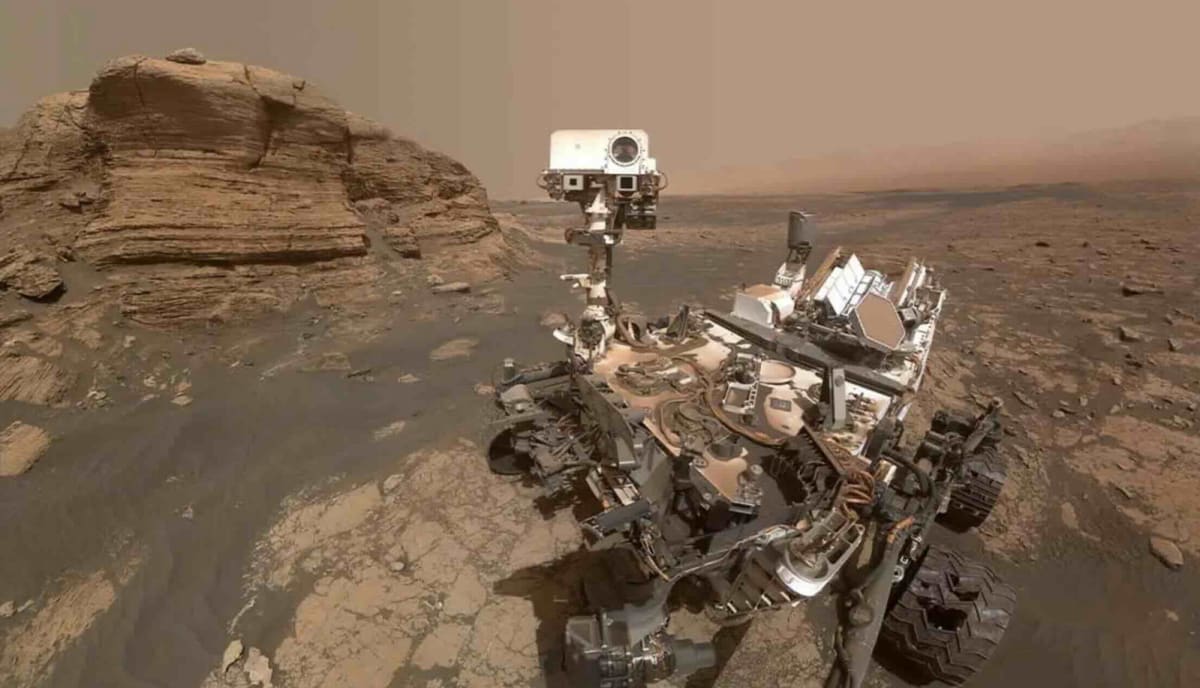
NASA's Curiosity rover unearthed the discovery in 2020 while exploring Gale Crater. The robotic explorer found 21 carbon-based molecules embedded in clay-rich sedimentary rock, seven of which had never been identified on Mars.
The molecules themselves aren't proof of ancient Martian life. They could have formed through geological reactions or arrived via meteorites. But what stuns researchers is their survival.
"These organics were likely preserved in the rocks for a very long time, possibly billions of years, despite radiation and other harsh conditions on Mars," said Dr. Michael Tice, an astrobiologist at Texas A&M University. "It blows my mind."
Organic molecules are life's critical building blocks, though they can form without biology. On Earth, scientists study similar preserved compounds to understand ancient environments. Finding them on Mars opens a window into the planet's deep history.
The discovery suggests Martian rocks might preserve stories Earth can no longer tell. Our planet's active geology has erased most records from before life began. Mars, geologically quieter for billions of years, may have kept that evidence intact.
"We do not have an equivalent record of such a time preserved on Earth," Tice explained. Some Mars rocks could reveal times when only prebiotic chemistry existed, or when organic material arrived from space.
Why This Inspires
This finding transforms Mars from a dead world into a cosmic library. While Earth's restless surface has rewritten its own history over billions of years, Mars quietly preserved chapters we've lost forever.
The implications reach beyond one planet. Understanding how organic molecules survived in Mars' harsh environment helps scientists know where else to look for life's ingredients. Every preserved molecule is a clue about which conditions protect life's building blocks across the universe.
Tice's team continues exploring with NASA's Perseverance rover, comparing ancient Earth sediments from South Africa with potential Martian biosignatures. They're hunting for chemical patterns that reveal whether microbes once altered their environment, leaving fingerprints in stone.
"With the right collection, we could find the next step in evidence for past life on Mars or learn about the kinds of processes that eventually led to life on our planet," Tice said.
The Red Planet is sharing secrets Earth forgot long ago.
Based on reporting by Google: NASA discovery
This story was written by BrightWire based on verified news reports.
Spread the positivity!
Share this good news with someone who needs it
%3Amax_bytes(150000)%3Astrip_icc()%3Afocal(999x0%3A1001x2)%2Fmars-rover-field-073126-1e9056218dc842cdb53565a4df6cf847.jpg)