NASA Rover Finds Mars' Oldest Rocks Beyond Jezero Crater
NASA's Perseverance rover just explored the oldest terrain in its five-year mission, discovering ancient rocks that could reveal whether Mars once had a magma ocean. Scientists say these 4-billion-year-old formations might finally explain how the Red Planet became habitable.
NASA's Perseverance rover just ventured farther from its landing site than ever before and found rocks that might rewrite our understanding of how Mars formed.
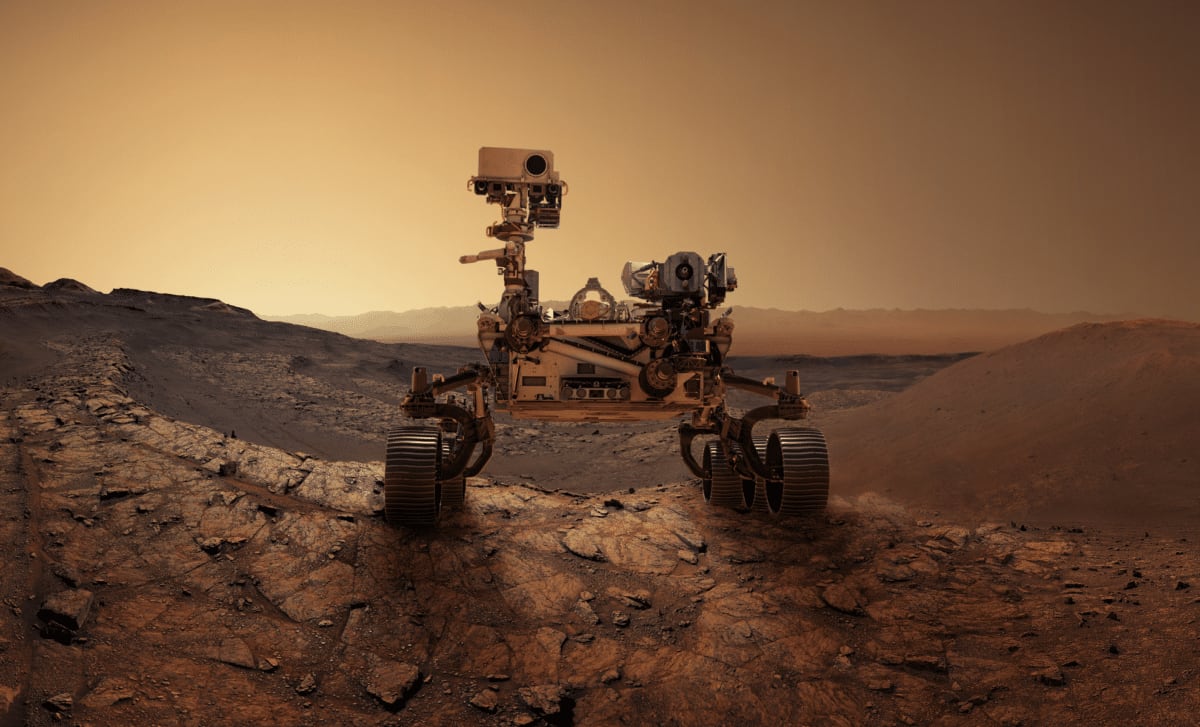
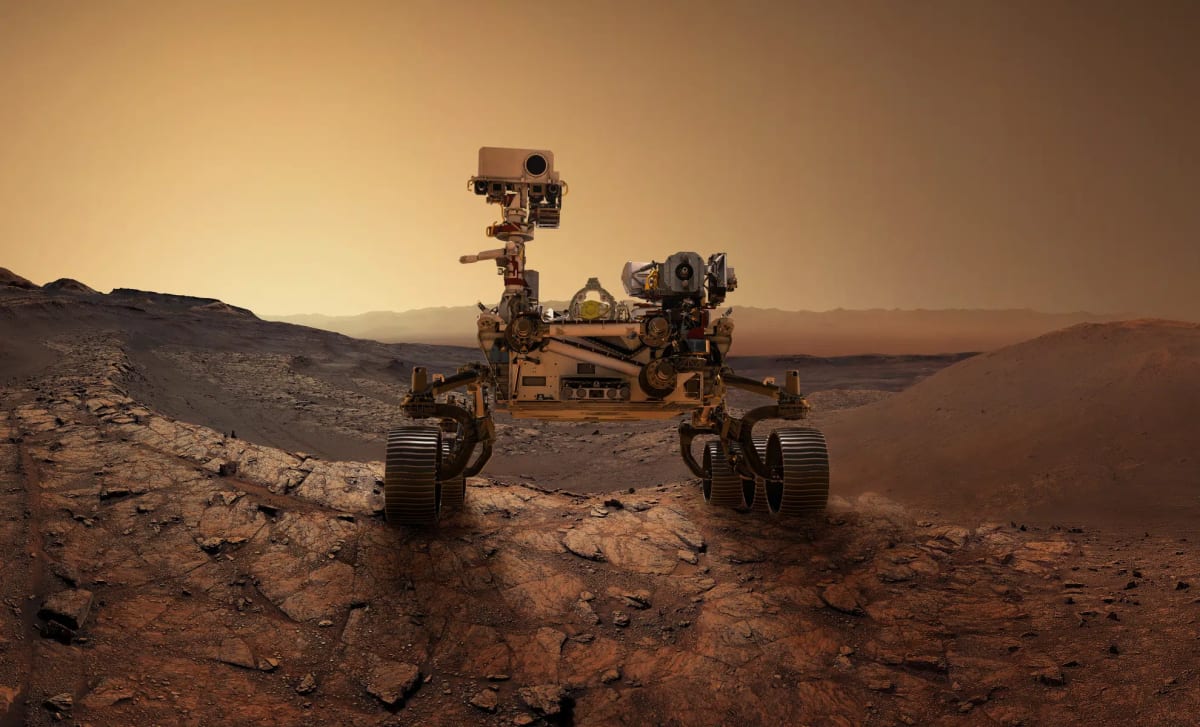
The rover is now exploring a rugged region called Lac de Charmes, located beyond Jezero Crater's western rim. On March 11, Perseverance snapped a 61-image selfie beside freshly analyzed rocks that scientists believe are nearly four billion years old.
These aren't just any rocks. They likely came from deep within Mars' crust, exposed over billions of years by massive meteor impacts and erosion.
"What I see in this image is excellent exposure of likely the oldest rocks we are going to investigate during this mission," said Ken Farley, the mission's deputy project scientist at Caltech. The team spotted features that could be volcanic dikes, where magma hardened underground and remained standing after softer material wore away.
This discovery marks a major shift in Perseverance's mission. For the past five years, the rover focused on finding signs of ancient water and environments that might have supported microbial life. Now it's tackling bigger questions about the planet's geological foundations.
Perseverance also captured a sweeping panorama of the Arbot region using 46 stitched images. The landscape shows fractured ridges, rounded boulders, and layers of rock that differ dramatically from the water-deposited sediments inside Jezero Crater.
Scientists think some of this material might be megabreccia, debris launched during a colossal meteorite collision nearly 3.9 billion years ago. Instead of sediments formed by flowing water, many rocks here appear to be igneous, created when molten rock cooled either underground or as lava flows.
Why This Inspires
Project scientist Katie Stack Morgan calls this terrain the "Wild West" of Mars exploration. These ancient formations could answer whether Mars once had a global magma ocean and what conditions made it habitable in the first place.
Understanding Mars' formation helps scientists compare the Red Planet with early Earth and other rocky worlds across the solar system. The rover has collected 27 rock cores during its mission, with 25 sealed for potential return to Earth in future missions.
Advanced laboratory analysis back on Earth could reveal mineral structures and chemical signatures impossible to detect remotely. Those samples might become part of one of the most ambitious extraterrestrial programs ever attempted.
After five years and nearly a marathon's distance traveled, Perseverance continues pushing boundaries on Mars. Every new image brings us closer to understanding not just the Red Planet's past, but the story of rocky planets everywhere.
More Images

Based on reporting by Google: NASA discovery
This story was written by BrightWire based on verified news reports.
Spread the positivity!
Share this good news with someone who needs it