NASA Rules Out 2032 Asteroid Hit Using Webb Telescope
That asteroid scientists were watching? New data from the James Webb Space Telescope just confirmed it will safely miss the Moon in 2032. What looked like a small chance of impact turned into a clear all-clear thanks to unprecedented observations.
Scientists just crossed a cosmic worry off their list using one of humanity's most powerful tools.
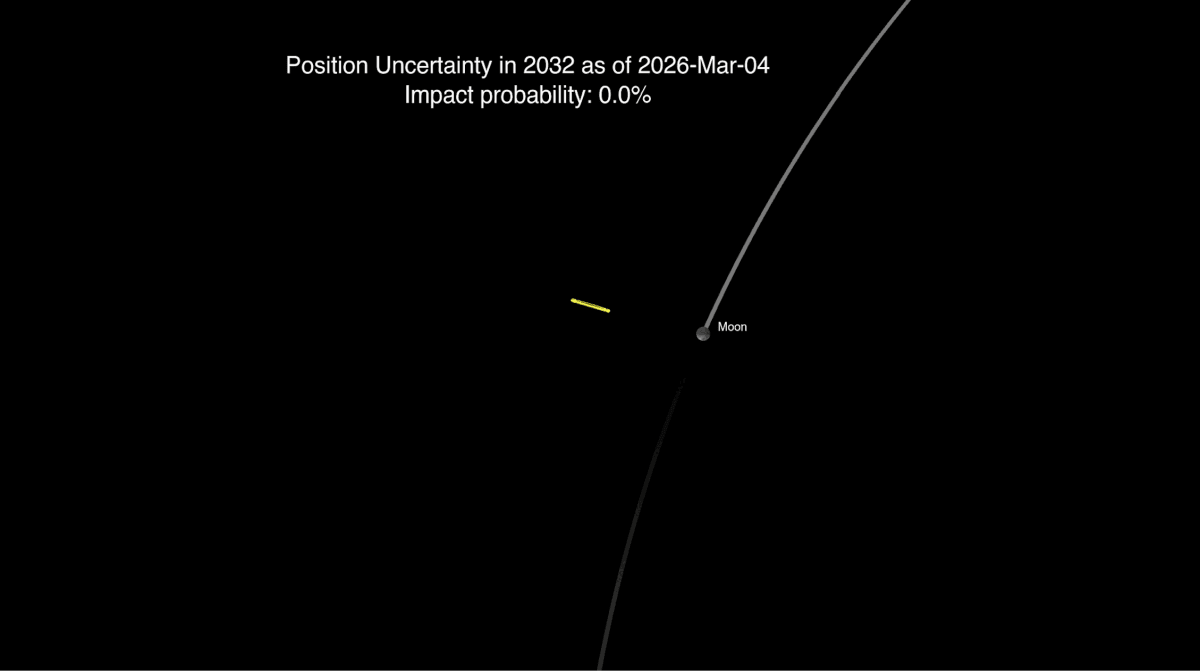
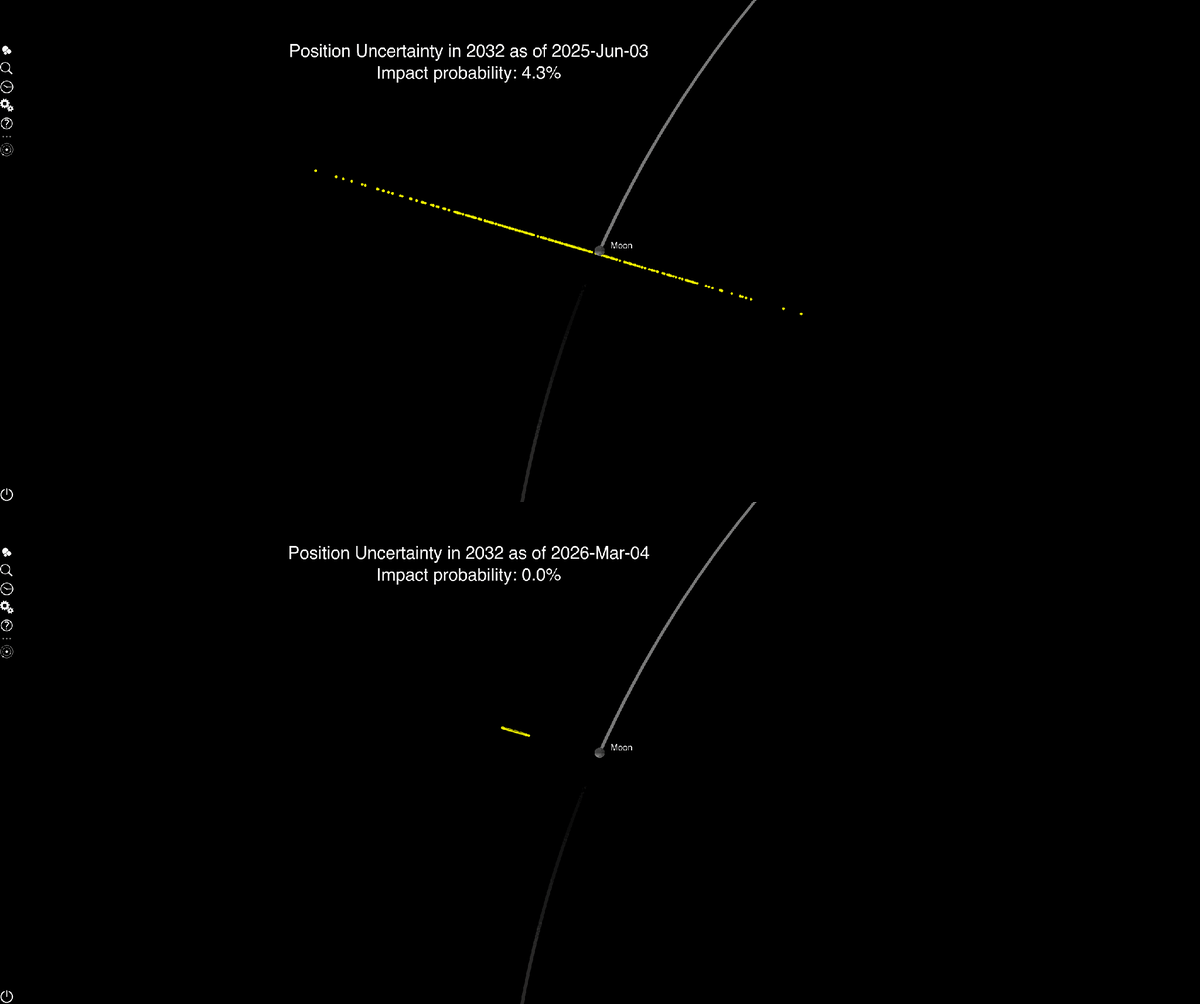
NASA announced this week that asteroid 2024 YR4, which had a 4.3% chance of hitting the Moon in December 2032, will actually sail past at a safe distance of 13,200 miles. The game changer was new data from the James Webb Space Telescope captured in late February.
The asteroid was first spotted in late 2024 by a NASA-funded telescope in Chile. Early tracking data suggested it might pose a risk to Earth, but scientists quickly ruled out any danger to our planet with additional observations throughout early 2025.
The Moon, however, remained a question mark. For nearly a year, the asteroid disappeared from view as it moved into a position where traditional telescopes couldn't track it.
That's where Webb stepped in with a remarkable feat. A team led by Johns Hopkins Applied Physics Laboratory used the telescope to capture some of the faintest asteroid observations ever recorded. These two February observations provided the missing puzzle pieces scientists needed to map the asteroid's path with confidence.
The new precision doesn't mean the asteroid changed course. It means scientists now know exactly where it was heading all along, like zooming in on a map to see the road actually curves away from the building rather than toward it.
Why This Inspires
This story showcases scientific problem-solving at its finest. When faced with uncertainty about a potential lunar impact, researchers didn't just wait and hope for the best. They pushed the boundaries of what the Webb telescope was designed to do, using it to track an object far fainter than its typical cosmic targets.
The collaboration worked. Observatories around the world contributed tracking data, while Webb provided the crucial observations during a period when the asteroid would have otherwise remained invisible.
What started as a small but notable concern became a testament to how far our space monitoring capabilities have come. We can now track objects with unprecedented accuracy and rule out risks that would have remained uncertain just a decade ago.
The asteroid will pass by safely, and scientists can now predict its path through the next century with confidence.
More Images
Based on reporting by Google: James Webb telescope
This story was written by BrightWire based on verified news reports.
Spread the positivity!
Share this good news with someone who needs it