NASA Satellite Sees Through Clouds to Map Louisiana Wetlands
A new Earth-watching satellite just proved it can see what other cameras can't: the ground beneath thick clouds. NASA and India's space agency captured stunning details of Louisiana's coast on a cloudy day when regular satellites saw nothing.
When clouds roll in, most satellites go blind. But a new mission from NASA and India just showed it can pierce right through them to map our planet in remarkable detail.
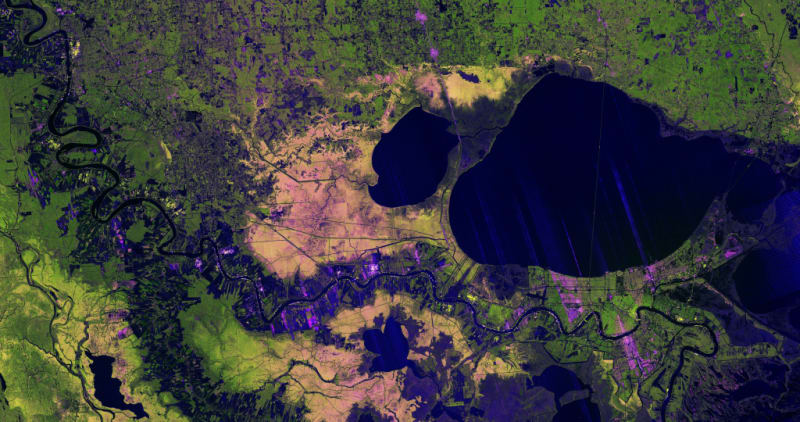
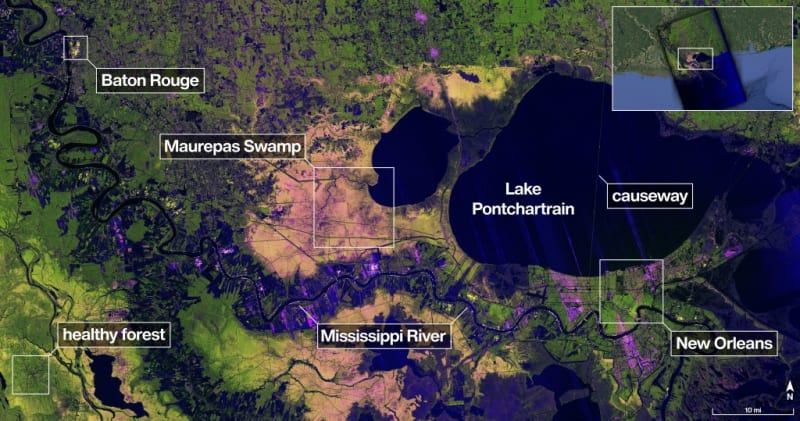
The NISAR satellite captured a vibrant image of Louisiana's Mississippi River Delta on November 29, revealing New Orleans, Baton Rouge, sprawling wetlands, and working farms. While optical satellites saw only clouds that day, NISAR painted a complete picture using radar technology that treats clouds like they're invisible.
The secret lies in how NISAR sees the world. Instead of capturing visible light like a camera, it bounces microwaves off Earth's surface. These waves pass straight through clouds and return with detailed information about what's below.
The results are color-coded maps that distinguish healthy forests from thinning swamps, tall crops from empty fields, and bustling cities from quiet countryside. Bright green areas west of the Mississippi River show thriving forests where tree canopies scatter radar signals in multiple directions. Yellow and magenta speckles in Maurepas Swamp reveal where trees have grown sparse.
The image is sharp enough to clearly show the Lake Pontchartrain Causeway, twin bridges stretching nearly 24 miles across water as the world's longest continuous bridge over a lake. Farm plots appear as a patchwork quilt along both riverbanks, with magenta patches showing tall crops and darker areas marking resting soil.
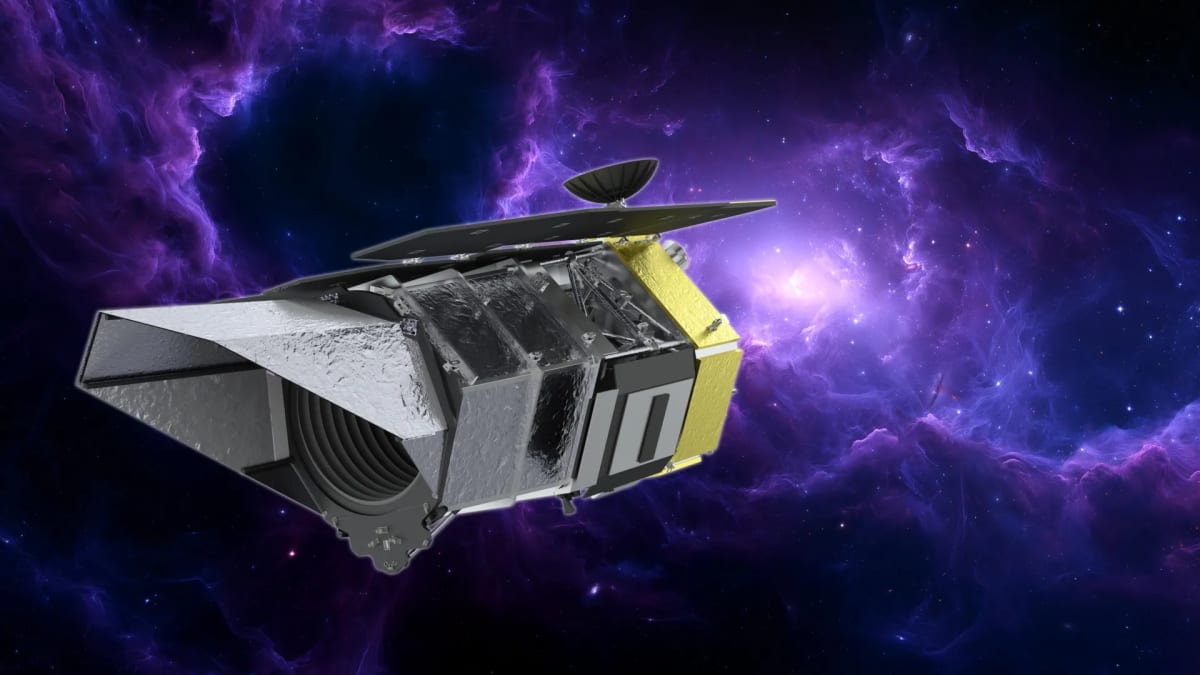
NISAR launched last July as a partnership between NASA and the Indian Space Research Organisation. The satellite carries the largest radar antenna NASA has ever sent to space, a drum-shaped reflector measuring 39 feet wide that will scan the entire planet every 12 days.
Why This Inspires
This technology means scientists can now monitor our planet consistently, rain or shine. They'll track how forests grow and shrink, watch crops develop through growing seasons, and spot changes in vulnerable wetland ecosystems that protect coastal communities from storms.
In late February, NASA will release thousands of data files for researchers, disaster responders, and agricultural managers worldwide. These insights will help communities prepare for floods, track infrastructure changes, and make smarter decisions about protecting vital ecosystems.
The mission proves that international partnerships can achieve remarkable things when nations work together toward a shared goal.
More Images
Based on reporting by NASA
This story was written by BrightWire based on verified news reports.
Spread the positivity!
Share this good news with someone who needs it