NASA Satellite Unlocked Secrets of Universe's Birth
A telescope launched in 1989 proved how the universe began and revealed the cosmic seeds that made galaxies, stars, and us possible. The discovery was so groundbreaking it earned a Nobel Prize and launched the era of precision cosmology.
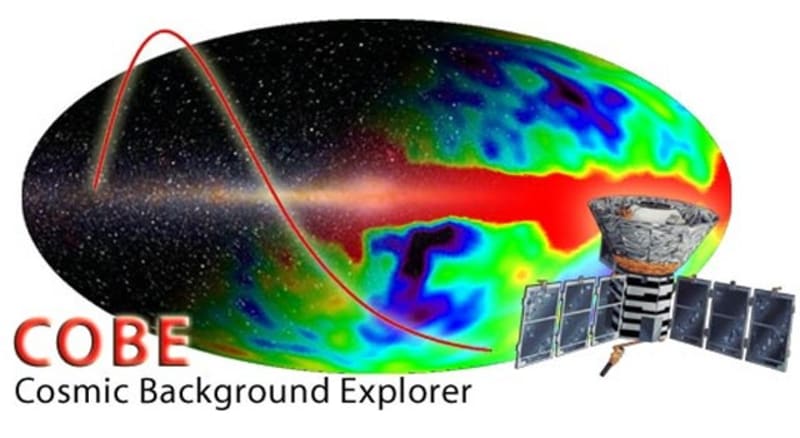
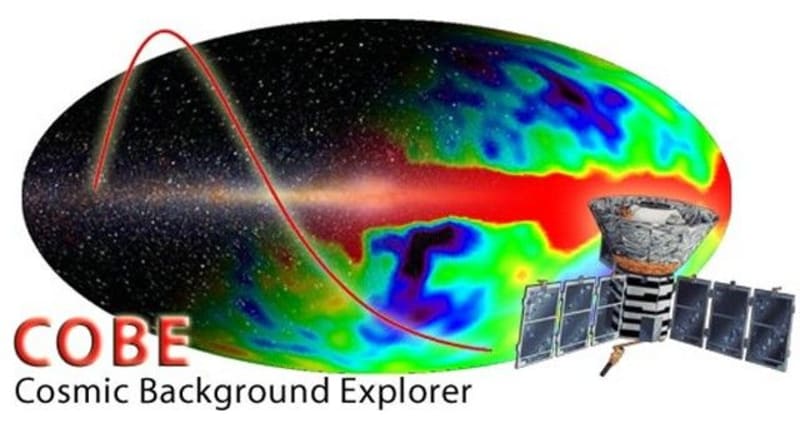
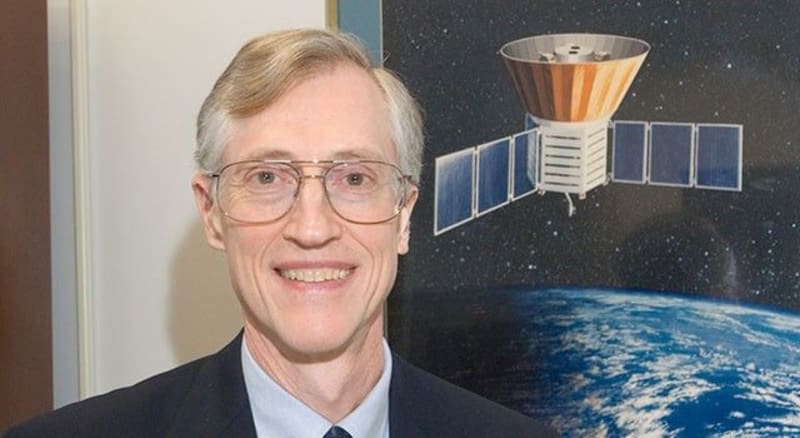
Imagine proving the universe's origin story with such precision that scientists around the world had to rewrite their understanding of everything. That's exactly what happened when NASA's Cosmic Background Explorer satellite looked back in time to capture light from when the cosmos was just a baby.
On November 18, 1989, the COBE satellite launched into orbit with a bold mission: measure the faint glow of radiation left over from the universe's scorching infancy. Led by astrophysicist John Mather and a team of 1,500 contributors, the project aimed to test whether the Big Bang theory could stand up to rigorous scientific scrutiny.
The results were stunning. COBE measured the spectrum of ancient cosmic radiation with a precision of 50 parts per million, and it matched the theoretical predictions perfectly. No other explanation for the universe's origin could account for what the satellite detected.
But the mission delivered an even bigger surprise. The satellite found hot and cold spots in this ancient radiation, tiny temperature differences that physicist Stephen Hawking called "the most important scientific discovery of the century, if not of all time."
Those spots weren't just interesting patterns. They were the seeds of everything we see today: galaxies, stars, planets, and ultimately us. Gravity pulled matter together in those slightly denser regions, stopping it from just expanding forever into emptiness.
The Ripple Effect
The discovery transformed cosmology from educated guessing into a precision science. Before COBE, astronomers knew the universe was expanding but little else for certain. After COBE, they could trace the universe's history with confidence and make testable predictions.
The work also revealed that most of those crucial spots came from dark matter, the mysterious invisible substance that makes up most of the universe's mass. Understanding what created those spots might one day unlock quantum gravity, one of physics' biggest unsolved puzzles.
The journey from idea to triumph took 15 years and required solving problems no engineer had faced before. When the Challenger disaster changed launch plans, the team redesigned everything. Mather spent countless hours with engineers, pushing beyond known limits, building instruments that had never existed.
In 2006, the world recognized the achievement when Mather and colleague George Smoot received the Nobel Prize in Physics. Their success showed what's possible when scientists and engineers trust each other to attempt the impossible.
Today, COBE's legacy lives on in newer missions like the James Webb Space Telescope, which Mather now helps lead. Each discovery builds on that original breakthrough, when a satellite the size of a car looked across billions of years and saw the universe's baby picture.
The mission proved something profound: with curiosity, collaboration, and courage to tackle enormous challenges, we can answer humanity's biggest questions about where we came from and why we're here.
More Images

Based on reporting by NASA
This story was written by BrightWire based on verified news reports.
Spread the positivity!
Share this good news with someone who needs it