NASA Solves Mystery of Sahara's 15-Mile Ring Mountain
Scientists discovered Mount Arkanu's stunning concentric rings weren't caused by an asteroid, but by ancient volcanic forces that shaped the Sahara over millions of years. The 15-mile geological wonder also shelters ancient art and sustains life in one of Earth's driest places.
A massive ring formation in the Sahara desert finally has an explanation, and it's even more fascinating than scientists first thought.
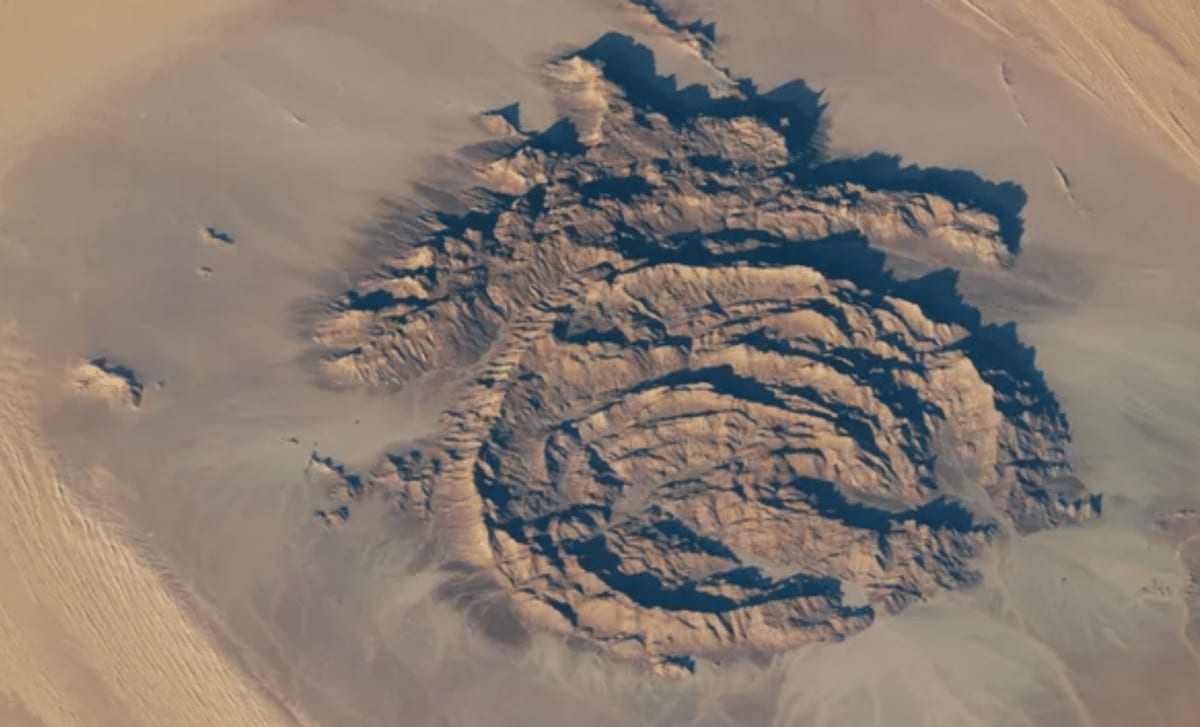
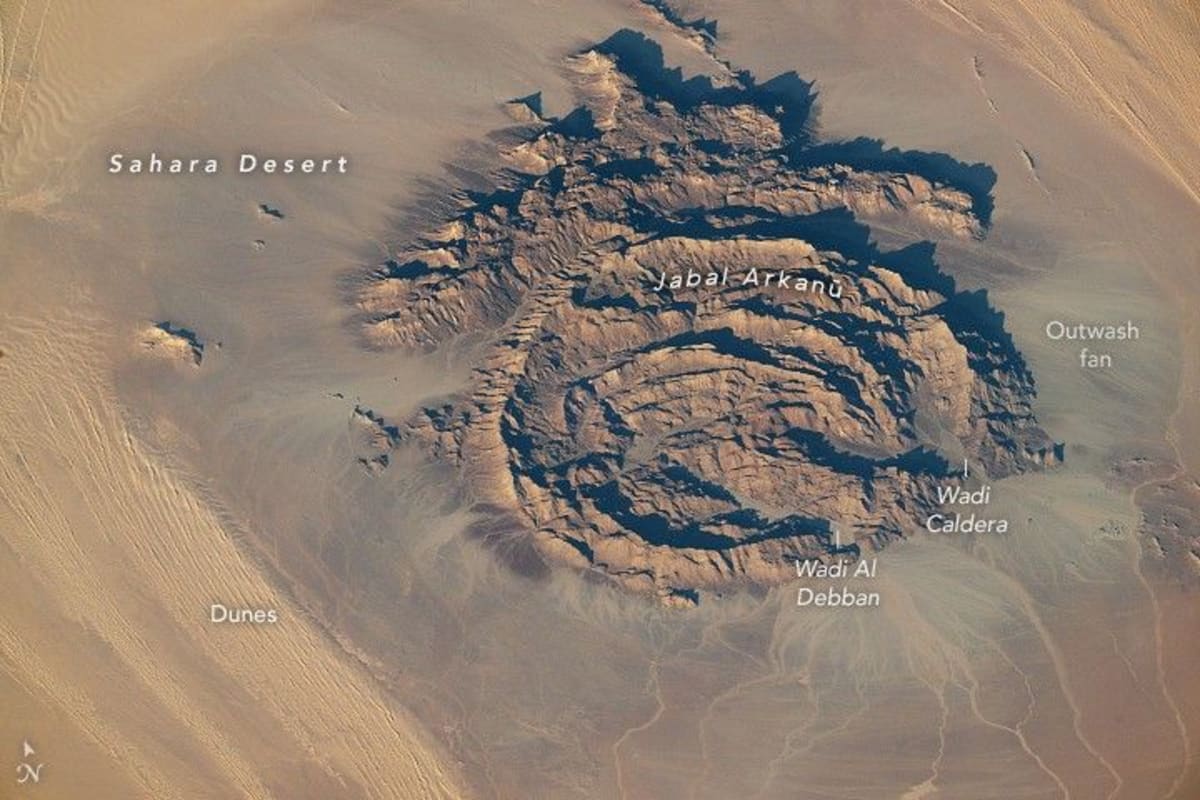
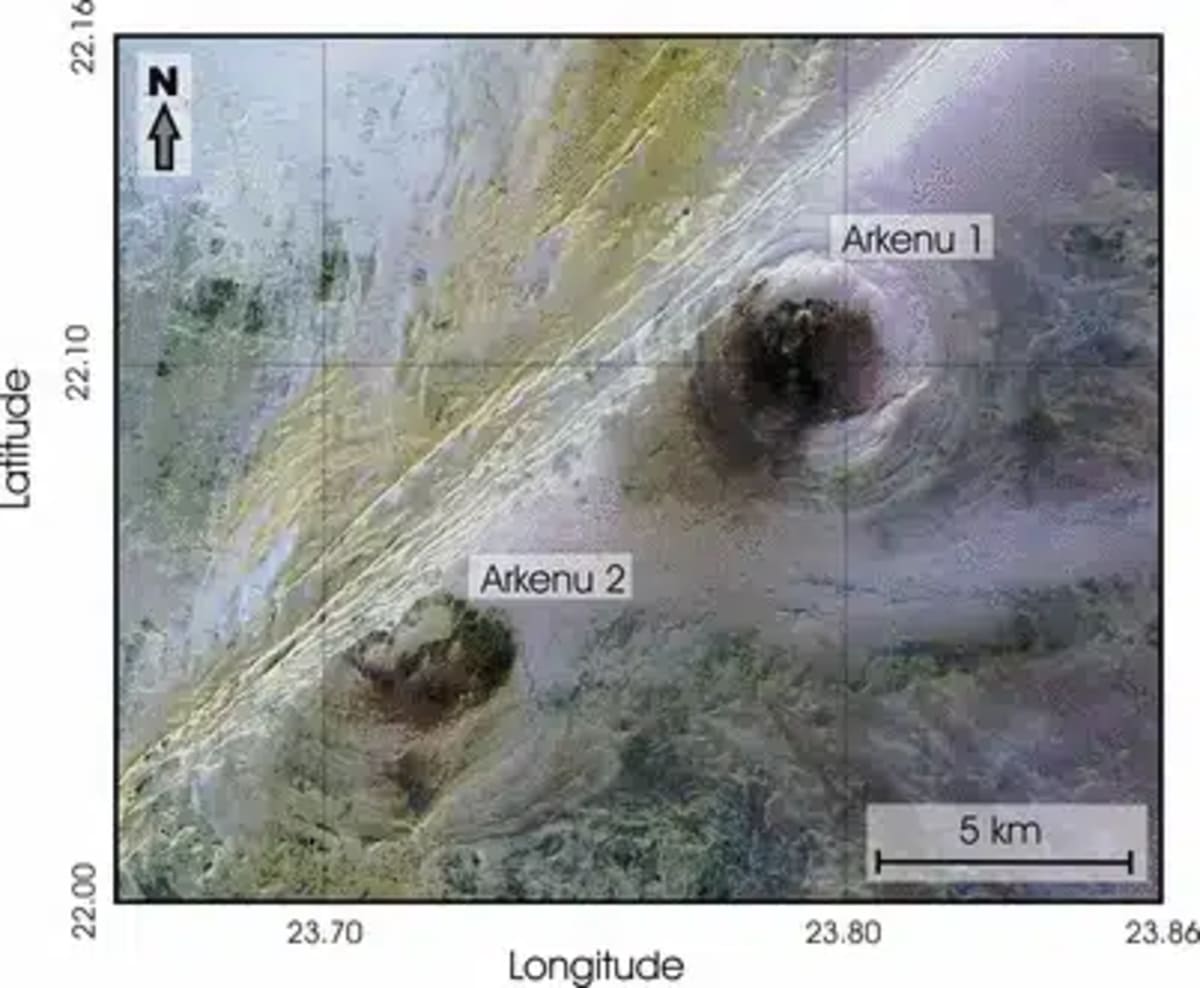
Mount Arkanu, a 15-mile geological wonder in Libya's remote desert, looks like something from another planet. Its concentric circles of rock stretch across the sand in perfect rings, leading researchers to believe an ancient asteroid created the formation. But new findings from NASA's Earth Observatory reveal the truth is far more earthly and equally spectacular.
The mountain's dramatic rings formed from repeated volcanic magma intrusions over hundreds of millions of years. Each eruption pushed molten rock toward the surface, creating overlapping circles of igneous basalt and granite. The centers of these rings align roughly to the southwest, showing where underground forces repeatedly broke through over time.
The formation gets even stranger at its northern edge, where a massive "hat" made of sandstone, limestone, and quartz caps the rocky rings below. This unusual combination of volcanic and sedimentary rock tells the story of powerful geological forces working together across vast stretches of time.
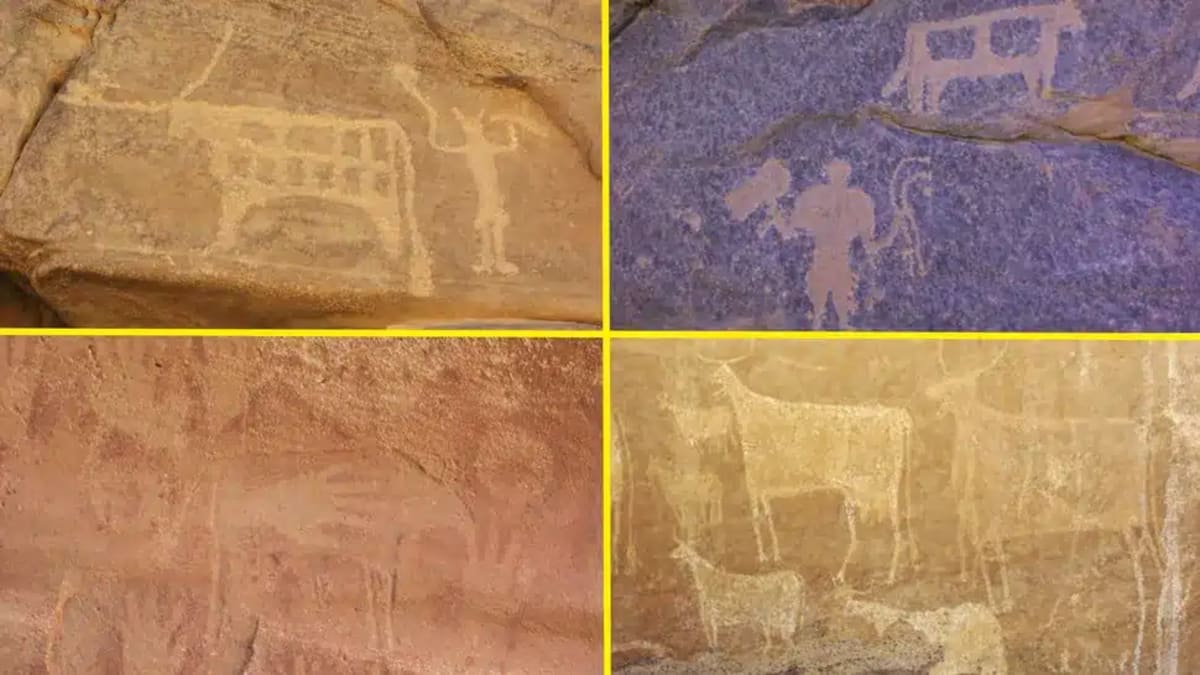
Mount Arkanu holds more than geological secrets. Ancient petroglyphs carved into the massif's walls show cattle, giraffes, and human figures, discovered in 2003. These carvings prove the mountain has sheltered people and their herds for thousands of years.
Bedouin nomads still use Mount Arkanu the same way their ancestors did, bringing cattle into its protective rings to escape the desert heat. Herders would block gaps in the rock walls and spend months at a time in this natural fortress. The ancient artwork and modern practices reveal an unbroken connection between people and this extraordinary landscape.
The Bright Side
Despite sitting in one of Earth's most arid regions, Mount Arkanu sustains surprising life. The mountain receives between 5 to 10 millimeters of rain annually, thanks to orographic precipitation that happens when moist air rises over the peaks. That's double the rainfall of the surrounding desert.
This slight increase supports grasses, bushes, and small trees that create a rare oasis for wildlife and herders. Wadis, or ghost rivers, occasionally flood after rains and carve through the rocky walls, feeding this delicate ecosystem. In a landscape where water means survival, Mount Arkanu's unique geology creates a lifeline.
The discovery shows how much our own planet can still surprise us, offering beauty and resources in the most unexpected places.
More Images
Based on reporting by Google: NASA discovery
This story was written by BrightWire based on verified news reports.
Spread the positivity!
Share this good news with someone who needs it