NASA Spacecraft Changes Asteroid's Path Around the Sun
For the first time ever, humans have measurably shifted the orbit of a celestial body around the Sun. When NASA deliberately crashed a spacecraft into an asteroid in 2022, the impact changed the path of not just one asteroid, but two.
Humanity just proved we can protect Earth from dangerous asteroids, and the results are even better than scientists hoped.
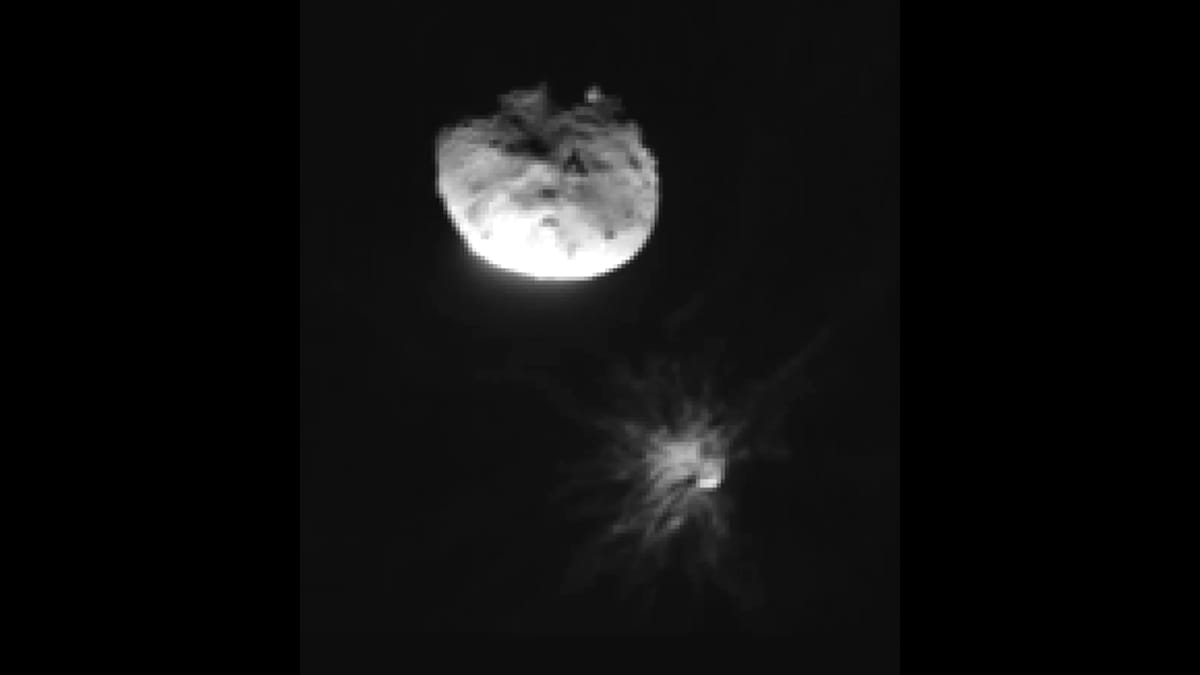
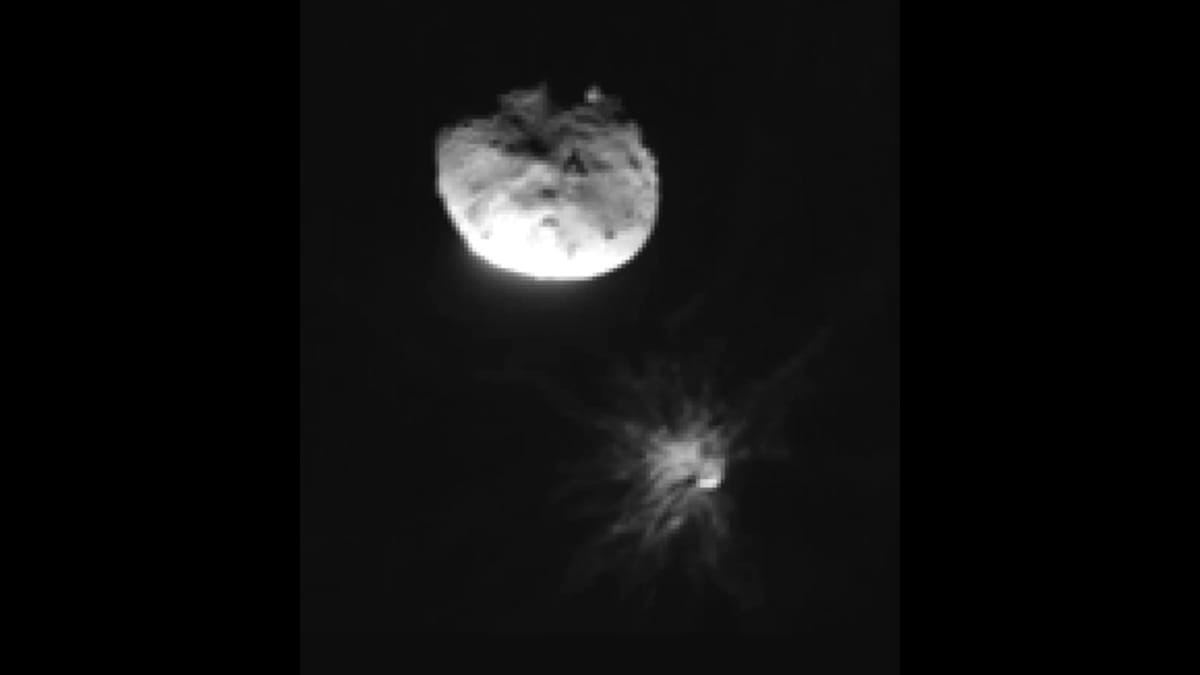
In September 2022, NASA's DART spacecraft deliberately smashed into Dimorphos, a small asteroid about the size of a football stadium. The goal was simple: see if we could nudge an asteroid off course by crashing into it. The results, published this week, exceeded expectations.
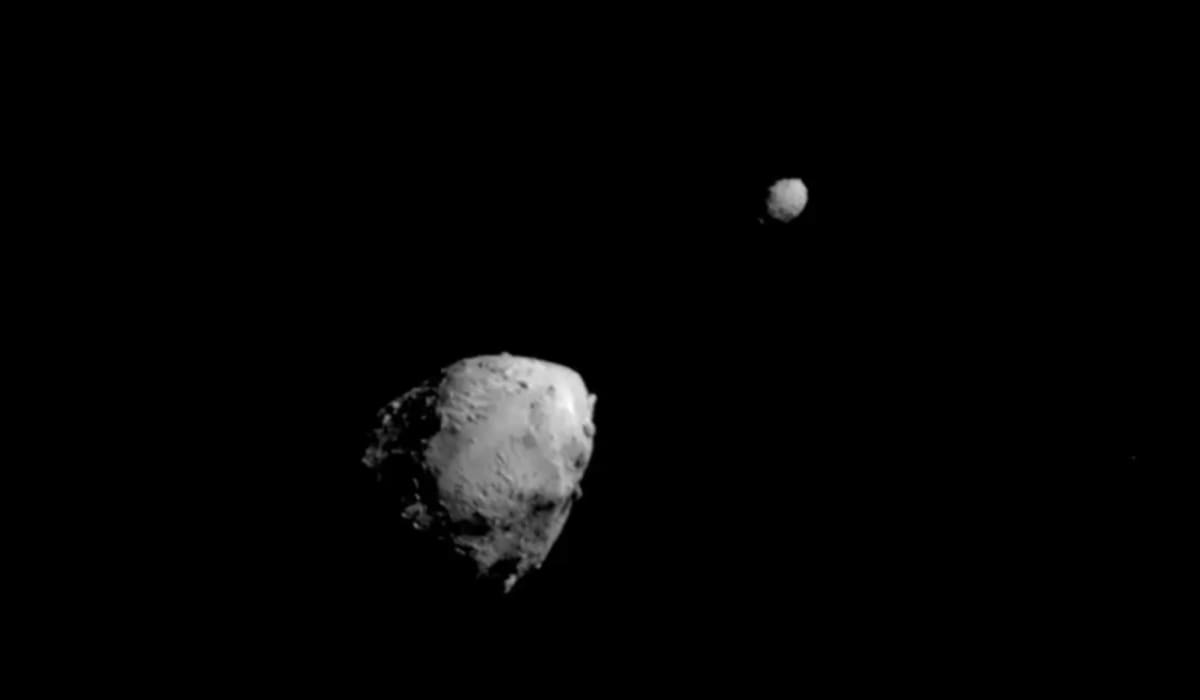
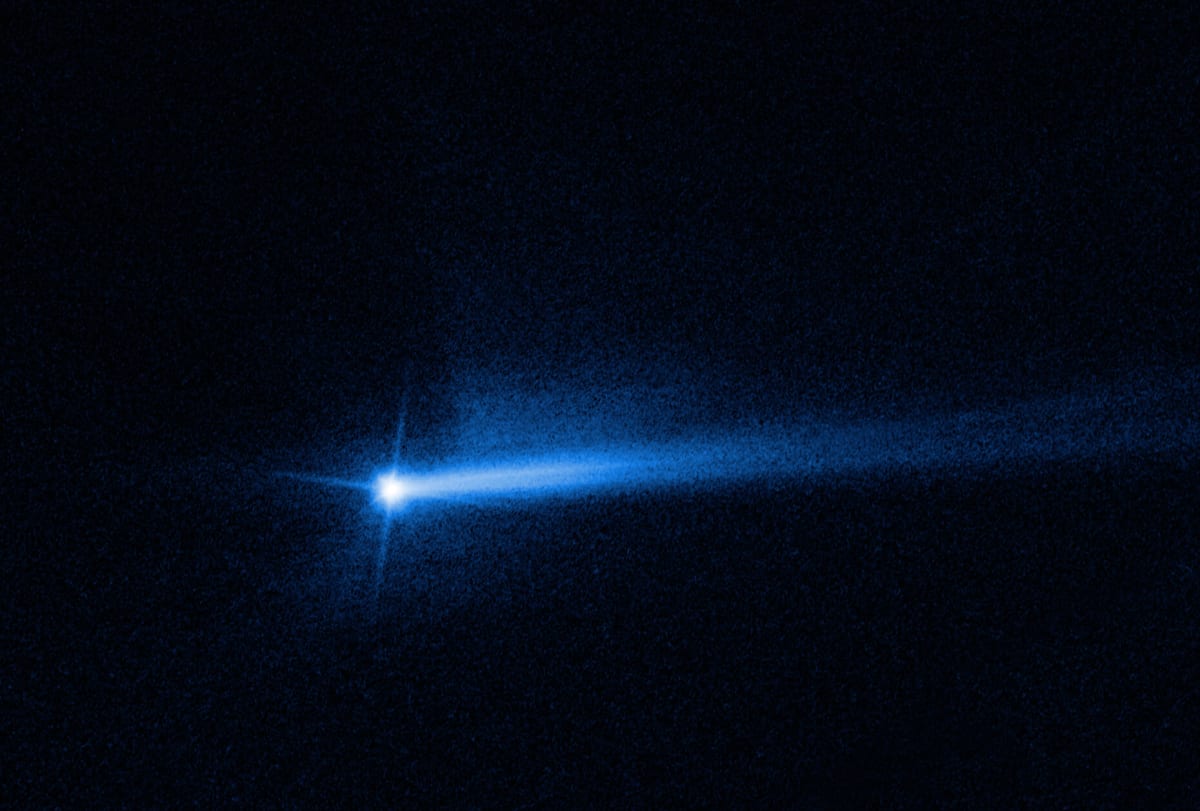
The impact didn't just change Dimorphos itself. Because Dimorphos orbits alongside its larger partner asteroid Didymos in what scientists call a binary system, the crash affected both space rocks. New research shows the collision actually shifted the pair's orbit around the Sun by 0.15 seconds.
That might sound tiny, but it's historic. This marks the first time a human-made object has measurably changed the path of any celestial body around the Sun.
The secret was in the debris. When DART hit Dimorphos, it blasted a massive cloud of rocky material into space. That debris carried its own momentum, giving the asteroid an extra push that doubled the spacecraft's punch.
Lead researcher Rahil Makadia from the University of Illinois explains the asteroid's speed changed by just 1.7 inches per hour. But over time, even that small shift could make the difference between a hazardous asteroid hitting or missing Earth entirely.
The crash shortened Dimorphos' orbit around Didymos by 33 minutes. Scientists tracked the change using ground-based telescopes and a technique called stellar occultation, where they watched the asteroids pass in front of distant stars and measured the tiny flickers of light.
Neither Didymos nor Dimorphos posed any threat to Earth, and the test couldn't have put them on a collision course. That's exactly why NASA chose them for this planetary defense test.
Why This Inspires
This breakthrough validates that humanity has the technology to protect itself from asteroid impacts. While Hollywood has dramatized this scenario for decades, we now have real proof that kinetic impact works as a defensive strategy.
The key is early detection. NASA is already building the Near-Earth Object Surveyor, a next-generation space telescope specifically designed to hunt for potentially dangerous asteroids. This mission will search for the hardest-to-find objects, including dark asteroids and comets that don't reflect much visible light.
Scientists emphasize that finding threatening asteroids years or decades in advance gives us time to send a kinetic impactor spacecraft. The DART mission proves that given enough warning, we have the tools to deflect danger.
We just became the first species capable of intentionally protecting our planet from cosmic threats.
More Images
Based on reporting by Google News - Science
This story was written by BrightWire based on verified news reports.
Spread the positivity!
Share this good news with someone who needs it