NASA Telescope to Find Invisible Stars Hiding in Our Galaxy
NASA's upcoming Roman Space Telescope will hunt for tens of millions of hidden neutron stars scattered throughout the Milky Way using a breakthrough detection method. Even finding just one would transform our understanding of how stars die and extreme matter behaves.
Scientists are about to solve one of astronomy's biggest mysteries: where millions of invisible stars are hiding in our own galaxy.
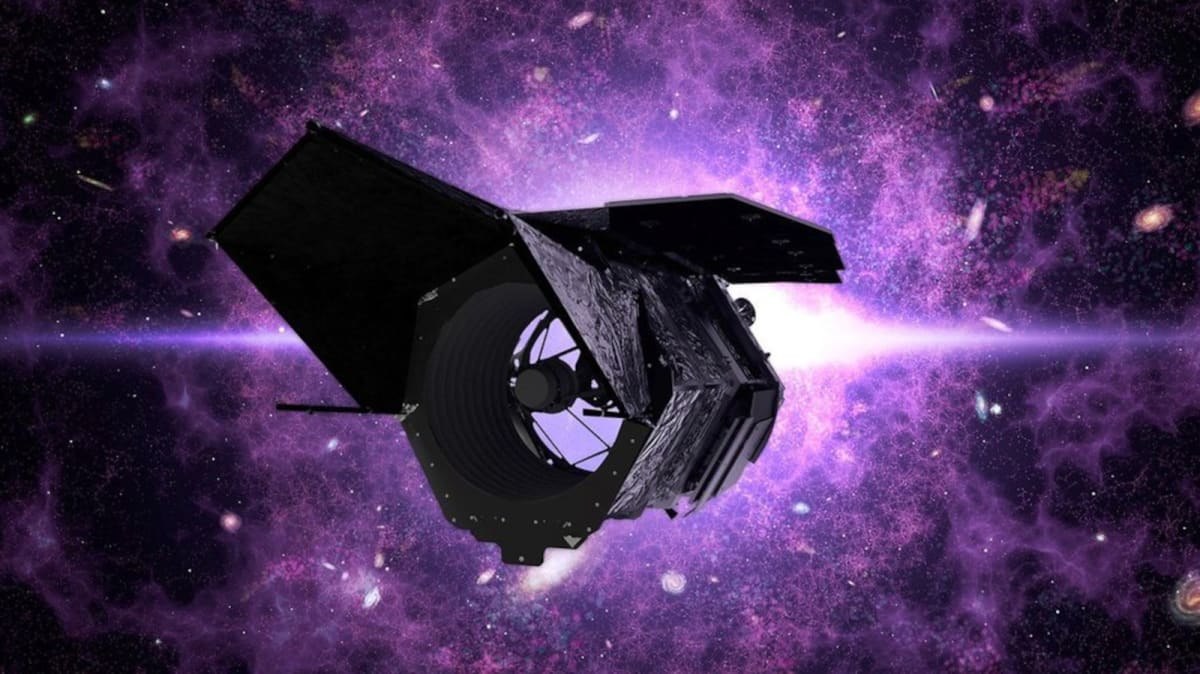
NASA's Nancy Grace Roman Space Telescope, launching soon, will search for neutron stars that have remained hidden from every telescope ever built. These crushed stellar cores pack more mass than our Sun into a sphere the size of a city, but most are too dim to spot directly.
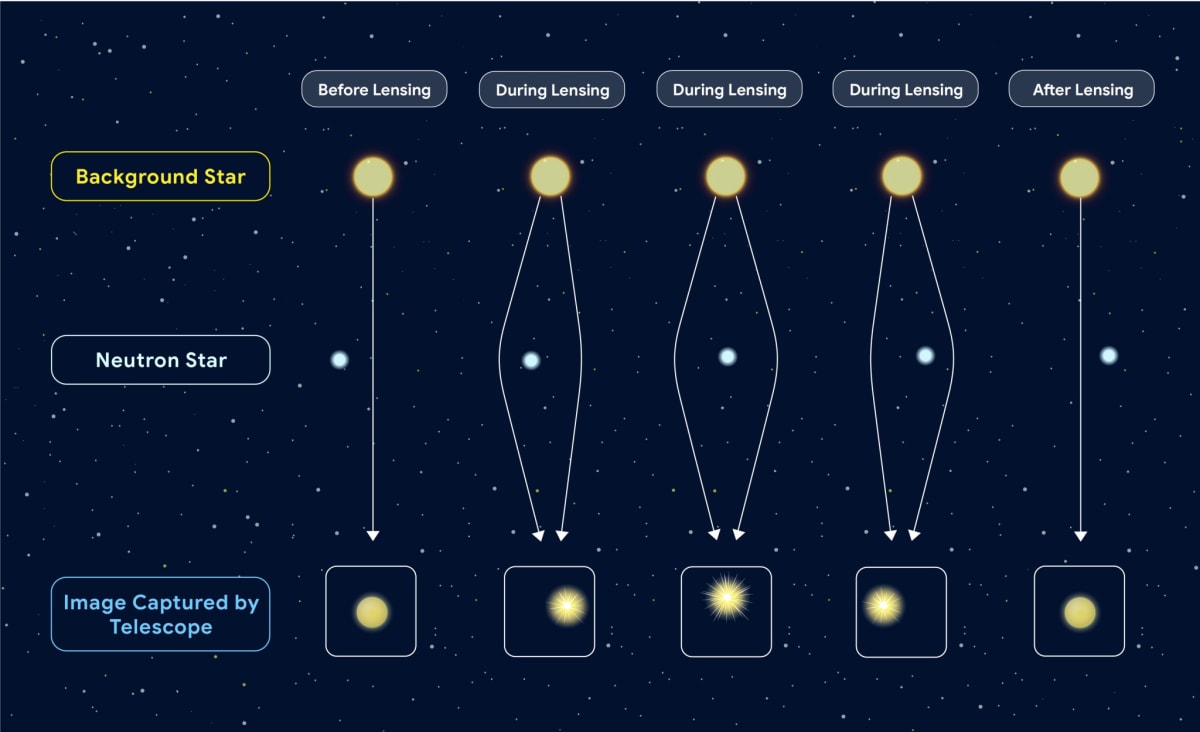
The secret weapon is something called gravitational microlensing. When a neutron star passes in front of a distant background star, its intense gravity bends spacetime and shifts the star's position slightly. Roman can measure that tiny shift with exceptional precision.
"What's really cool about using microlensing is that you can get direct mass measurements," said Peter McGill of Lawrence Livermore National Laboratory, who co-authored the new study. The amount of shift directly reveals how heavy the invisible object is.
Scientists estimate tens of millions to hundreds of millions of neutron stars exist in the Milky Way. So far, we've only found a few thousand, mostly pulsars that beam radio waves. This new approach could reveal dozens more within the first few months after the telescope starts operating.
Why This Inspires
Finding these hidden stars matters for more than just cosmic inventory. Neutron stars help us understand how massive stars explode, how heavy elements spread through space, and what happens under the most extreme conditions imaginable.
Right now, astronomers can only measure neutron star masses when they're paired with another star. "We're seeing a small sample that's not representative of the big picture," said lead researcher Zofia Kaczmarek of Heidelberg University. "Even a single mass measurement would be very powerful."
The discovery could also solve whether there's a true gap between neutron star and black hole masses, something scientists have debated for years. Roman will weigh these invisible objects by watching how they warp light from distant stars.
The best part? This wasn't even in the original mission plan. Roman was designed to find exoplanets, but its powerful precision opened the door to entirely new science. "We're going to get to work as soon as the data start coming in," McGill said.
Sometimes the most transformative discoveries come from looking at the universe in completely new ways.
More Images



Based on reporting by NASA
This story was written by BrightWire based on verified news reports.
Spread the positivity!
Share this good news with someone who needs it