NASA Telescopes Reveal Saturn's Most Detailed Images Ever
Two NASA telescopes working together have captured the most detailed view of Saturn ever seen, revealing secrets hidden in the planet's swirling atmosphere. The combined observations show scientists exactly how Saturn's weather works in stunning new ways.
Saturn has never looked better, and the images are giving scientists answers they've waited decades to find.
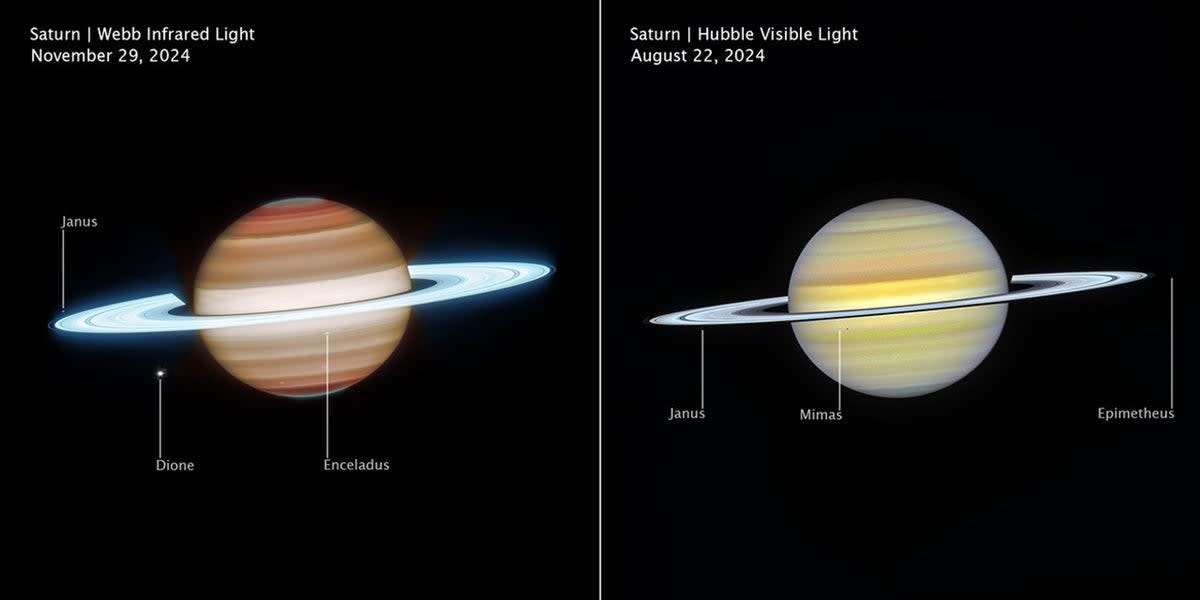
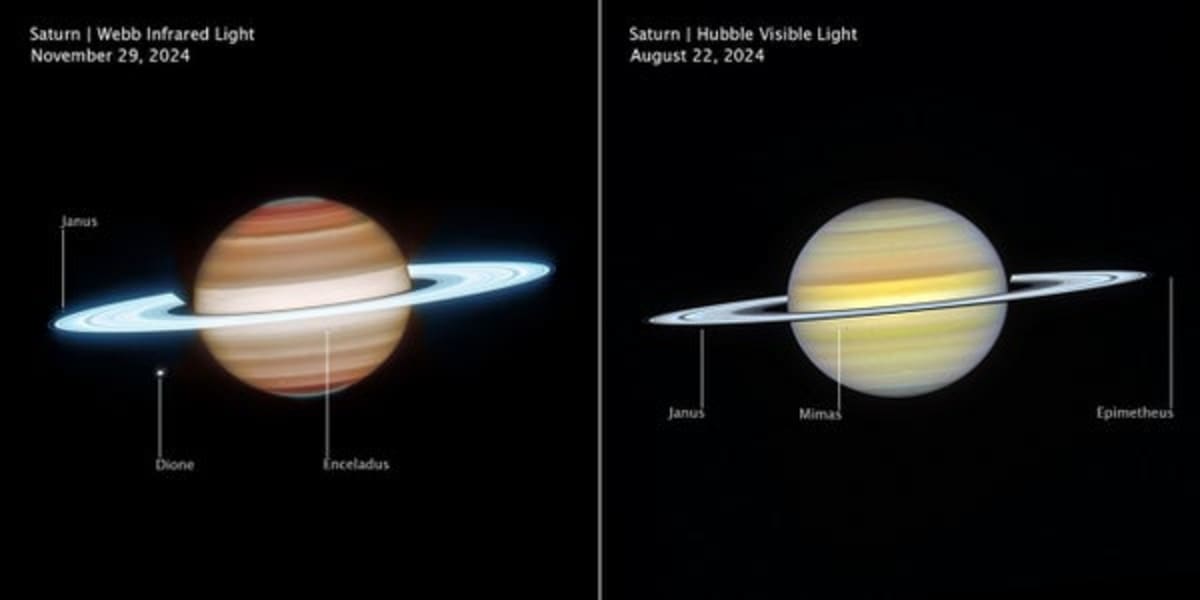
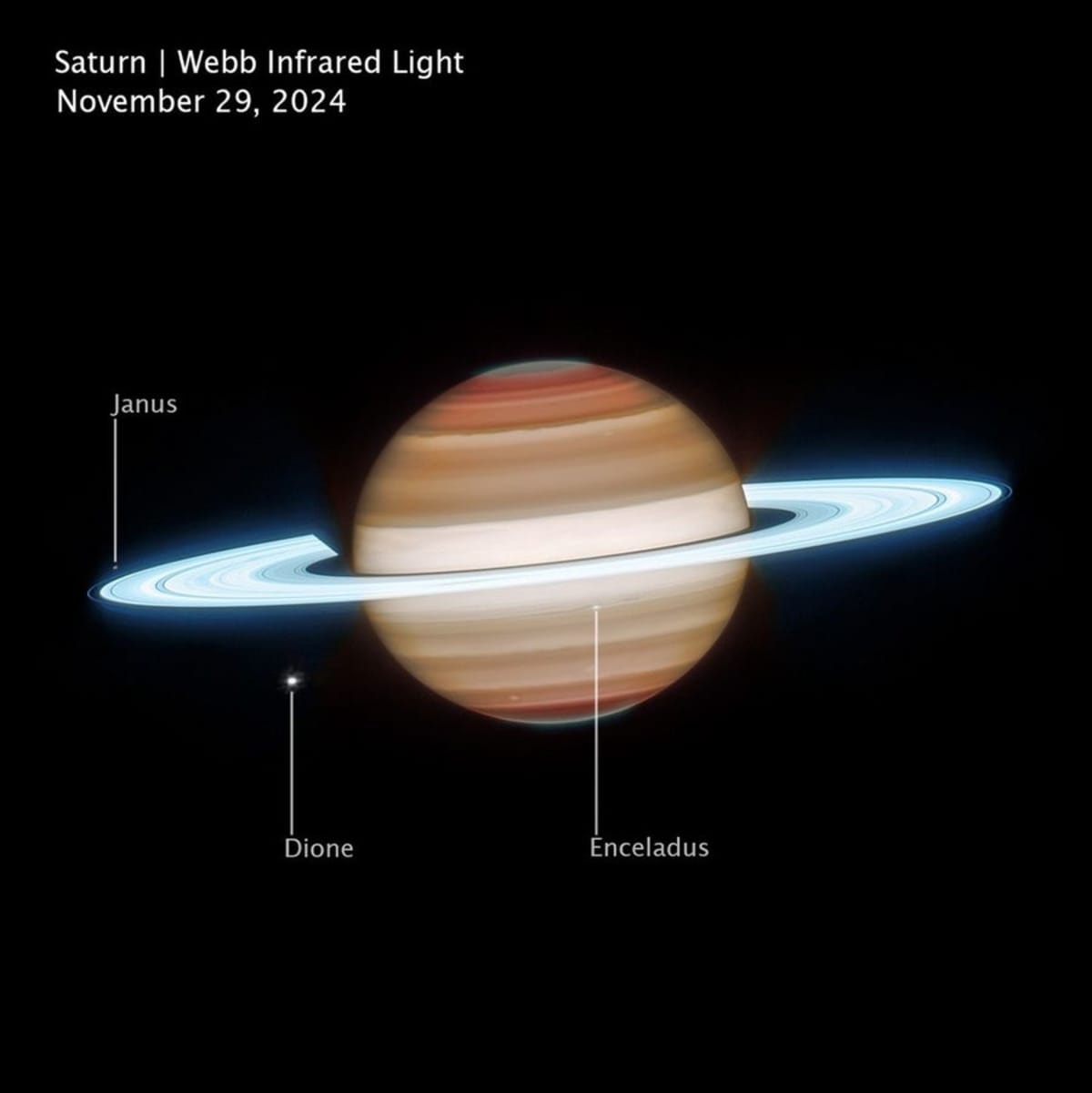
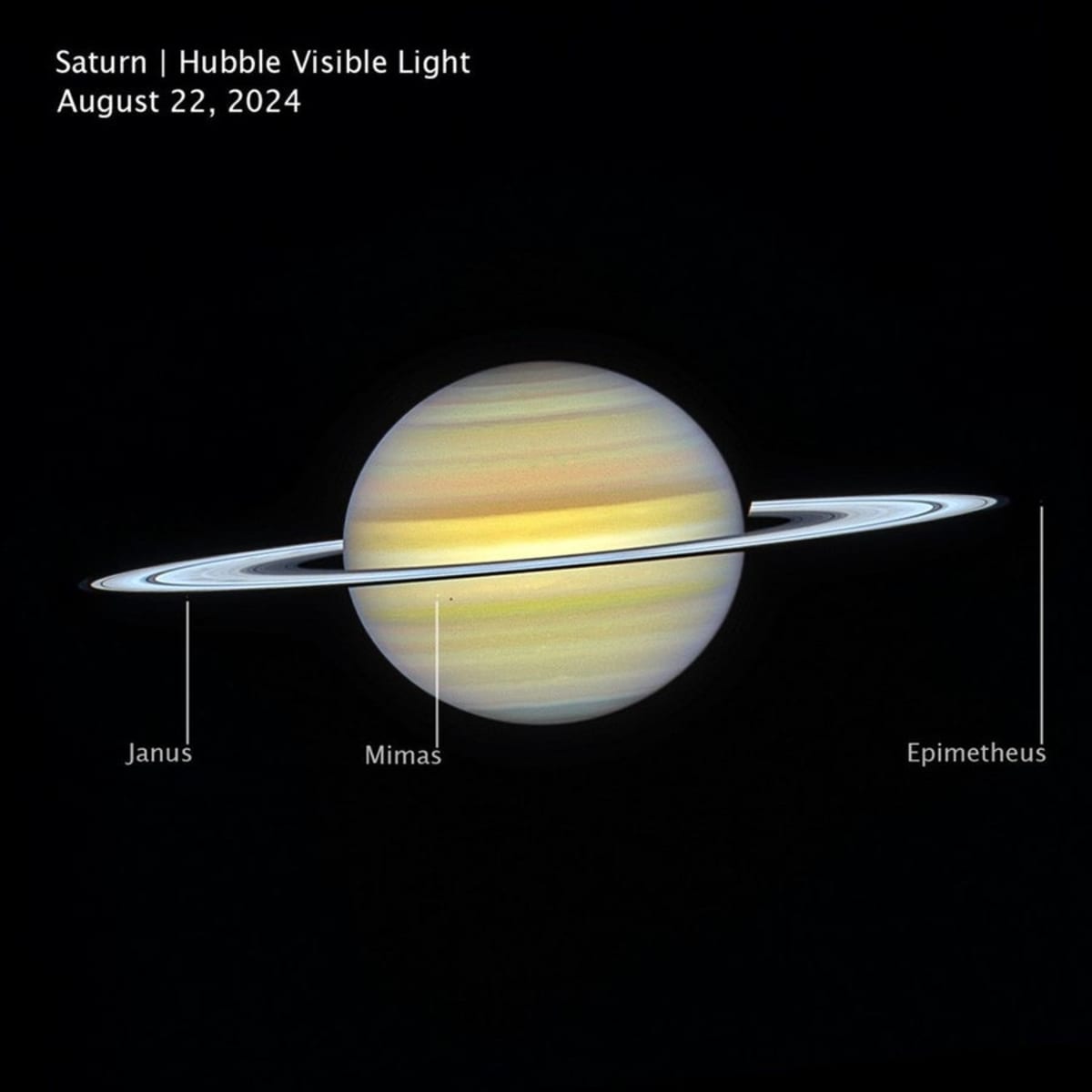
NASA's Hubble and James Webb Space Telescopes teamed up to photograph Saturn from two different perspectives, creating the most complete view of the ringed planet in history. Hubble captured the planet's familiar golden yellows in visible light, while Webb peered through infrared to see deeper into Saturn's atmosphere than ever before.
The images, taken in late 2024, reveal swirling jet streams, storm remnants, and a mysterious greenish glow around Saturn's poles. Scientists think that glow might be auroras similar to Earth's northern lights, but they're still investigating.
What makes these observations special is how the two telescopes work together like a tag team. Hubble launched in 1990 and sees Saturn the way our eyes would. Webb, which launched in 2021, can see through atmospheric layers using infrared light. Together, they let scientists slice through Saturn's atmosphere at different depths, like peeling an onion one layer at a time.
The golden hues that make Saturn so recognizable come from ammonia crystals and methane reflecting sunlight. Webb's infrared vision reveals what's happening underneath those colorful clouds, showing how Saturn's atmosphere moves and changes as one connected system in three dimensions.
Saturn's famous rings shine brilliantly in both images, lit up by the sun. Made of dust and rocky ice, they frame the turbulent atmosphere in ways that highlight just how dynamic this giant planet really is.
Why This Inspires
These images represent more than just pretty pictures of space. They show what happens when we combine old and new technology to answer questions we couldn't tackle alone. Hubble has watched Saturn for over three decades, building a timeline of how the planet changes. Adding Webb's capabilities means scientists can now understand not just what Saturn looks like, but how its mysterious atmosphere actually works over time.
The collaboration proves that newer doesn't always mean better. Sometimes the biggest breakthroughs come from using every tool we have, working together.
Scientists will continue studying these images to understand how Saturn's weather patterns evolve and what drives the planet's atmospheric changes. Each new observation adds another piece to the puzzle of how gas giants work, both in our solar system and around distant stars.
The universe just got a little less mysterious, one stunning image at a time.
More Images
Based on reporting by Google: James Webb telescope
This story was written by BrightWire based on verified news reports.
Spread the positivity!
Share this good news with someone who needs it