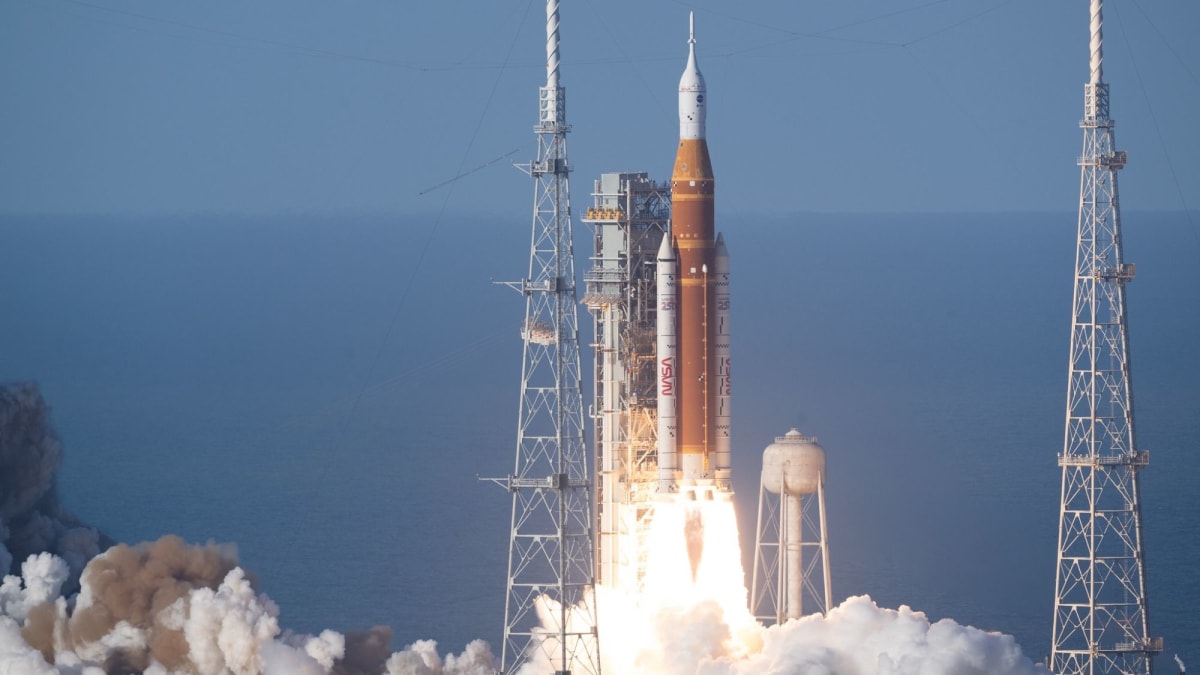
NASA's Artemis 2 Crew Hours From Historic Moon Journey
Four astronauts orbiting Earth are about to become the first humans to leave low Earth orbit in over 50 years. Tonight's engine burn will send them on a historic loop around the moon.
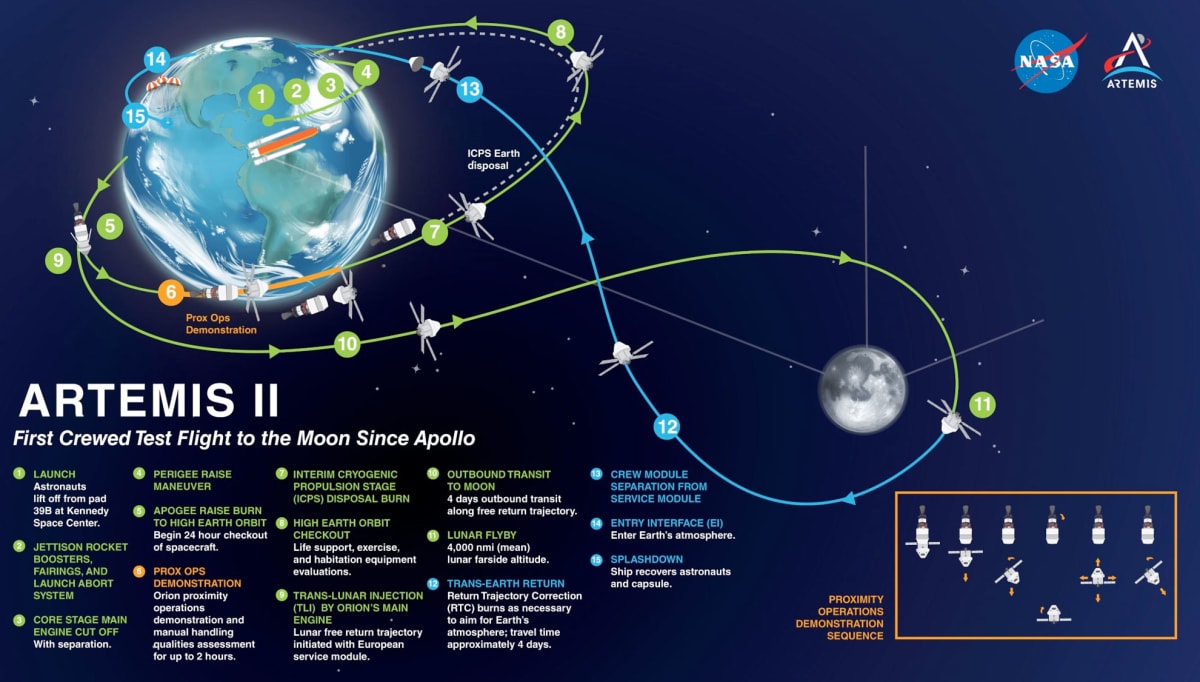
Four astronauts launched Wednesday from Florida are now circling Earth, waiting for the moment that will make history. Tonight at 8:12 p.m. EDT, their Orion capsule will fire its engine and send them toward the moon for the first time in over half a century.
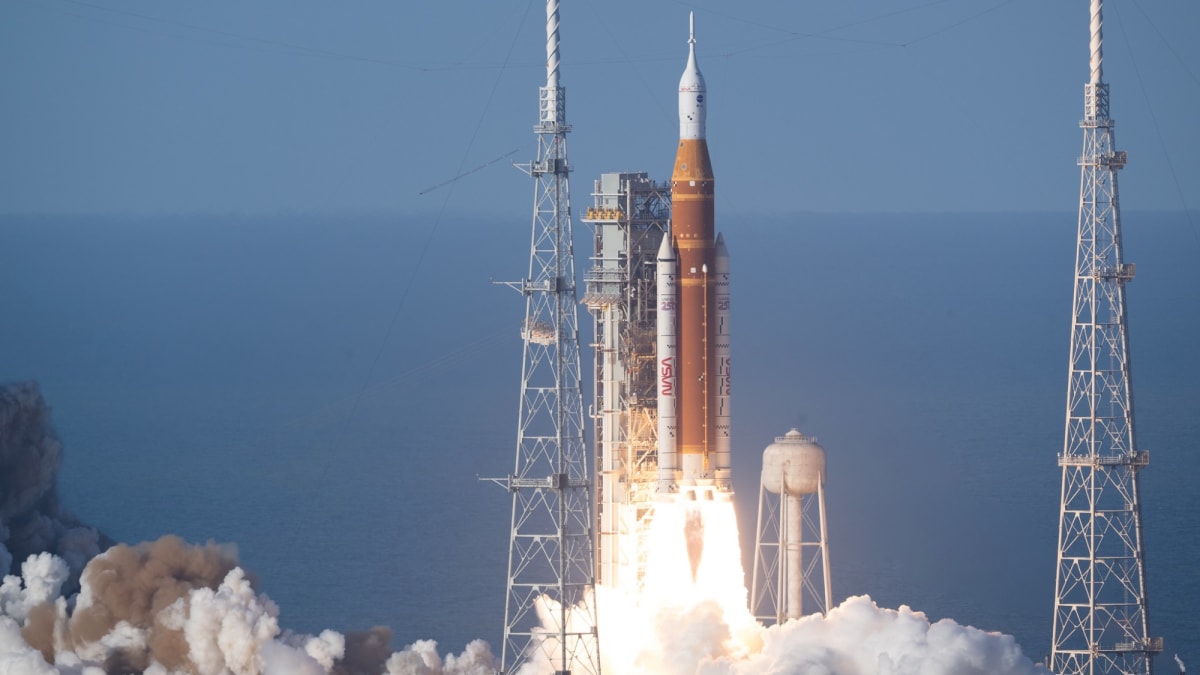
NASA's Artemis 2 mission lifted off Wednesday evening, carrying astronauts Reid Wiseman, Victor Glover, Christina Koch, and Canadian Space Agency's Jeremy Hansen into orbit. But the real journey begins tonight with what engineers call a translunar injection burn.
"That puts us outbound to the moon. That's a real big commitment point," said Norm Knight, director of NASA's Flight Operations Directorate. The burn happens 25 hours and 37 minutes after launch, propelling the crew on a figure-eight path around our nearest neighbor.
Since launch, Mission Control and the astronauts have been testing every system on Orion. They're checking life support, communications, and backup systems to make sure everything works perfectly before committing to deep space.
"We assure that those are functional, because once we commit to TLI, they have to function," Knight explained. This afternoon, the mission management team will meet to decide whether Orion is ready for the crucial burn.
If anything isn't working right, the mission stays in Earth orbit. But if they get the green light, Wiseman, Glover, Koch, and Hansen will become the first people to travel beyond low Earth orbit since Apollo 17 in 1972.
The translunar injection burn does double duty. It launches the crew toward the moon and simultaneously sets up their path home, essentially serving as their return burn too.
The Ripple Effect
This mission isn't just about breaking a 54-year record. The four astronauts will fly by the moon on Day 6 and splash down on Day 10, gathering vital experience for what comes next.
NASA plans to land astronauts on the lunar surface by 2028 on Artemis 4. A few years after that, crews will start building a base near the moon's south pole, establishing humanity's first permanent foothold beyond Earth.
The diverse crew represents a new era of space exploration. Glover will be the first Black astronaut to travel to the moon, Koch one of the first women, and Hansen the first Canadian to venture into deep space.
Every system check today, every data point collected, helps engineers prepare for those future missions. The lessons learned from this ten-day journey will shape how humans live and work in space for generations.
Tonight's engine burn opens the door to humanity's next giant leap.
More Images


Based on reporting by Space.com
This story was written by BrightWire based on verified news reports.
Spread the positivity!
Share this good news with someone who needs it