NASA's Artemis II: 4 Astronauts Return to Moon in April
NASA is launching four astronauts on a 10-day journey around the moon as early as this week, marking America's most ambitious space mission in over 50 years. The crew will live in a capsule the size of a small bathroom, testing everything needed for future lunar landings. ---
Four astronauts are about to squeeze into a space capsule and fly around the moon, and they're going to love every cramped minute of it.
NASA plans to launch the Artemis II mission as soon as Wednesday evening, sending a crew on humanity's first lunar voyage since 1972. The 10-day flight represents the biggest leap in American space exploration in decades, paving the way for astronauts to eventually land on the moon again.
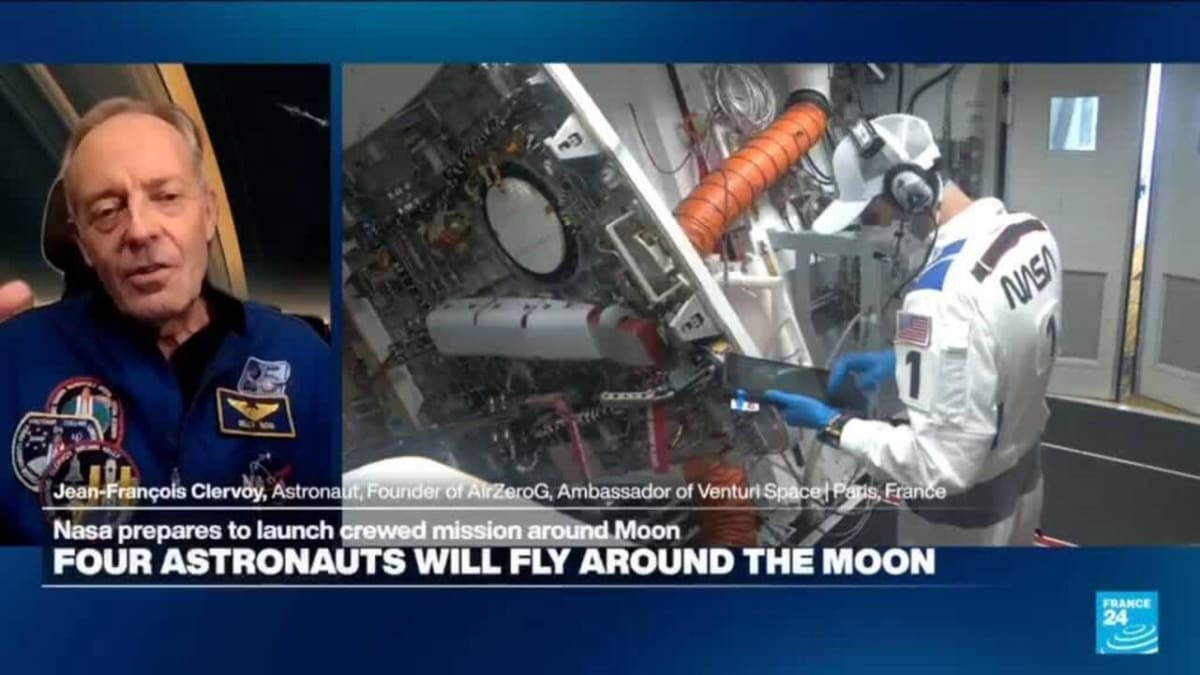
But first, these four spacefarers need to survive living together in extremely close quarters. Astronaut Jean-François Clervoy, founder of Air Zero G and a veteran of three space shuttle missions, describes life aboard the Orion capsule perfectly: "Like a camping trip, but everything needs to be attached."
The Artemis II capsule offers roughly 316 cubic feet of habitable space. That's smaller than most walk-in closets, and four people will call it home for more than a week while circling the moon.
Clervoy knows from experience that personality conflicts can make or break a mission. "The four astronauts better get along with each other," he told France 24. In that confined environment, there's nowhere to escape for alone time, no separate rooms for privacy, and every floating object becomes everyone's problem.
The crew will test critical systems needed for Artemis III, the mission planned to actually land astronauts on the lunar surface. They'll verify life support, navigation, communication arrays, and the heat shield that must protect them during their fiery return to Earth at over 24,000 miles per hour.
This mission also marks a symbolic return to bold space exploration. The last time humans ventured beyond low Earth orbit was Apollo 17 in December 1972. An entire generation has grown up knowing space travel only as astronauts circling a few hundred miles above Earth aboard the International Space Station.
Why This Inspires
The Artemis program represents more than nostalgia for the Apollo era. NASA designed these missions to establish a sustainable human presence on and around the moon, creating a stepping stone for eventual Mars exploration.
Unlike the Apollo program, Artemis aims to land the first woman and first person of color on the lunar surface. The program also involves international partnerships and commercial companies, spreading both the costs and the opportunities across more nations and organizations than ever before.
The cramped quarters that Clervoy describes highlight an often-overlooked truth about space exploration: it requires not just technological brilliance but profound human cooperation. Four people choosing to trust each other completely while hurtling through the void demonstrates something beautifully human.
These astronauts will see views no living person has witnessed. They'll watch Earth rise over the lunar horizon, a perspective that profoundly changed every Apollo astronaut who experienced it. Many Apollo crews described that sight as spiritually transformative, seeing our entire world as a fragile blue marble suspended in infinite darkness.
The mission timeline aims for a Wednesday evening launch, though space missions often shift based on weather and technical factors. Once they leave Earth's orbit, the crew will loop around the moon's far side before returning home roughly 10 days later.
Every system test, every successfully completed objective on Artemis II brings humanity closer to walking on the moon again. And this time, the goal isn't just to plant flags and return home, but to stay, to build, and to use the moon as a gateway to destinations farther out in our solar system.
Four astronauts in a tiny capsule are about to remind us that the sky isn't the limit anymore.
---
More Images


Based on reporting by France 24 English
This story was written by BrightWire based on verified news reports.
Spread the positivity!
Share this good news with someone who needs it