NASA's Artemis II Returns After Historic Moon Mission
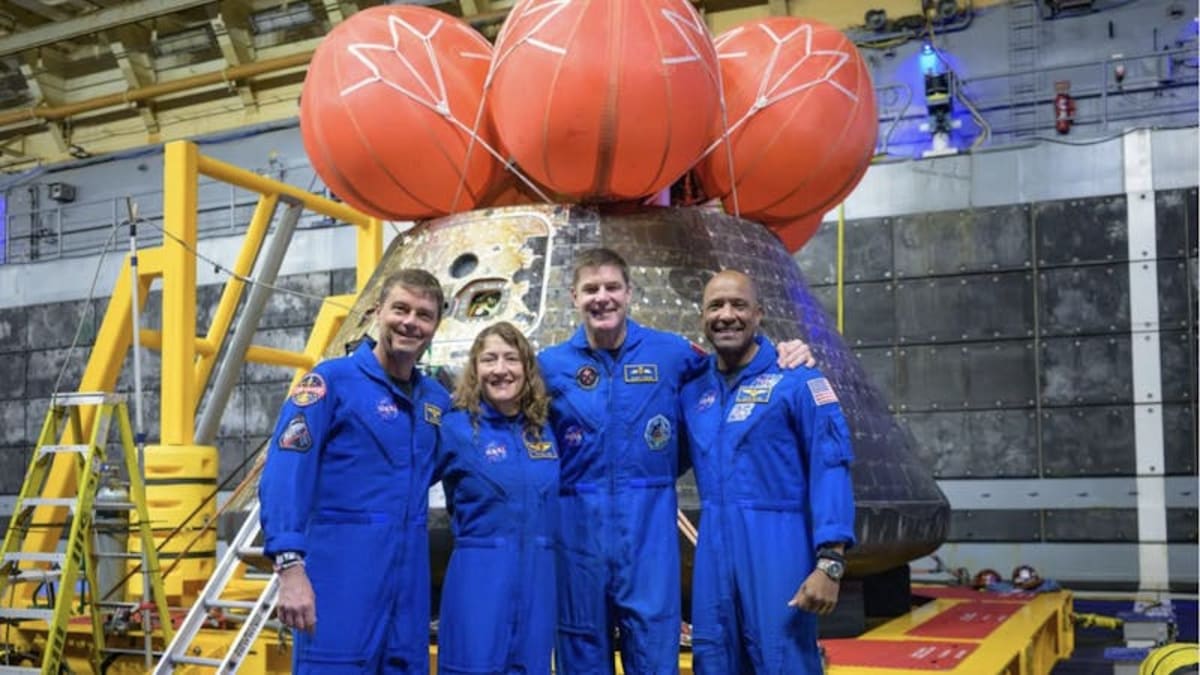
Four astronauts just splashed down off San Diego after circling the Moon, marking humanity's first lunar mission in over 50 years. The crew traveled farther from Earth than any humans in history and captured stunning images of the Moon's unexplored south pole.
Four astronauts made history Friday evening when their spacecraft splashed into the Pacific Ocean off San Diego, completing the first crewed journey around the Moon in more than half a century.
The Artemis II mission spent 10 days in space, sending its crew on a figure-eight path around the far side of the Moon before returning safely home. During the journey, they shattered the record for the farthest distance humans have ever traveled from Earth.
The Orion spacecraft performed flawlessly throughout the mission, proving it can protect human life in the harsh environment of deep space. The crew documented never-before-seen photographs of the Moon's far side, including detailed images of the south pole.
These images captured the Moon's Permanently Shadowed Regions, craters that haven't seen sunlight in over a billion years. Scientists believe these ancient shadows could hold water ice, a resource that would be crucial for future space exploration.
The Ripple Effect
This mission represents far more than a trip around the Moon. NASA designed Artemis II as a proving ground for technology that will eventually send humans to Mars.
"Artemis is all about testing and improving the technology needed for longer, more demanding missions," said Lindsay Pojdasek, a Ph.D. student in Earth and Planetary Sciences at Rutgers University. "The moon is an ideal testing ground due to its proximity to Earth and confirmed surface resources like water ice."
The mission's success opens the door for longer, more ambitious journeys into deep space. Every system tested on this flight brings us closer to establishing a permanent human presence beyond Earth.
Young scientists and space enthusiasts now have a new generation of exploration to look up to. After decades of robotic missions, humans are once again venturing beyond Earth's orbit and pushing the boundaries of what's possible.
It's incredibly inspiring to begin a new wave of space exploration.
More Images


Based on reporting by Google: space mission success
This story was written by BrightWire based on verified news reports.
Spread the positivity!
Share this good news with someone who needs it