NASA's Artemis II Takes 4 Astronauts to the Moon in 2025
For the first time in over 50 years, humans are heading back to the moon. NASA's Artemis II mission launches as early as February 8, carrying four astronauts farther from Earth than anyone has ever traveled.
After more than half a century of waiting, humanity is finally returning to the moon's neighborhood. NASA's Artemis II mission will send four astronauts on a 10-day journey around the lunar far side, marking the first crewed mission beyond low Earth orbit since 1972.
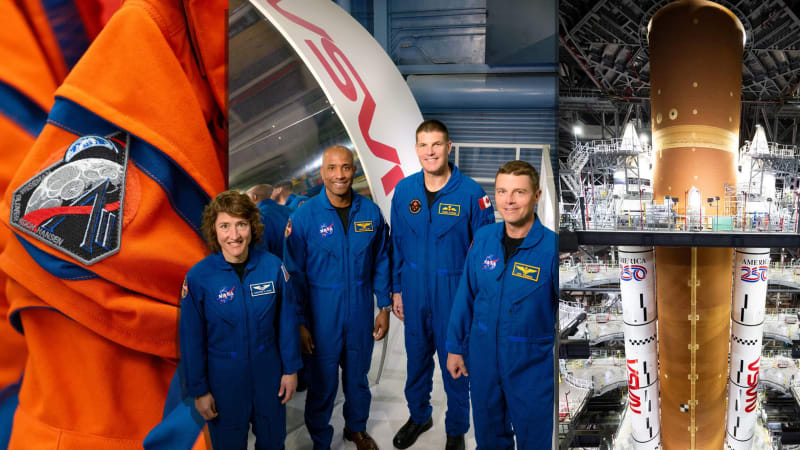
The crew includes NASA astronauts Reid Wiseman, Victor Glover, and Christina Koch, plus Canadian Space Agency astronaut Jeremy Hansen. They'll travel an incredible 230,000 miles from home aboard the Orion spacecraft, breaking the distance record for human spaceflight.
Launching from Kennedy Space Center, the mission uses NASA's powerful Space Launch System rocket, which generates 15% more thrust than the historic Apollo Saturn V. After reaching orbit, the astronauts will test critical systems that future missions to the moon and Mars will depend on.
This isn't just a victory lap around the moon. The crew will evaluate life support systems, practice docking maneuvers for future lunar landers, and test radiation shielding that will keep astronauts safe on longer journeys.
The astronauts will also become citizen scientists in space. They'll deploy four small CubeSats to measure space weather and monitor their own health using wearable devices tracking sleep, stress, movement, and radiation exposure. These biomarker readings will help NASA optimize future missions and protect astronaut wellbeing.
The Ripple Effect
Artemis II represents the foundation for something much bigger than a single mission. NASA and its international partners are building toward sustained human presence on the moon, establishing a lunar economy, and eventually sending people to Mars.
The mission also shows how far space exploration has evolved. While Apollo proved we could reach the moon, Artemis is proving we can stay there and use it as a stepping stone to the rest of the solar system.
"This will be our first step toward sustained lunar presence on the moon," said John Honeycutt, the mission management team chair. After six days of testing and lunar observation, the crew will use the moon's gravity to slingshot back to Earth for a splashdown off San Diego's coast.
A new generation gets to witness what their grandparents saw in 1969: humans venturing to another world, proving once again that our greatest achievements happen when we dare to reach beyond what we thought possible.
More Images

Based on reporting by Fast Company
This story was written by BrightWire based on verified news reports.
Spread the positivity!
Share this good news with someone who needs it