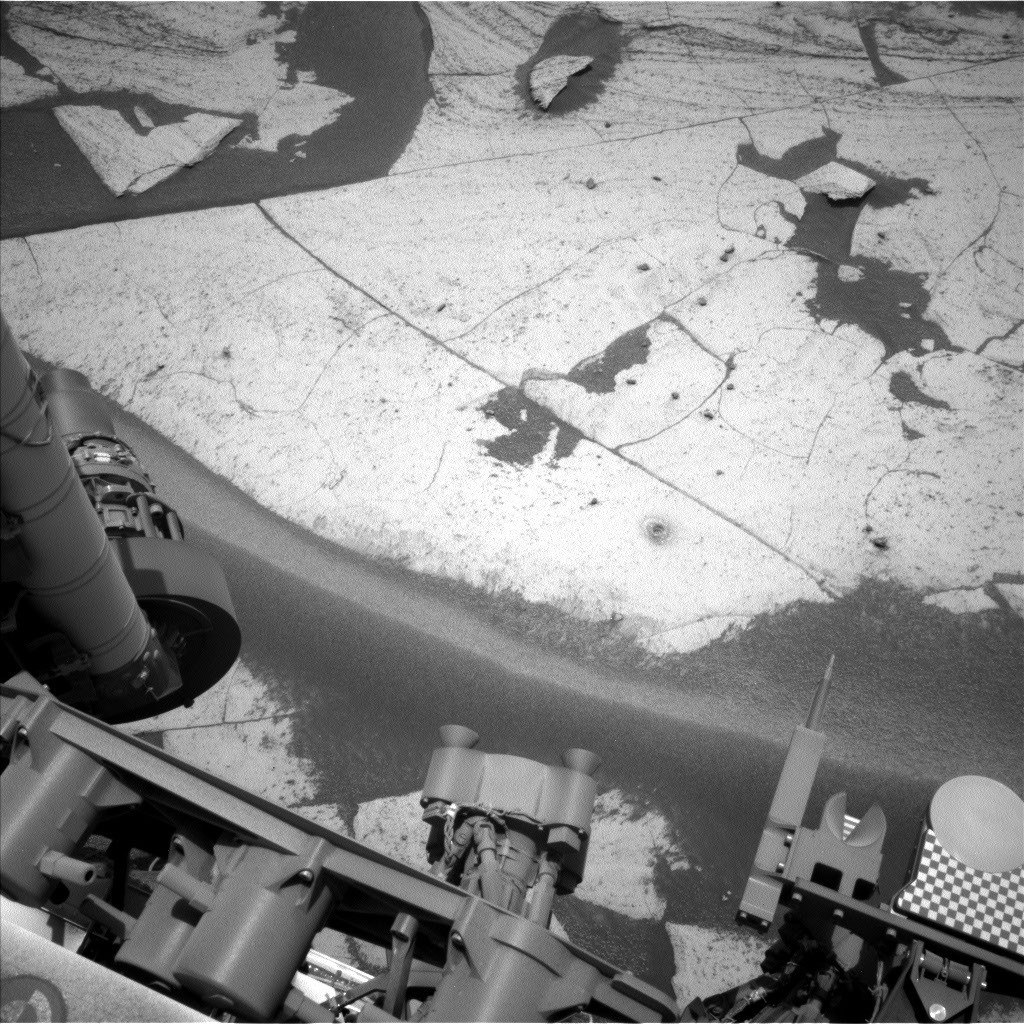
NASA's Curiosity Rover Analyzes Ancient Mars Rock Samples
NASA's Curiosity rover just completed its most advanced laboratory work yet, analyzing drill samples from Mars to unlock secrets about the Red Planet's ancient past. The rover's high-tech instruments are searching for clues about whether Mars could have once supported life.
NASA's Curiosity rover is living up to its "Mars Science Laboratory" name in the best possible way, conducting sophisticated chemical analysis on Martian rock samples that could reveal whether the Red Planet ever hosted life.
The rover recently drilled into a site called "Basque Lakes" and spent the past week running the sample through two of its most powerful instruments. CheMin analyzed the rock's mineral composition while SAM measured volatile compounds using its tunable laser spectrometer.
This laboratory work represents the pinnacle of Curiosity's mission. While the rover regularly captures stunning images and gathers surface measurements, it's only during these drill campaigns that scientists can truly peek inside ancient Martian rocks to understand what conditions were like billions of years ago.
The process takes significant power and careful coordination. CheMin's results determined whether SAM should proceed with deeper analysis, and SAM is now deciding if a follow-up mass spectrometry test is warranted next week. It's like watching scientists work in real time, except their laboratory is 140 million miles away.
Between lab sessions, Curiosity stayed busy documenting its surroundings. The rover captured a complete 360-degree panorama to show the geological context of where it drilled, and analyzed everything from sand ripples to mysterious gray rock fragments scattered near the workspace.
The team also conducted photometry observations throughout the day, measuring how Mars rocks look different as sunlight angles change. These measurements help scientists better interpret both rover images and photos taken from orbiting spacecraft, creating a more complete picture of Mars.
Why This Inspires
Curiosity has been exploring Mars since 2012, and it's still making discoveries that could answer one of humanity's biggest questions: are we alone in the universe? Each drill sample brings us closer to understanding whether Mars once had the right conditions for life.
The rover's persistence mirrors the dedication of the hundreds of scientists and engineers who plan its activities from Earth. They're methodically building a geological story of Mars, one carefully analyzed rock sample at a time.
This week's work shows that even after years on Mars, Curiosity remains a cutting-edge mobile laboratory conducting world-class science on another planet.
Scientists will review SAM's volatile measurements before deciding on next steps, continuing humanity's patient, methodical search for answers written in Martian stone.
More Images


Based on reporting by NASA
This story was written by BrightWire based on verified news reports.
Building Something New? Try the BrightWire Tech Stack Advisor
Compare modern frameworks, cloud hosting, and AI tools tailored to your project budget and scale.
Spread the positivity!
Share this good news with someone who needs it

