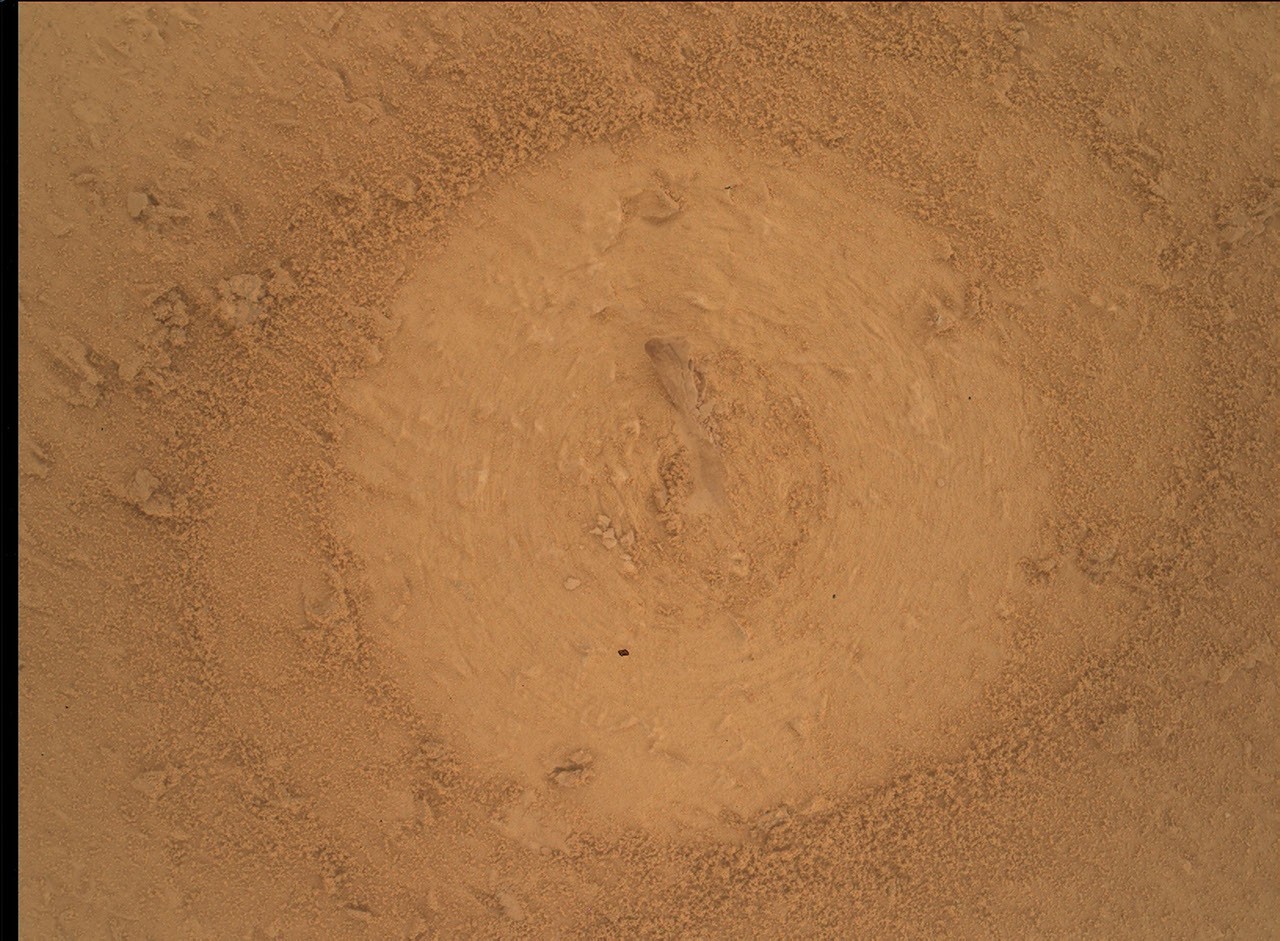
NASA's Curiosity Rover Drills 48th Mars Rock Sample
After 14 years and 24 miles across Mars, NASA's Curiosity rover just collected its 48th rock sample at a spot named after a gold rush town. Scientists are eager to discover what minerals lie hidden in the Martian terrain.
NASA's Curiosity rover just completed a major milestone in humanity's exploration of the Red Planet, drilling into its 48th rock target after traveling an incredible 24.6 miles across Mars over 14 years.
The rover recently entered a new exploration area called Cache Creek, named after a geologically diverse region in British Columbia, Canada. That Earth location sits at the southern end of the 1860s Gold Rush Trail, where prospectors once sought riches in the Canadian wilderness.
While Curiosity won't strike literal gold, scientists are just as excited about what treasures the Martian rock might reveal. The team drilled into a target called "Basque Lakes" and will use specialized instruments to analyze the sample's mineral composition.
Before drilling, researchers took every precaution to ensure success. They used the rover's robotic arm camera to examine textures within half an inch of the surface, fired lasers to check composition, and tested the rock's stability.
The analysis involves multiple sophisticated instruments working together. The CheMin tool uses X-ray diffraction to identify minerals, while other sensors measure chemistry and capture detailed images of the drilling site and surrounding landscape.
Why This Inspires
Despite power constraints and aging equipment, Curiosity continues pushing the boundaries of exploration. The rover has climbed more than half a mile in elevation, studying layers of Martian history with each sample.
The Cache Creek area on Earth contains oceanic crust, marine sediments, volcanic rocks, and lakes with unusual chemistry that might mirror ancient Martian lakes. If Curiosity finds similar minerals, it could reveal crucial clues about whether Mars once supported conditions favorable to life.
The team also photographed jumbled rock deposits at the base of a nearby butte and monitored atmospheric conditions. Every piece of data helps scientists understand how Mars transformed from a potentially habitable world to the dry planet we see today.
Curiosity will spend another week at this location before moving on to continue its exploration of Mount Sharp and Gale crater. Each sample brings humanity closer to understanding our planetary neighbor and the possibility that life once existed beyond Earth.
After 14 years of tireless work, this rover proves that patient, methodical exploration yields discoveries worth celebrating.
More Images


Based on reporting by NASA
This story was written by BrightWire based on verified news reports.
Building Something New? Try the BrightWire Tech Stack Advisor
Compare modern frameworks, cloud hosting, and AI tools tailored to your project budget and scale.
Spread the positivity!
Share this good news with someone who needs it

