NASA's Curiosity Rover Finds Rare Water Minerals on Mars
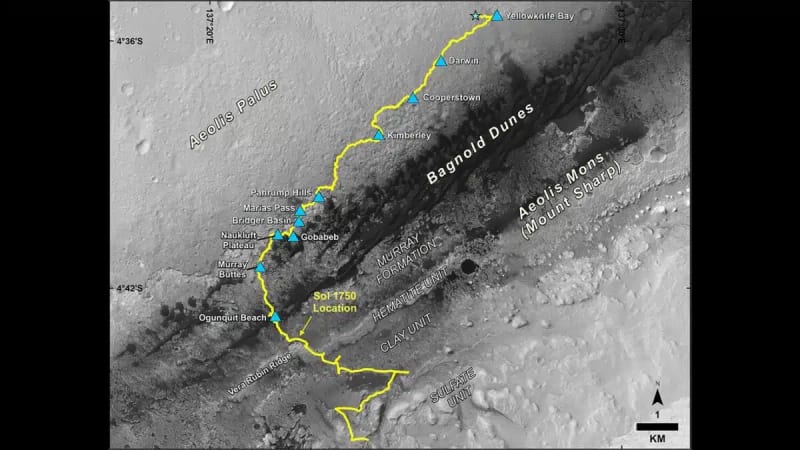
NASA's Curiosity rover has discovered high concentrations of hematite on Mars, a mineral that only forms in water-rich environments. The find on Vera Rubin Ridge offers the strongest evidence yet that the Red Planet once had conditions favorable for life.
After 13 years of climbing Mount Sharp inside Mars' Gale Crater, NASA's Curiosity rover just found something remarkable: ancient minerals that tell the story of a wetter, potentially life-friendly Mars.
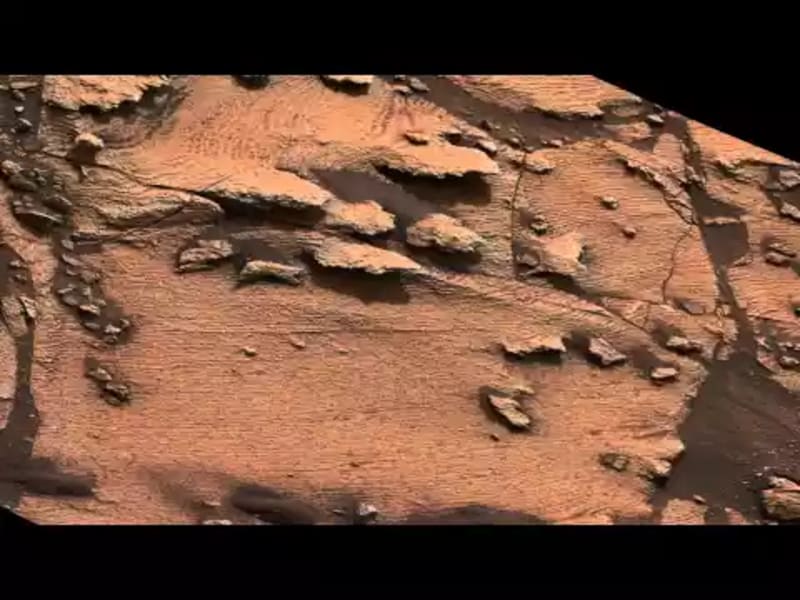
The rover has reached Vera Rubin Ridge, an eight-story-high rock formation packed with hematite. This iron-oxide mineral only forms where water is present, making it a crucial clue in understanding Mars' transformation from a wet world to the dry, cold planet we see today.
Scientists are now asking questions they couldn't ask before. Did ancient lakes deposit these minerals, or did water flow through the rocks long after they formed? The answers will reveal whether Mars had stable, long-lasting water on its surface.
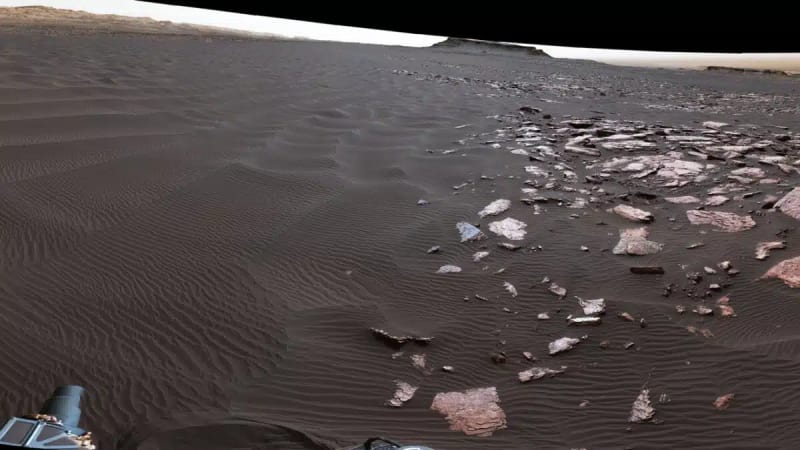
The discoveries keep coming despite the rover's age and wear. Curiosity has rolled more than 10 miles across Martian terrain on damaged wheels, worked through drill malfunctions, and kept sending data back to Earth. The robot even found sand dunes that don't exist anywhere on Earth, mid-sized formations created by Mars' thin atmosphere that challenge what scientists thought they knew about planetary geology.
Now stationed at the ridge, Curiosity is measuring oxidation levels in the rocks. Different oxidation states could have provided energy for ancient microbes. Scientists are also testing whether water at higher elevations was more acidic, which would completely reshape our understanding of where life could have existed on ancient Mars.
The Ripple Effect
This discovery does more than add another chapter to Mars exploration. Every water signature Curiosity finds helps scientists understand how planets lose their habitability and what conditions life needs to survive. That knowledge shapes how we search for life on other worlds and how we might one day make Mars habitable again.
The findings also prove that patient, methodical science pays off. While Curiosity climbed Mount Sharp year after year, it was building a complete geological timeline of Mars' climate history. Each rock layer tells part of the story, and the hematite-rich ridge might hold the most important chapter yet.
A 13-year-old robot with broken parts is still rewriting what we know about life beyond Earth.
More Images
Based on reporting by Google: NASA discovery
This story was written by BrightWire based on verified news reports.
Spread the positivity!
Share this good news with someone who needs it