NASA's Deep Space Network Tracks Artemis II Moon Mission
NASA successfully established contact with the Artemis II spacecraft on its journey to the Moon, marking a major milestone in humanity's return to lunar exploration. The Deep Space Network's global antenna system is now guiding four astronauts through the first crewed lunar mission in over 50 years.
On April 1, 2026, NASA's worldwide network of giant antennas locked onto signals from Artemis II as the spacecraft carried four astronauts toward the Moon. This connection marks the first time humans have traveled beyond Earth orbit in more than half a century.
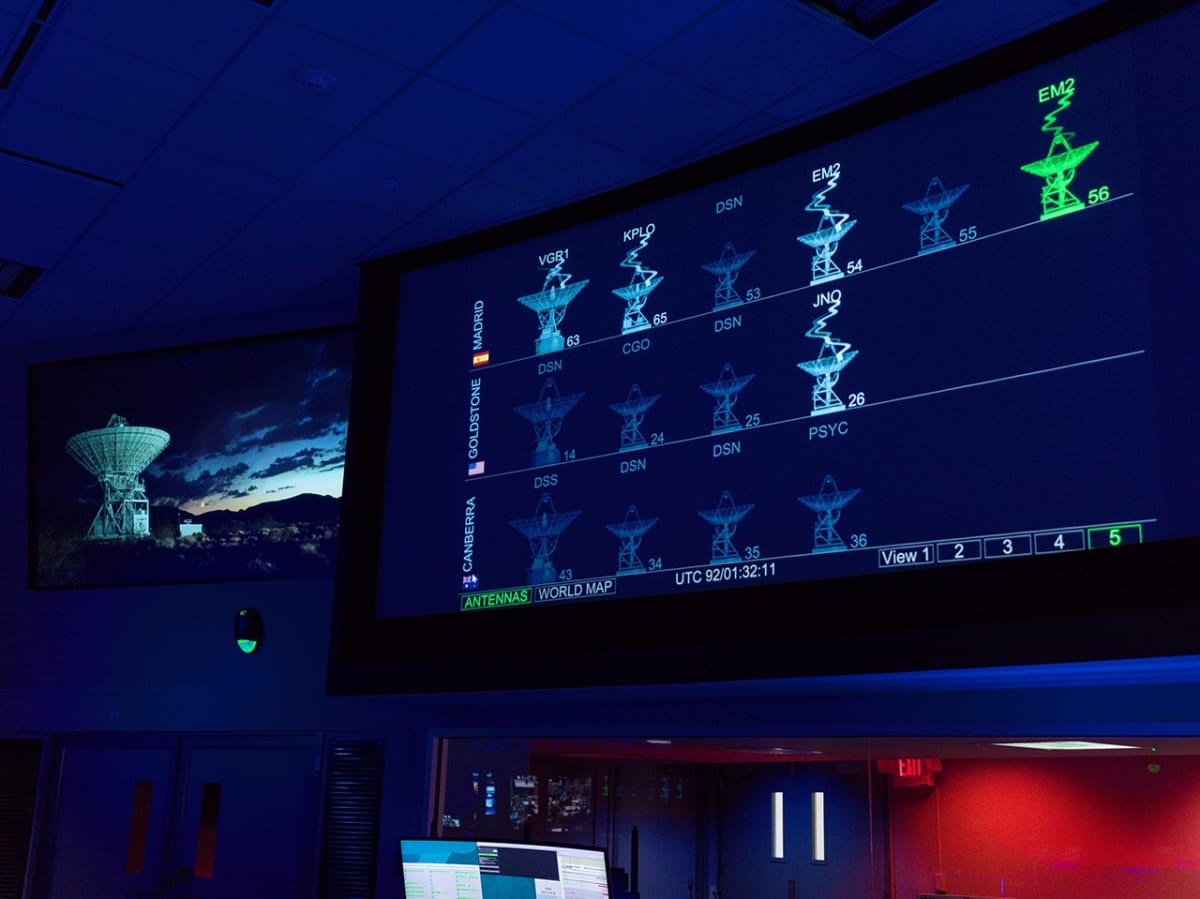
The Deep Space Network made contact using two massive radio antennas in Madrid, Spain, tracking the crew as they ventured 230,000 miles from home. Engineers at NASA's Jet Propulsion Laboratory in California watched their screens light up with confirmation that communication was flowing smoothly between Earth and the lunar-bound spacecraft.
This isn't just one antenna doing the work. The Deep Space Network operates three complexes positioned around the globe in California, Spain, and Australia, ensuring that at least one station can always reach spacecraft no matter where Earth rotates. Together, these facilities communicate with dozens of missions exploring our solar system 24 hours a day, seven days a week.
For Artemis II, this constant connection means mission control can track the crew's location, send commands to the spacecraft, and receive vital data about the astronauts' health and the mission's progress. The network serves as humanity's lifeline to explorers venturing into the cosmic frontier.
The Madrid antennas labeled the Artemis II signals as "EM2" for Exploration Mission 2, displaying the active connection inside the Space Flight Operations Facility. Anyone can watch these real-time communications through NASA's DSN Now website, which shows every spacecraft the network is talking to at any given moment.
The Ripple Effect
This successful signal acquisition represents more than technical achievement. It demonstrates that decades of investment in deep space communication infrastructure are paying off, creating a reliable highway for humanity's expansion beyond our planet.
The same network guiding Artemis II also supports missions studying Mars, Jupiter, and the edges of our solar system. As more countries and private companies launch ambitious space programs, this proven system provides the foundation for collaborative exploration that benefits all of humanity.
The technology connecting us to the Artemis II crew today will enable tomorrow's missions to establish a permanent human presence on the Moon and eventually journey to Mars.
Four astronauts are now traveling farther from Earth than anyone in a generation, and we're right there with them every step of the way.
More Images

Based on reporting by NASA
This story was written by BrightWire based on verified news reports.
Spread the positivity!
Share this good news with someone who needs it