NASA's Hubble and Webb Capture Stunning Pinwheel Galaxy
Two of humanity's most powerful space telescopes just teamed up to photograph one of our cosmic neighbors in breathtaking detail. The Pinwheel Galaxy has never looked more spectacular.
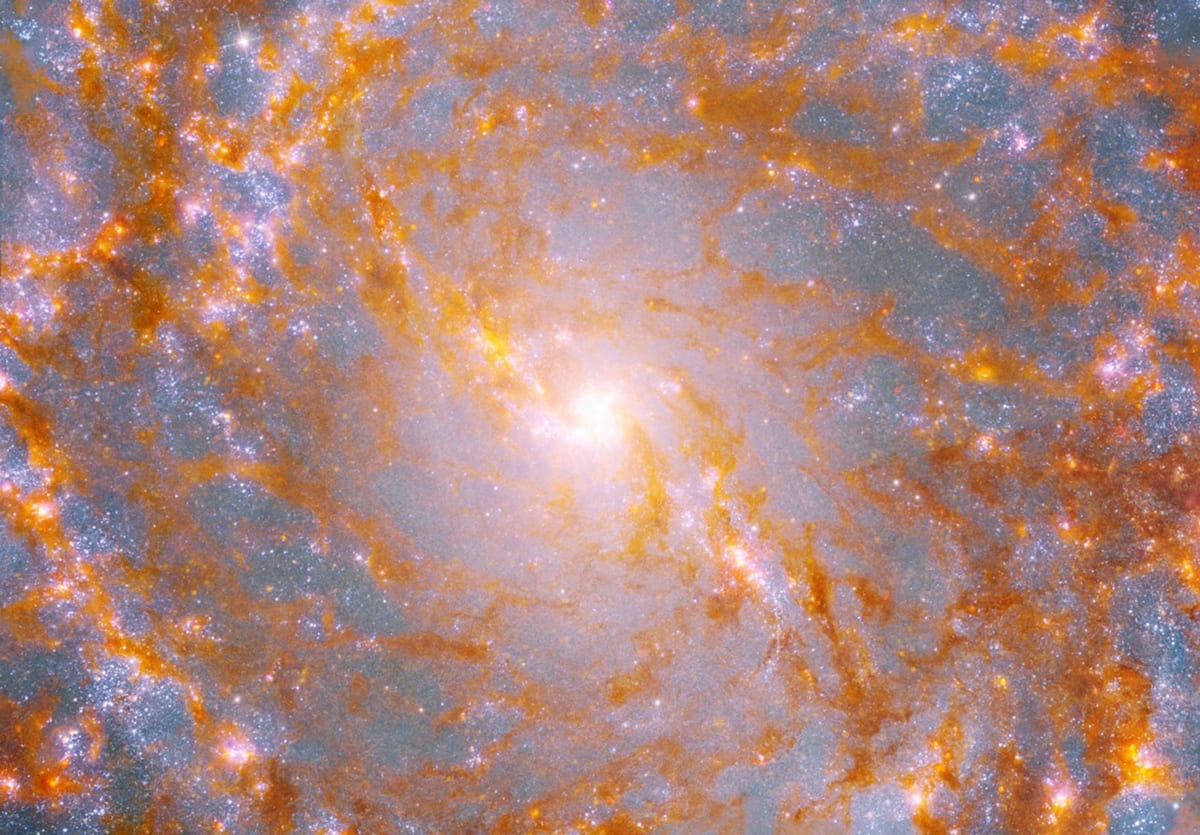
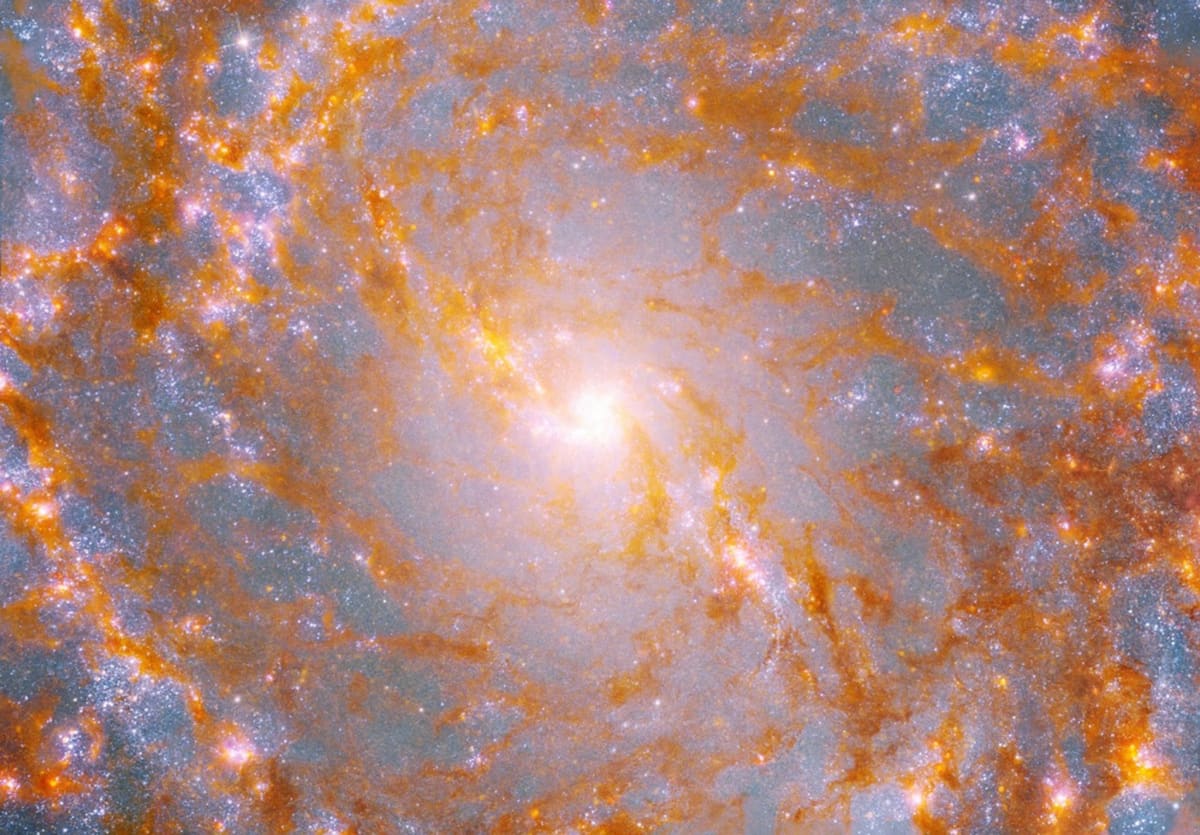
NASA released a stunning new image of the Pinwheel Galaxy, captured by combining data from both the Hubble Space Telescope and the James Webb Space Telescope. The collaboration between these two powerhouse observatories gives us an unprecedented view of a galaxy 25 million light-years away.
The Pinwheel Galaxy, officially known as Messier 101, is one of the closest spiral galaxies we can see face-on from Earth. This orientation makes it perfect for scientists to study the structure and stellar population of spiral galaxies like our own Milky Way.
Hubble collected data across ultraviolet, visible, and near-infrared wavelengths, while Webb added its cutting-edge infrared capabilities. Together, they revealed the galaxy's core in ways neither telescope could achieve alone.
The image was released on March 16, 2026, as part of Hubble's Messier Marathon 2026, a campaign to observe objects cataloged by French astronomer Charles Messier in the 18th century. The project brings fresh eyes to celestial objects that have fascinated astronomers for centuries.
Why This Inspires
This collaboration shows what's possible when we combine the best tools humanity has created. Hubble, launched in 1990, continues to deliver groundbreaking science alongside Webb, which joined it in space just a few years ago.
The partnership demonstrates how different perspectives create fuller understanding. Each telescope sees wavelengths the other cannot, and together they paint a more complete picture of the universe.
These observations help scientists understand how galaxies form, evolve, and create new stars. Every discovery about distant galaxies teaches us more about our own cosmic home.
Looking at an object 25 million light-years away reminds us that human curiosity knows no bounds, and our capacity for wonder only grows with each new image from space.
More Images
Based on reporting by NASA
This story was written by BrightWire based on verified news reports.
Spread the positivity!
Share this good news with someone who needs it